Syllabus: NSW Road User Handbook (2026)
NSW DKT: Full Free Practice Test B
Complete practice set for the Service NSW Driver Knowledge Test.
Part 1: General Knowledge
15 Practice Questions
Part 2: Road Safety
30 Practice Questions
Question Format
Multiple Choice (3 Options)
⚠️ Practice Mode: This is a relaxed study session. You can complete all 45 questions to review the correct answers, even if you make a mistake.
Start DKT Test B
Ready to master the questions?
What should you do if your brakes feel 'spongy'?
Pump them repeatedly while driving.
Ignore it until the next service.
Have them checked immediately.
Spongy brakes often indicate air in the brake lines or a fluid leak. This is a critical safety issue that reduces your stopping power, so you must have them repaired by a mechanic right away.
What happens to your braking distance if you double your speed?
It doubles.
It triples.
It quadruples.
Braking distance increases with the square of your speed, meaning that doubling your speed will result in a braking distance that is four times longer.
What is the maximum speed a P2 driver can travel?
90 km/h.
The sign-posted limit.
100 km/h.
Provisional P2 drivers must not exceed a maximum speed of 100 km/h, even if the sign-posted limit is higher.
What must you NOT do when another vehicle is overtaking you?
Increase your speed.
Maintain your speed.
Stay in your lane.
You must not accelerate while another vehicle is overtaking you, as it makes the maneuver dangerous for everyone involved.
What defines negligent driving in NSW?
Driving slowly in the right lane.
Driving without due care or attention.
Driving during heavy rain.
Negligent driving is legally defined as operating a vehicle without the level of care and attention that a reasonable person would use to ensure the safety of others.
Which of these is a common crash at T-junctions?
Parallel parking error.
Failing to give way.
Overtaking on the left.
Many accidents occur at T-junctions because drivers entering from the terminating road fail to properly yield to traffic already traveling on the continuing road.
When turning right at an intersection, you must give way to:
Vehicles behind you.
Vehicles turning left into the same road.
Oncoming vehicles going straight.
When turning right, you must yield to oncoming traffic going straight or turning left, as they have the right of way.
What should you do if there are no lines at an intersection?
Always stop and wait for a green signal.
Follow standard give way rules.
Use your horn to signal your presence.
At an unmarked intersection where there are no lines or signs, you must apply the standard "give way to the right" rule and yield to any vehicle already in the intersection.
When you see this hand signal, the driver intends to:
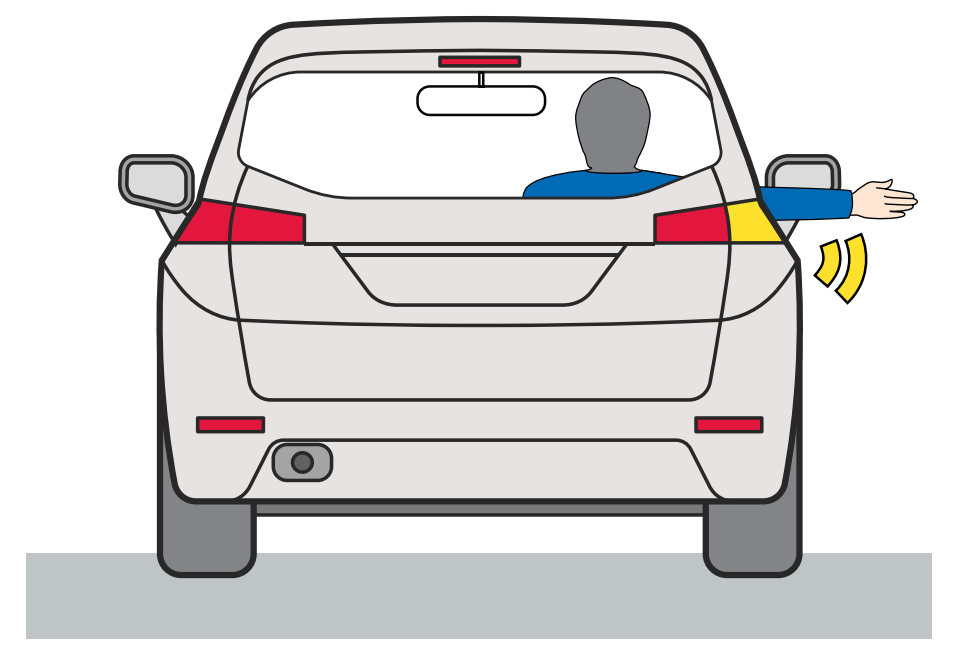
Turn right.
Turn left.
Stop the vehicle.
An outstretched right arm indicates the driver intends to turn right, warning other road users of the upcoming movement.
What should you do to avoid a crash when turning at an intersection?
Wait for a safe gap.
Speed up to clear the way.
Follow the car in front closely.
You must wait for a gap in traffic that is large enough to allow you to complete your turn safely without forcing other drivers to slow down or swerve.
When you see a GIVE WAY sign, what are you required to do?
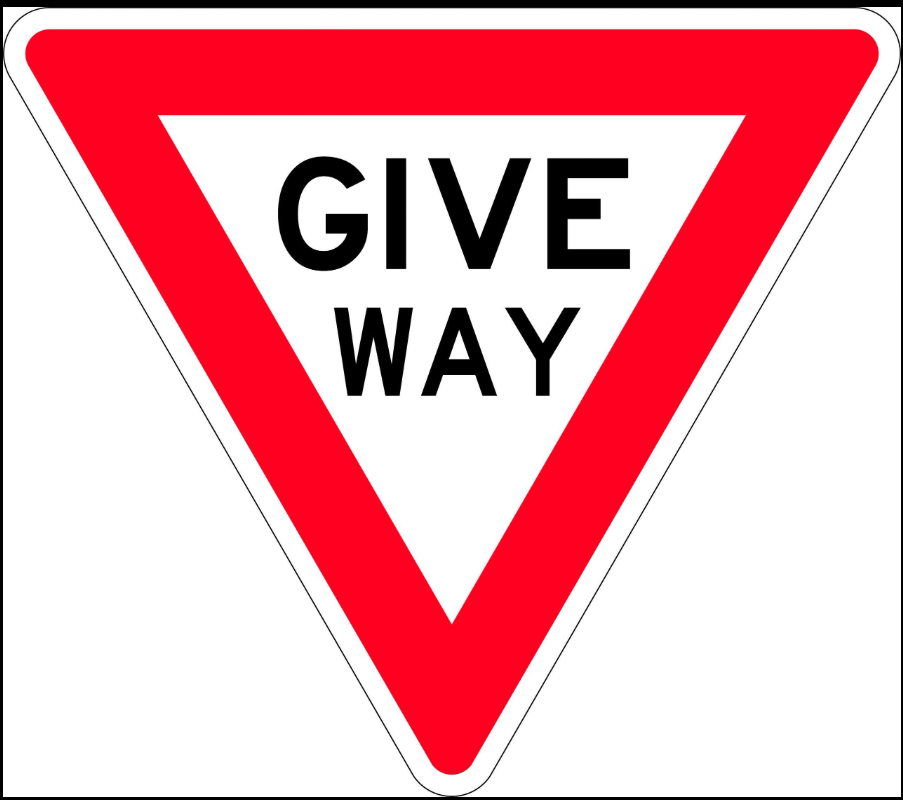
Always stop before proceeding.
Slow down and give way if required.
Continue at the same speed.
A Give Way sign requires you to slow down and give priority to other vehicles or pedestrians if necessary.
Can you be tested for alcohol if involved in a crash?
Only if injured.
Only if you agree.
Yes, always.
Police have the legal authority to require a breath test from any driver involved in a vehicle accident, regardless of whether there are injuries or consent.
In this situation, when a bus signals to move out from the left, what must you do?
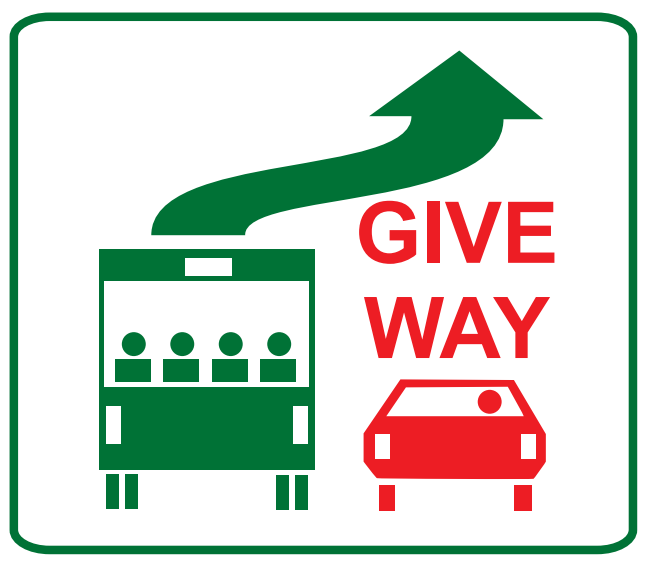
Speed up and pass the bus.
Give way to the bus.
Sound your horn and continue.
You must give way to a bus displaying a Give Way to buses sign when it indicates and is moving out from the left side.
In this situation, which car must give way?
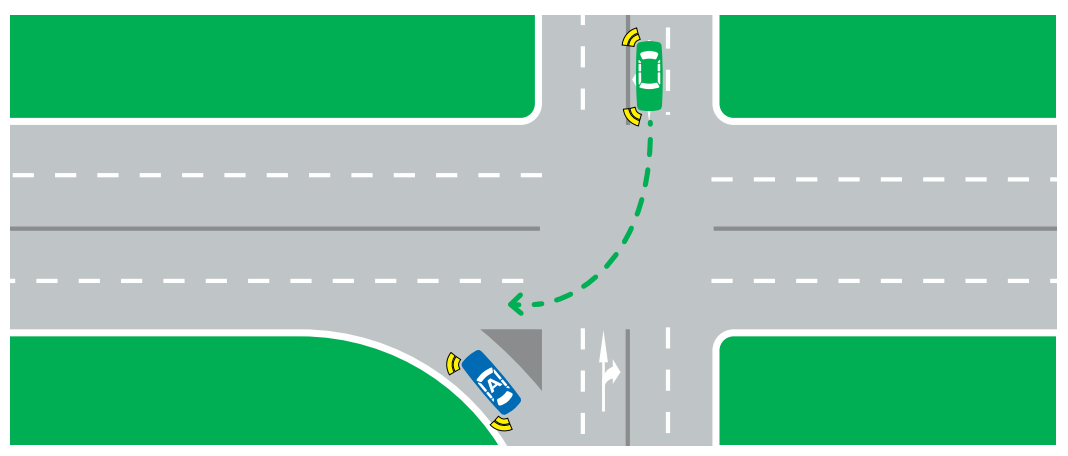
Blue car.
Green car.
Neither car.
The blue car in the slip lane must give way to the green car turning right into the road it is entering.
What is the speed limit in a Shared Zone?
10km/h.
15km/h.
20km/h.
In Shared Zones where pedestrians and vehicles use the same road space, the speed limit is 10km/h to ensure maximum safety for everyone.
At this T-intersection, which car must give way?
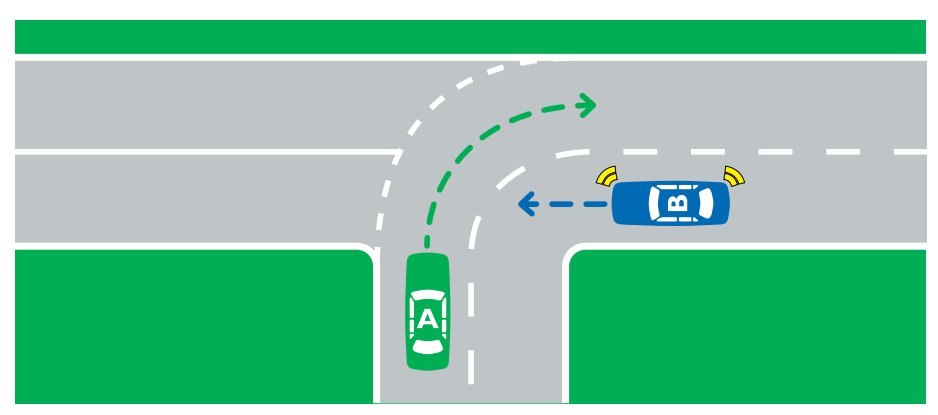
Car A.
Car B.
Neither car.
Car B must give way because it is leaving the continuing road and must give way to the vehicle following the continuing road.
Which side are you generally required to overtake on?
The left side.
Either side.
The right side.
In Australia, you must generally overtake other vehicles on the right side to ensure safety and visibility.
You are approaching an intersection and traffic ahead is stopped. What should you do?
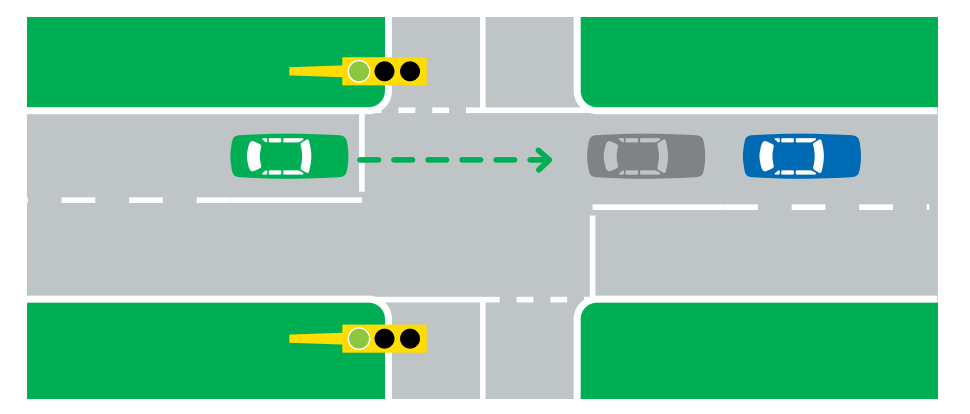
Enter the intersection and wait.
Proceed slowly and stop inside.
Wait until there is space beyond the intersection.
You must not enter an intersection unless there is enough space on the other side to clear it without stopping.
What is the recommended hand position on a steering wheel for safety?
12 o'clock.
Bottom of the wheel.
'10 and 2' or '9 and 3'.
Placing your hands at these positions provides the best leverage for steering and ensures your arms are not in the way if the driver's airbag deploys during a collision.
Can you cross a single continuous white line to overtake another vehicle?
Yes, if there is no oncoming traffic.
Yes, if the vehicle ahead is travelling very slowly.
No, you must not cross it to overtake.
A single continuous white line is a strict boundary that prohibits crossing for overtaking to ensure safety on stretches with limited visibility or high risk.
You are making a U-turn. Who must you give way to?
Only vehicles on your right.
Only oncoming traffic.
All vehicles and pedestrians.
When performing a U-turn, you must yield to every other road user, including all vehicles and pedestrians, ensuring the turn is made safely without obstructing anyone.
Which light follows green in a standard traffic signal?
Red.
Flashing Green.
Yellow.
The standard sequence for traffic lights is Green, followed by Yellow to warn of an upcoming change, and then Red.
In this situation, when changing lanes, which vehicle must give way?
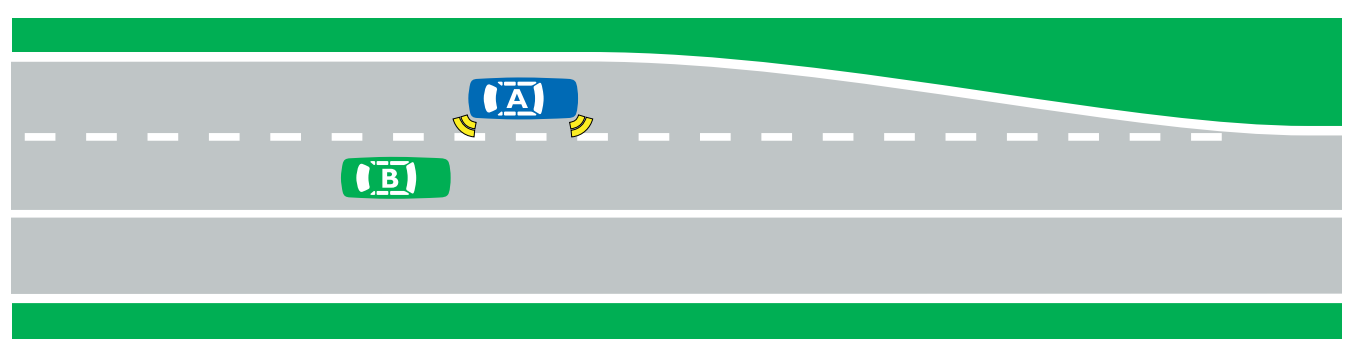
Vehicle A.
Vehicle B.
Neither vehicle.
A vehicle changing lanes must give way to vehicles already in that lane to avoid interfering with their path.
What does this sign indicate?
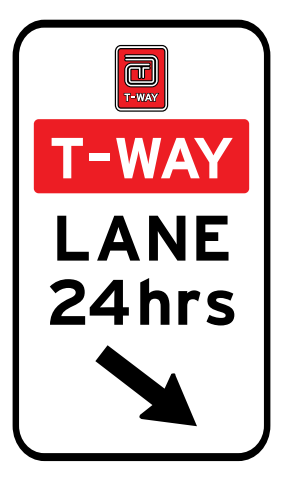
You may use this lane at any time.
Only buses and authorised vehicles may use this lane.
This lane can be used outside peak hours.
A T-way lane operates at all times and is reserved only for buses and authorised vehicles, so other drivers must not use it.
What does this sign indicate?
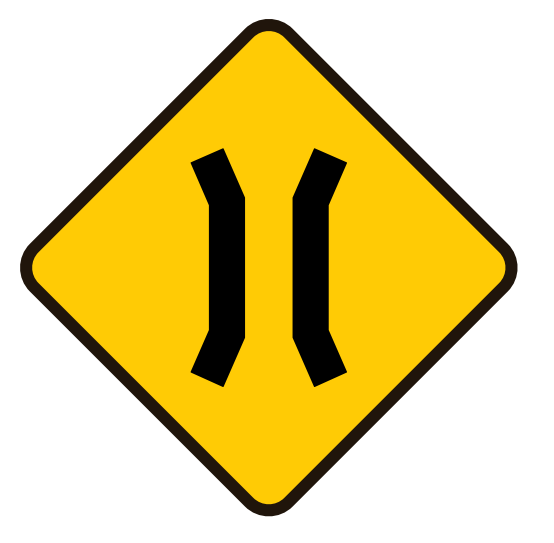
Road narrows ahead.
Narrow bridge ahead.
Two-way traffic ahead.
This sign warns that the bridge ahead is narrower than the road, so drivers must slow down and be cautious of oncoming traffic.
What does this sign mean?
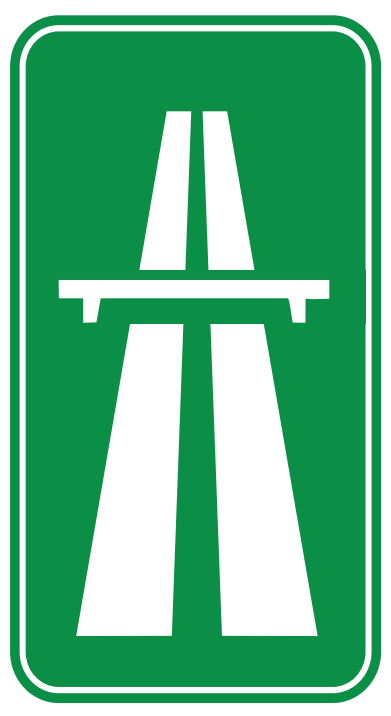
End of motorway.
Start of motorway.
Road works ahead.
This sign indicates the beginning of a motorway where specific motorway rules apply to drivers.
What does this sign represent?
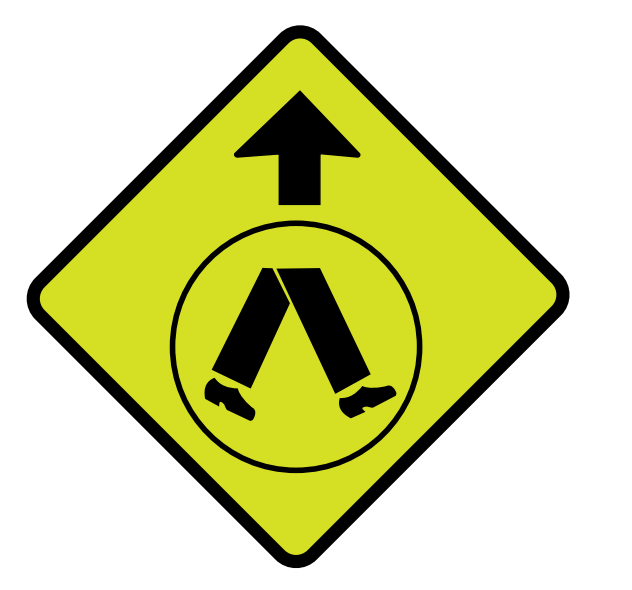
Pedestrian crossing ahead.
Pedestrians prohibited.
Footpath only ahead.
This sign warns that a pedestrian crossing is ahead, so drivers must slow down and be ready to stop for people crossing.
You approach a narrow bridge with a GIVE WAY sign and another vehicle is already on the bridge. What should you do?
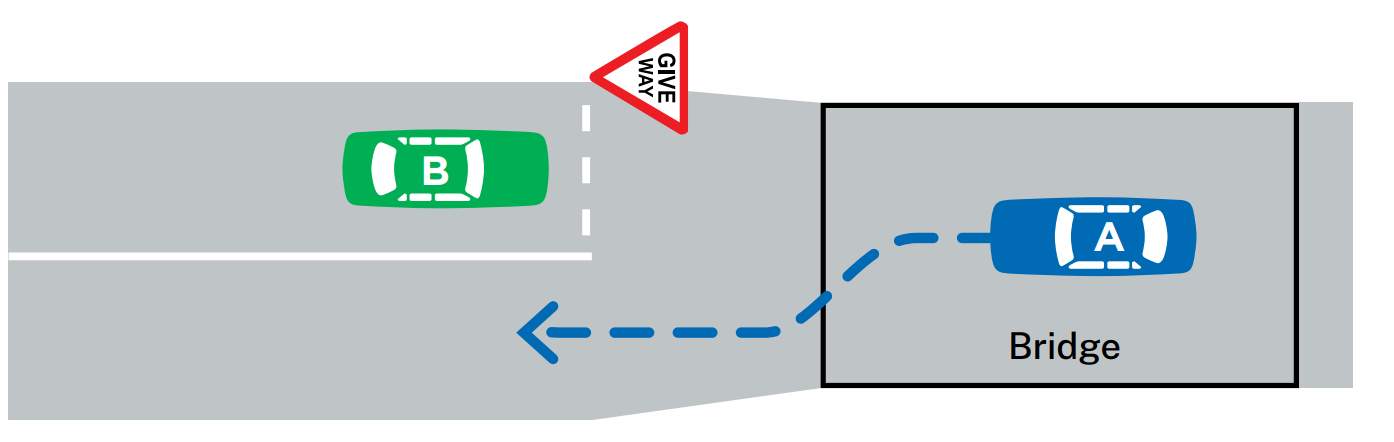
Enter the bridge and continue.
Give way and wait.
Speed up to cross first.
You must give way to vehicles already on the bridge or approaching, especially when facing a Give Way sign.
In this situation, which car must give way?
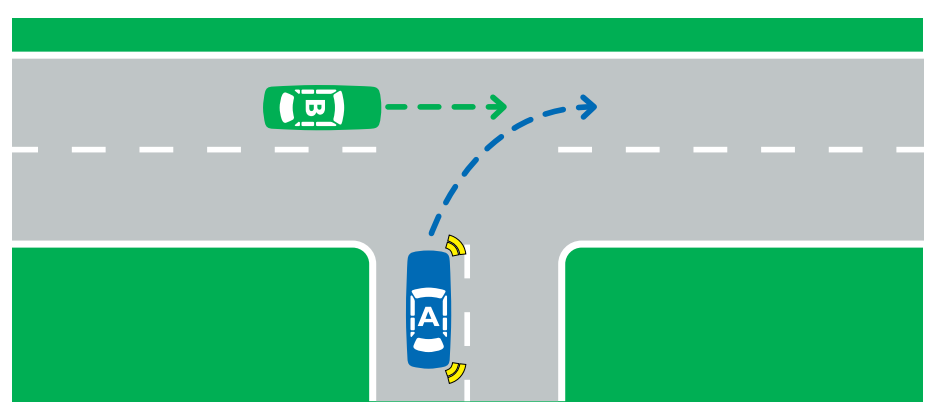
Car A.
Car B.
Neither car.
Car A must give way because it is turning right and must give way to oncoming traffic going straight across its path.
You are at a red light. Can you turn left?
Yes, after stopping.
Only in an emergency.
No, unless a sign says otherwise.
In NSW, turning left on a red light is prohibited unless a specific sign explicitly permits it after a full stop.
Which part of the body does the lap part of the seatbelt cover?
The hips.
The stomach.
The thighs.
The lap belt must be worn low across the hips to ensure the skeletal structure absorbs the force of a crash, preventing serious internal injuries to the stomach area.
What is the purpose of 'Dragon’s teeth' road markings?
To mark a high-speed exit.
To show a bicycle-only path.
To indicate the start of a school zone.
Dragon's teeth are a series of triangular markings painted on both sides of a lane to alert drivers that they are entering a school zone and need to reduce speed.
How does smooth acceleration affect fuel consumption?
It increases fuel use.
It has no effect.
It decreases fuel use.
Smooth acceleration and maintaining a steady speed help the engine operate more efficiently, which significantly reduces the amount of fuel your vehicle consumes.
What percentage of NSW road deaths are caused by fatigue?
10%.
50%.
20%.
Fatigue is a major safety concern in New South Wales, contributing to approximately 20% of all fatal road accidents across the state.
At a railway crossing with a STOP sign, what must you do?
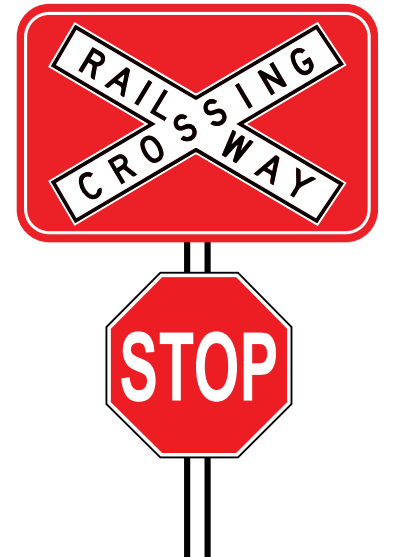
Stop, then proceed when safe.
Slow to 10 km/h and go.
Stop only if a train is present.
A STOP sign at a railway crossing requires you to come to a complete stop and only proceed when it is safe.
When turning right from a one-way street, where should you position your vehicle?
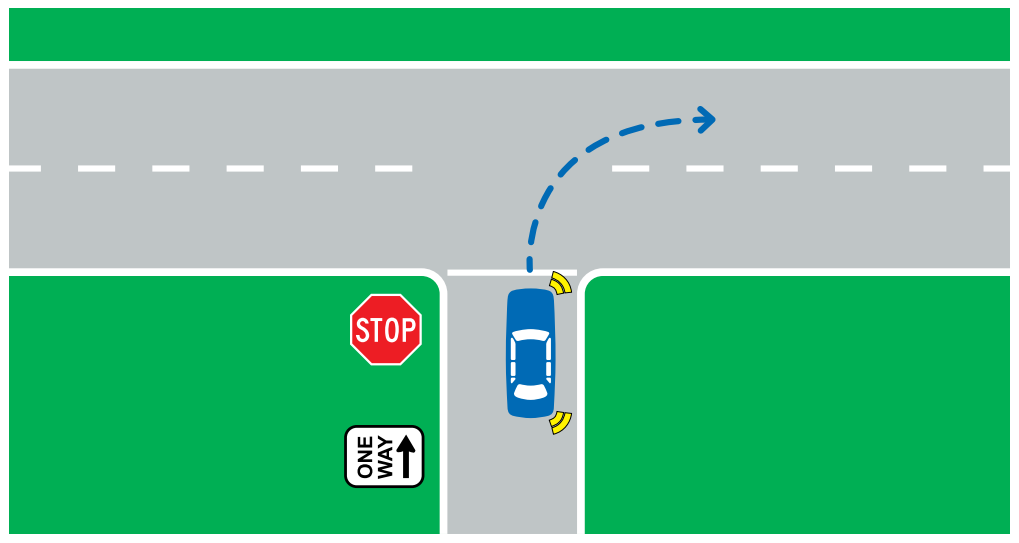
Keep to the left side.
Keep to the right side.
Stay in the centre.
When turning right from a one-way street, you must position your vehicle on the right side to turn safely into the correct lane.
What is a 'pink slip' in the context of vehicle registration?
A proof of purchase.
A safety inspection report.
A fine for speeding.
A pink slip is a safety inspection report that confirms your vehicle is roadworthy and is required for registration renewal for most vehicles over five years old.
What does this sign represent?
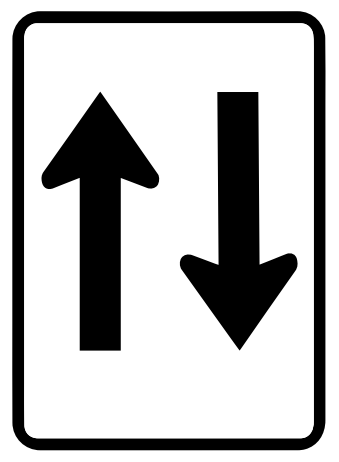
Two-way traffic.
One-way traffic.
Divided road ahead.
This sign shows that traffic moves in both directions on the same road, so drivers must watch for oncoming vehicles.
What does this sign mean?
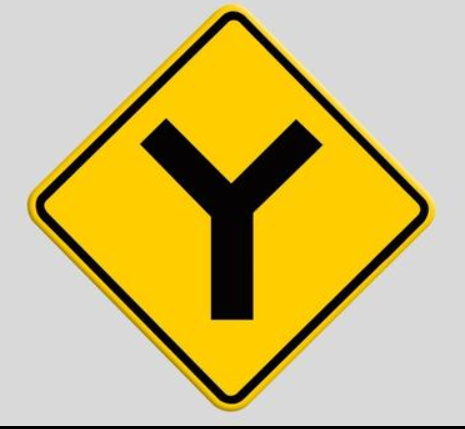
Road divides ahead.
Divided road ends.
Y-junction ahead.
This sign warns that the road ahead splits into two separate directions, forming a Y-shaped junction where drivers must choose a direction.
When turning left, you should be in which part of the lane?
The right side.
The left side.
The center.
Positioning your vehicle to the left makes your intent clear and allows traffic to pass safely on your right.
What does this sign indicate?
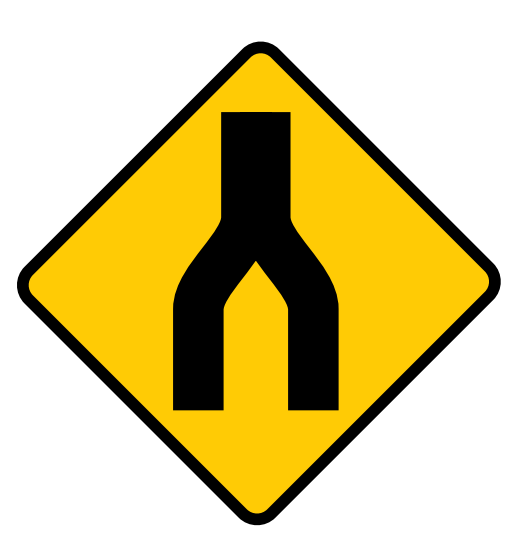
Road divides ahead.
Divided road ends.
Road narrows ahead.
This sign warns that the divided road is ending and traffic from both directions will merge onto a single roadway, requiring extra caution.
Where should the head restraint be positioned for safety?
As high as possible.
Level with your neck.
Level with the top of your ears.
For maximum protection against whiplash in a collision, the head restraint should be adjusted so the top is at least as high as your eyes or the top of your ears.
What does this green light with a red arrow mean?
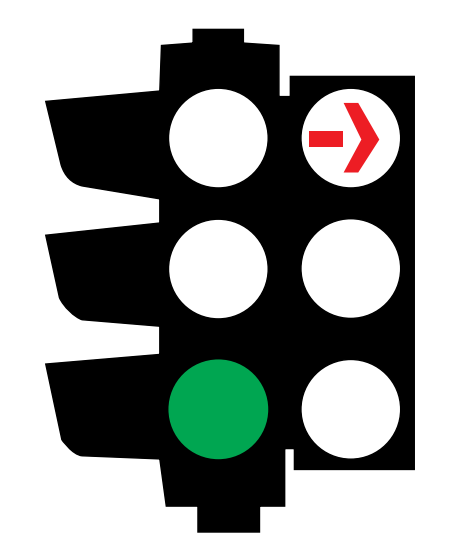
You may turn in the arrow direction.
You must stop completely.
You must not turn in the arrow direction.
A red arrow prohibits turning in that direction even if the green light allows you to proceed straight.
Where is a three-point turn typically used?
On a busy motorway.
At a major intersection.
On a road too narrow for a U-turn.
A three-point turn is a method of turning a vehicle around in a limited space by moving forward, backing up, and moving forward again.
You plan to turn right and then immediately left at the next road. From which lane should you turn right?
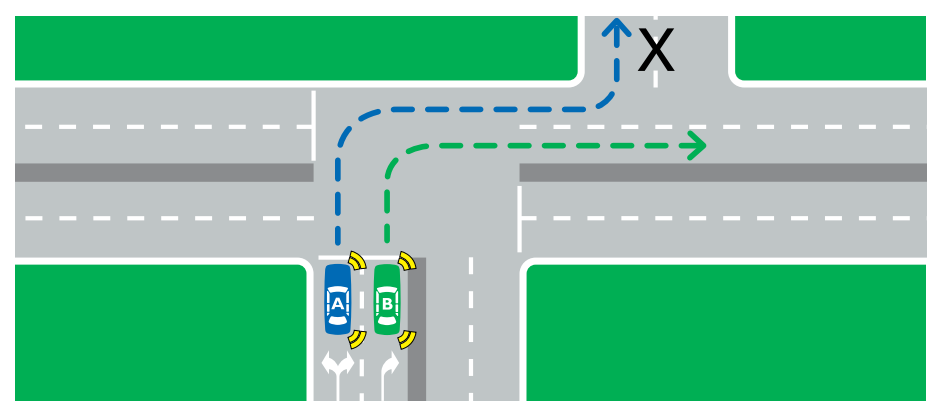
From the right lane.
From the left lane.
From any lane.
Turning right from the left lane positions you correctly to safely make the immediate left turn without crossing lanes.