Syllabus: Road to Solo Driving (2026)
Victoria Learner Permit: Practice Test A
Advanced simulation based on the official VicRoads computer-based test.
32 Questions
Comprehensive mix of rules
Pass Mark: 78%
25 correct answers required
VIC Scenarios
Focus on Trams & Hook Turns
📊 Study Mode: This practice test allows you to review all 32 questions and see detailed explanations. Use this set to master complex Melbourne intersections and Victorian speed zones.
Start Practice Test A
Click to begin your 2026 simulation
Which vehicle must stop and give way in this situation?
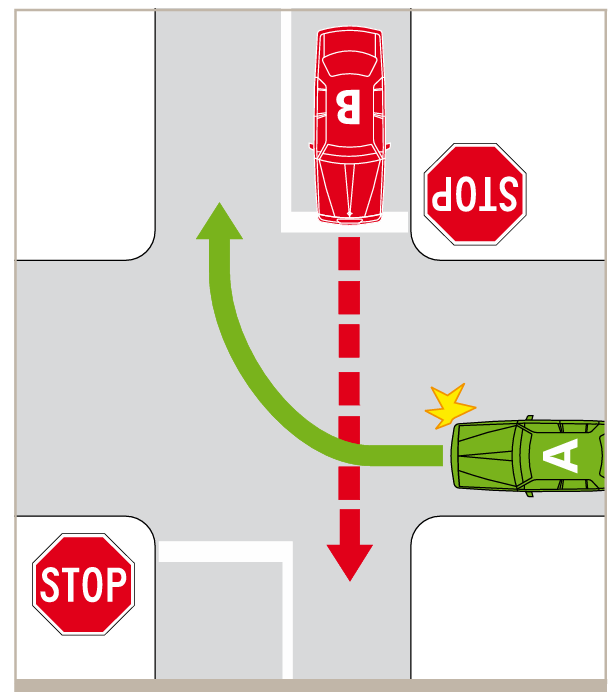
Green vehicle A.
Red vehicle B.
Both vehicles must give way.
Vehicle B must stop and give way as it faces a stop sign, while vehicle A has priority on the continuing road.
What is the correct way to enter a freeway from a ramp?
Match speed and merge safely.
Stop and wait for a gap.
Drive slowly to find a gap.
You should use the ramp to build up speed to match the freeway traffic, allowing you to merge smoothly into a safe gap without causing others to brake.
What is the passenger limit for P1 drivers under 22?
One passenger (16–21).
No passengers allowed.
Maximum two passengers.
To minimize distractions, P1 drivers under 22 are restricted to carrying only one peer-aged passenger between 16 and 21 years old.
Why should you increase your following distance in the rain?
To improve engine cooling.
It takes longer to stop.
To avoid water splashing.
Wet roads reduce tyre grip and friction, which means your vehicle needs much more distance to come to a complete stop safely.
When you see this signal, what must you do?
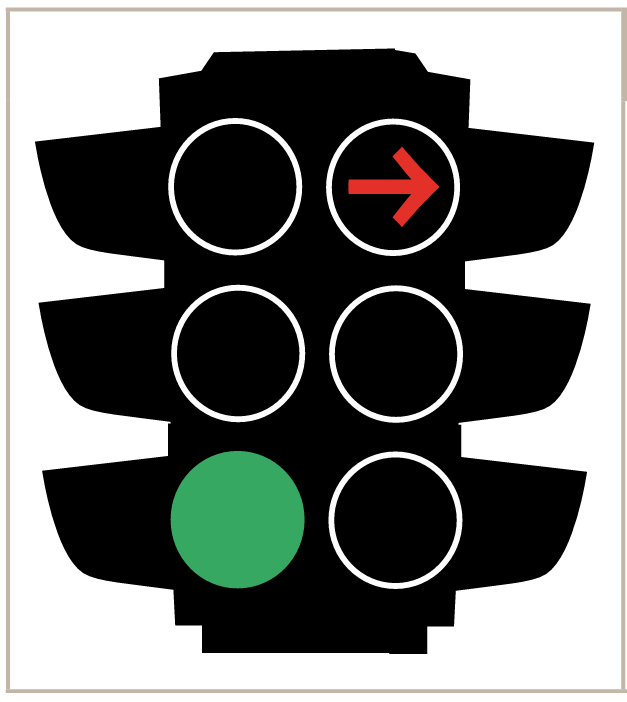
Turn right with caution.
Do not turn right.
Wait before turning right.
A red arrow is a strict instruction. Even if the main light is green, you must not turn right until the red arrow disappears or turns green.
What is a 'Hook Turn'?
U-turn in narrow streets.
Right turn from center.
Right turn from left lane.
In certain intersections with trams, you must stay in the left lane to turn right, allowing trams to pass through the center of the road without being blocked.
At a T-intersection, which vehicles must you give way to?
Only those from your right.
Only those from your left.
All on the continuing road.
When your road ends at a T-intersection, you must yield to all traffic traveling along the through road before it is safe to turn.
When two lanes merge without markings, which rule applies?
Faster vehicle goes first.
Right-side vehicle goes first.
Vehicle ahead goes first.
In a 'Zip Merge' where no line markings exist, you must give way to any vehicle that is ahead of you, regardless of which lane they are in.
What does this sign represent?
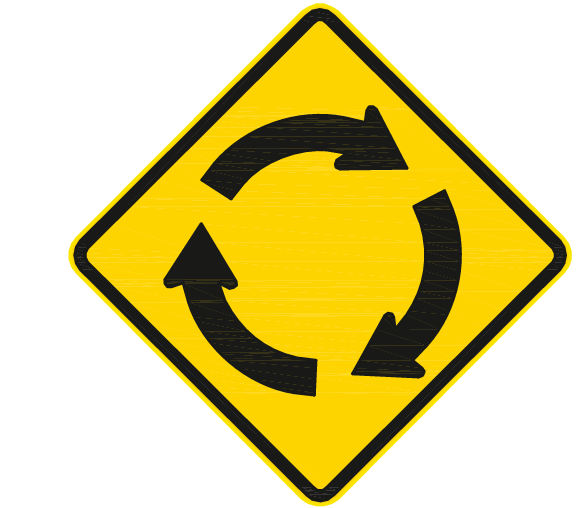
Mini-roundabout ahead.
Staggered junction ahead.
Roundabout ahead.
This warning sign alerts you that a roundabout is coming up, so you should slow down and prepare to give way to traffic already in the circle.
New drivers are how many times more likely to crash than experienced ones?
2 times more.
3 times more.
4 times more.
Due to limited experience, new drivers face a three times higher risk of being involved in a crash.
You are driving next to tram tracks with broken yellow lines. What must you do?
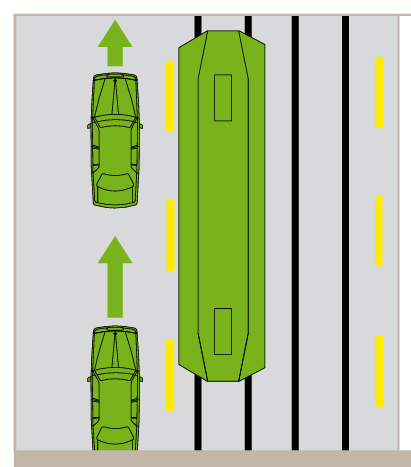
Overtake the tram when safe.
Give way to the tram at all times.
Drive beside the tram at same speed.
Broken yellow lines next to tram tracks mean the tram has priority at all times.
You are driving vehicle A. You must give way to:
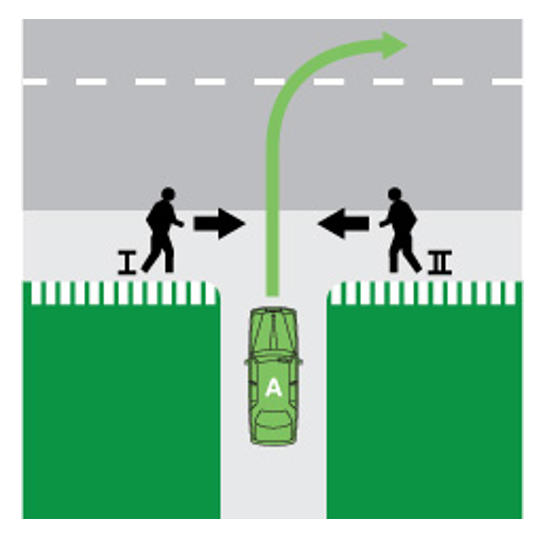
Pedestrian I only.
Pedestrian II only.
Both pedestrians I and II.
When turning, you must give way to all pedestrians crossing the road you are entering.
At this roundabout, who must give way?
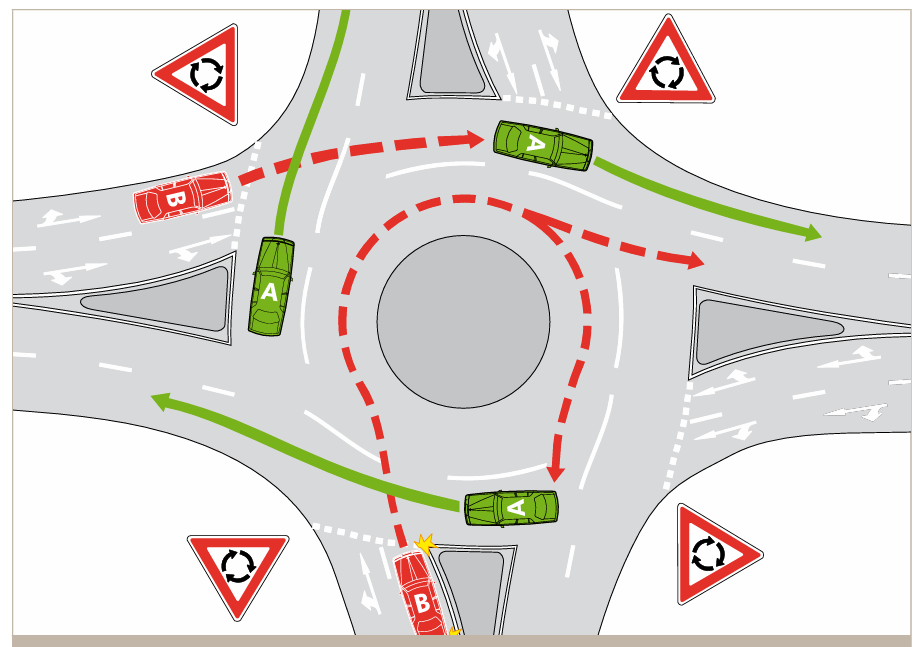
Vehicles already in circle.
Vehicles on the right.
Vehicles entering the circle.
In a roundabout, the priority is always given to those already inside. Vehicles entering must wait for a safe gap before proceeding.
What is the default speed limit in a built-up area without signs?
40 km/h.
50 km/h.
60 km/h.
In Victoria, 50 km/h is the legal default speed limit for built-up areas to ensure the safety of pedestrians and local traffic.
What does this sign mean?
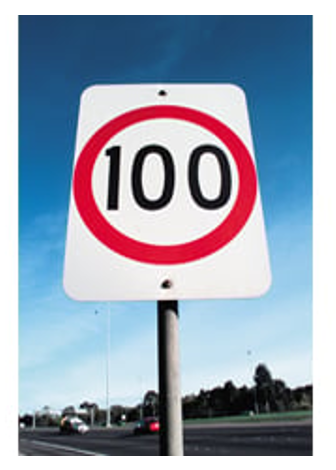
Minimum speed limit.
Maximum speed limit.
Recommended speed limit.
This is a regulatory sign that shows the maximum legal speed you are allowed to drive in good conditions. You must not exceed this limit.
When can you cross a solid white line on the road?
To enter or leave the road.
To overtake a slow vehicle.
When the road is clear.
A solid white line generally means "do not cross," but you are legally allowed to cross it to enter or leave the road, such as when turning into a driveway.
How long should a head check take?
No more than one second.
As long as necessary.
As quick as possible.
A head check must be quick to ensure your eyes don't leave the road for more than a second.
Is overtaking allowed in this situation?
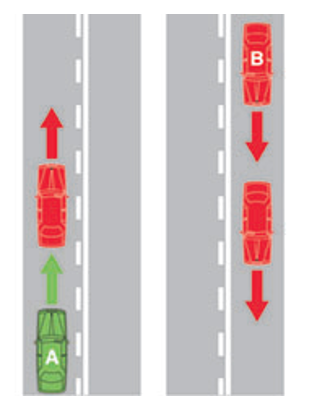
Only for vehicle B.
Only for vehicle A.
Not allowed for either vehicle.
Overtaking is allowed only where the line is broken, so vehicle A can overtake but vehicle B cannot.
What do zig-zag lines painted on the road mean?
Pedestrian crossing ahead.
The road is slippery.
No parking allowed.
These lines are a visual warning to drivers that they are approaching a pedestrian crossing and must be ready to slow down or stop.
What must you do at a 'Stop' sign?
Slow down and proceed.
Stop only if needed.
Stop completely and give way.
Even if the road is clear, a 'Stop' sign legally requires you to bring your vehicle to a complete halt before moving again safely.
What percentage of fatal crashes involve speed as a factor?
20% of crashes.
30% of crashes.
40% of crashes.
Excessive speed reduces a driver's reaction time and increases the impact force, contributing to one-fifth of all fatal road accidents.
What should you do first if your brakes fail while driving?
Switch off the engine.
Pull the handbrake hard.
Pump the brake pedal.
Pumping the brake pedal may build up enough hydraulic pressure to stop the vehicle safely.
What should you do before entering a tunnel?
Turn on your hazard lights.
Open all windows for airflow.
Use headlights and remove sunglasses.
Headlights help you see and be seen, while removing sunglasses allows your eyes to adjust quickly to the lower light levels inside the tunnel.
You are driving vehicle A. You must give way to:
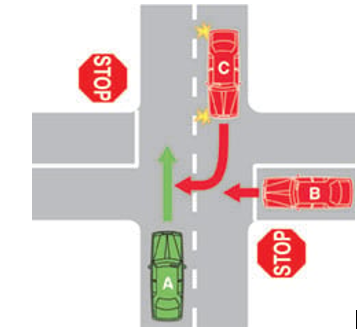
Vehicle B only.
Vehicle C only.
Neither vehicle B nor C.
Vehicles B and C face stop signs, so they must give way to vehicle A on the continuing road.
How does a BAC of 0.05 affect your driving risk?
Risk stays the same.
Risk is doubled.
Risk is quadrupled.
At a BAC of 0.05, your ability to judge distance and react to hazards is impaired, making you twice as likely to crash compared to a sober driver.
At this crossing, who must you give way to?
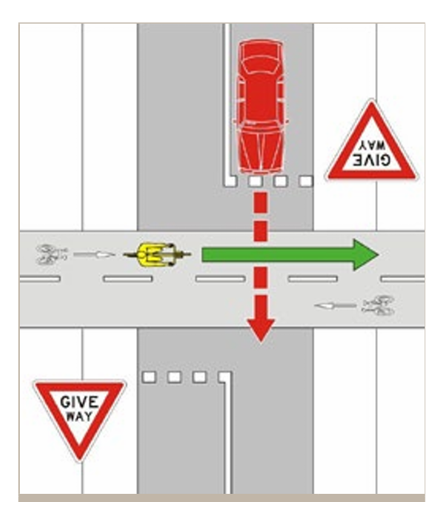
Only vehicles on the road.
Only pedestrians crossing.
Cyclists and pedestrians on the path.
Drivers facing a give way sign must give way to all users on the crossing path, including cyclists and pedestrians.
You are driving next to tram tracks with double continuous yellow lines. What must you do?
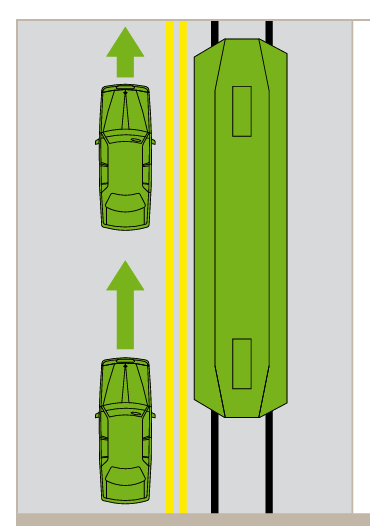
Cross the lines to overtake.
Stay outside the tram lane.
Drive on the tram tracks if clear.
Double continuous yellow lines mean you must not enter or drive in the tram lane.
When can you leave the left lane on a 100 km/h road?
When at speed limit.
When overtaking a vehicle.
When traffic is congested.
On roads with a speed limit over 80 km/h, you must stay in the left lane unless you are overtaking, turning right, or if the road is congested with traffic.
Where are a vehicle's blind spots generally located?
Directly in front of the car.
Behind the driver and to the sides.
In areas covered by mirrors.
Blind spots are areas around your vehicle that cannot be seen by using the mirrors alone.
How should a seatbelt be correctly worn?
Loose for comfort.
Under arm, over stomach.
Flat over shoulder, low on hips.
A seatbelt must be worn flat and untwisted across the strongest parts of the skeletal frame to safely distribute the force of an impact during a crash.
What does this sign indicate?
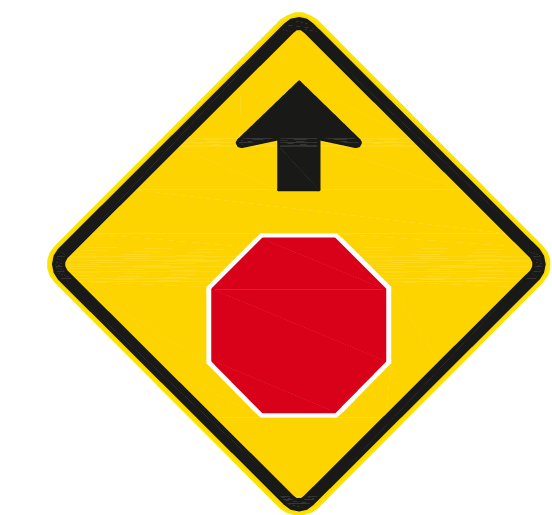
Stop sign ahead.
Yield sign ahead.
School zone ahead.
This warning sign alerts you that a 'Stop' sign is coming up, giving you plenty of time to slow down and prepare for a complete halt.
What is a common error new drivers make at intersections?
Using indicators too early.
Stopping with right of way.
Misjudging traffic gaps.
Inexperienced drivers often fail to accurately judge the speed and distance of oncoming vehicles, leading to dangerous turns or collisions at intersections.