Syllabus: Road to Solo Driving (2026)
Victoria Learner Permit: Practice Test B
Comprehensive knowledge check covering Victoria’s high-traffic road rules and signs.
32 Questions
Updated 2026 question bank
Pass Mark: 78%
Aim for 25/32 correct
Safety First
Pedestrian & Tram proximity
🚀 Challenge Mode: Practice Test B focuses on the more challenging sections of the VicRoads curriculum, including highway merges and complex Melbourne city driving scenarios.
Start Practice Test B
Click to begin your 2026 simulation
What should you do when an emergency vehicle approaches?
Speed up to stay ahead.
Move left and give way.
Stop where you are.
You must move as far to the left as safely possible to clear a path, rather than stopping abruptly and blocking the road.
What must you do when you see this sign?
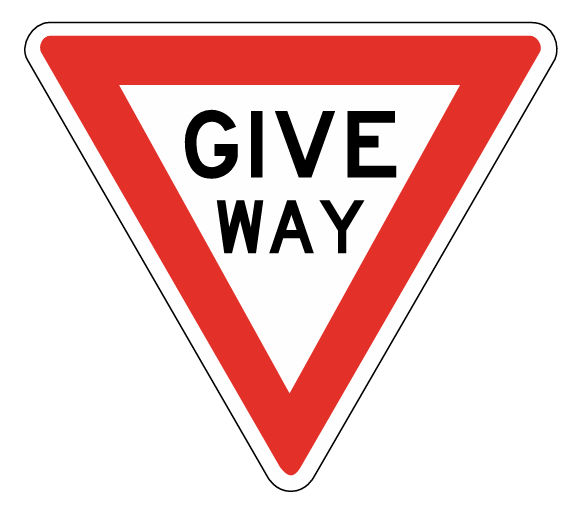
Stop completely and proceed only when safe.
Continue without slowing if no traffic is seen.
Slow down and be ready to stop if needed.
This sign requires you to reduce speed and be prepared to stop to avoid conflict with other road users.
What is the maximum speed in a 'Shared Zone'?
5 km/h.
10 km/h.
20 km/h.
In Shared Zones, the speed limit is strictly 10 km/h and drivers must always give way to pedestrians.
What does this sign indicate?
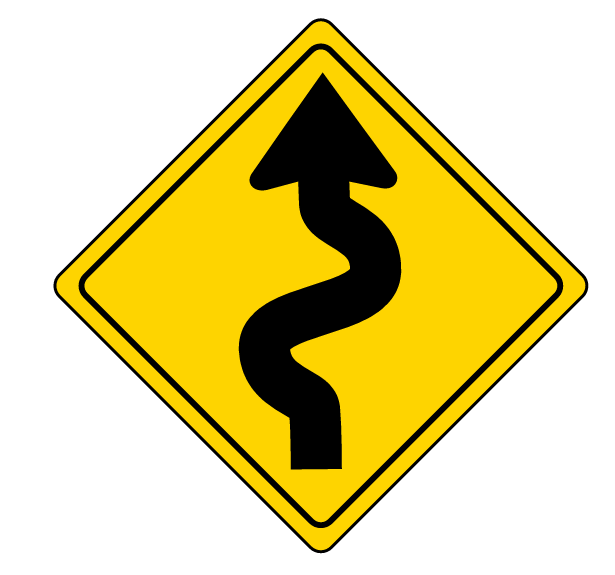
Winding road ahead.
Sharp turn right then left.
Sharp turn left then right.
This sign indicates a winding road ahead with multiple curves; you must slow down and prepare to adjust your steering continuously.
What should you learn in Stage 1 of the Learner Kit?
Basic control in quiet areas.
Driving in heavy traffic.
Learning to overtake others.
Stage 1 is all about the basics. You need to master steering, braking, and starting the car in a quiet environment before moving on to busier roads.
what does this sign indicate?
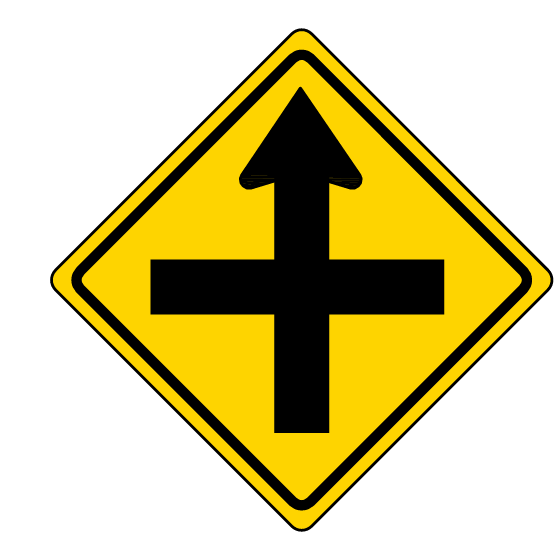
A crossroad ahead.
A Double T-intersection ahead.
A side road on the left.
This sign warns that a four-way intersection is ahead, so you must be alert for traffic from all directions and be prepared to give way if required.
How does speeding affect your 'margin for error'?
It increases it.
It reduces it.
It has no effect.
Higher speeds give you much less time to react to hazards or correct mistakes, significantly shrinking your safety margin.
Who must wear a seatbelt in the car?
Only the driver.
Front passengers only.
Everyone in vehicle.
It is a legal requirement for every person in the vehicle to wear a seatbelt, regardless of where they are sitting.
What must you expect when you see this sign?
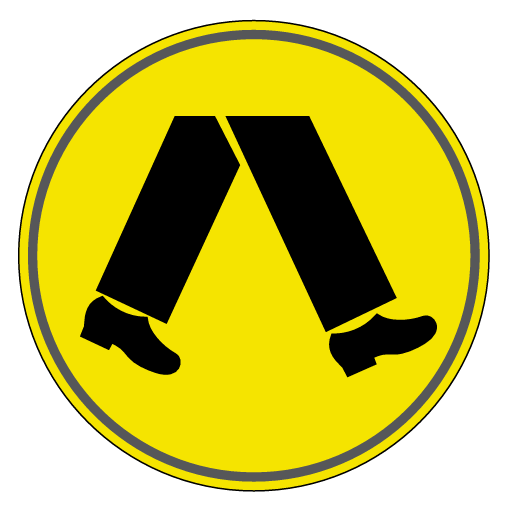
Pedestrian crossing ahead.
Shared path ahead.
School zone ahead.
This sign warns you that there is a pedestrian crossing ahead; you must be prepared to stop and give way to people crossing.
Why is driving over a hill a hazard?
Judging traffic speed harder.
Sudden speed changes occur.
Cannot see other side.
You cannot see oncoming traffic or potential obstacles on the other side of the hill until you reach the top.
what does this sign signify?
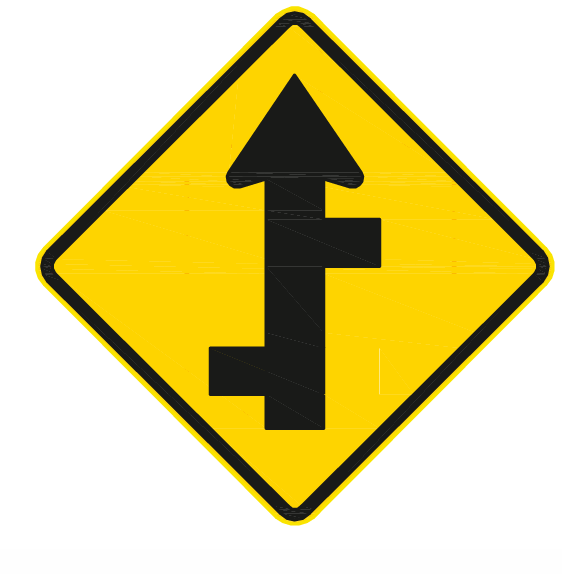
Staggered side road junction.
Double T-junction ahead.
Railway crossing ahead.
This sign warns that side roads join from left and right at different points, so you must watch for traffic entering the road in stages.
Which vehicle must give way in this situation?
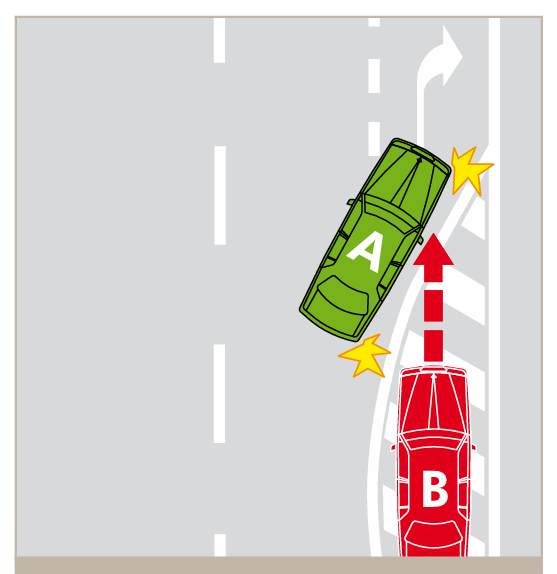
Vehicle A.
Vehicle B.
Both vehicles.
Vehicle B must give way because it is in the lane ending and must merge safely behind Vehicle A.
What is the minimum safe following distance in good conditions?
A one-second gap.
A two-second gap.
Exactly ten metres.
A two-second gap is the minimum recommended following distance in good conditions; this should increase in poor weather or at night.
How can you remove alcohol from your body?
Eat large meal.
Take cold shower.
Give it time.
Only time allows your body to process and eliminate alcohol; eating food or taking showers will not lower your blood alcohol concentration.
Where do new drivers most often lose control?
Sharp curves.
Straight roads.
School zones.
It sounds surprising, but new drivers often lose focus or speed too much on straight roads, leading to more control-related crashes than on difficult curves.
When you see this signal, what must you do?
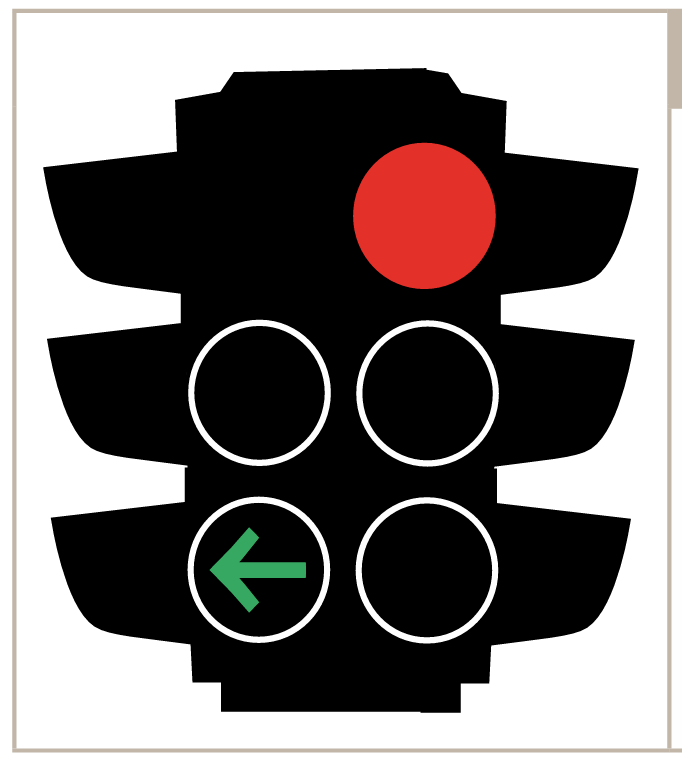
Turn left when it is safe.
Wait for the green signal.
Stop and remain behind the line.
This signal allows a left turn when safe, even if the main light is red, provided you give way to other road users.
If you miss your exit on a freeway, you should:
Reverse back safely.
Continue to next exit.
Stop on shoulder.
Never reverse or stop on a freeway as it is extremely dangerous. If you miss your exit, you must stay calm and drive until you reach the next available exit.
If traffic lights are not working, what should you do?
Assume right of way.
Wait for police to arrive.
Treat as a give way situation.
If traffic lights fail, you must treat the intersection as an uncontrolled one, following the 'Give Way' or 'Right-Hand' rule.
How should mirrors be adjusted for the best view?
Pointed at road surface.
No overlap between mirrors.
Slight overlap between mirrors.
Proper adjustment requires a slight overlap between your inside and outside mirrors. This minimizes blind spots and helps you track vehicles clearly as they pass from one mirror to another.
What is the primary purpose of a head check?
Check rear traffic.
Check traffic beside.
Check blind spots.
A 'head check' means looking over your shoulder to see vehicles that are not visible in your mirrors. This is essential before changing lanes.
What is the effect of 'fatigue' on a driver?
Faster reactions to road hazards.
No effect on experienced drivers.
Slower reactions and poor focus.
Fatigue impairs your brain's ability to process information, leading to slower reactions and a lack of concentration.
What is the default speed limit outside built-up areas?
80 km/h.
100 km/h.
110 km/h.
The default speed limit outside built-up areas is 100 km/h unless a road sign indicates a different limit.
Where should you position to turn right on an unmarked road?
Close to the left curb.
Just left of the centre.
Far right side of road.
On roads without lane markings, you must stay as close as possible to the centre line (but to the left of it) to turn right safely.
What does a red traffic arrow mean?
Turn only if road is clear.
Proceed through with caution.
Do not turn in that direction.
A red arrow means you must stop and not proceed in that direction until the light turns green or disappears.
What is hazard perception?
Knowing road signs.
Fast braking ability.
Identifying and responding to risks.
Hazard perception is not just about rules or fast reflexes; it is the skill of spotting potential dangers early enough to take action and avoid a crash.
What does a yellow box at a railway crossing mean?
Keep clear and do not stop.
Maintenance vehicle parking.
Speed up to clear tracks.
You must not enter the yellow box unless there is enough space on the other side to clear the tracks completely without stopping.
what does this sign mean?
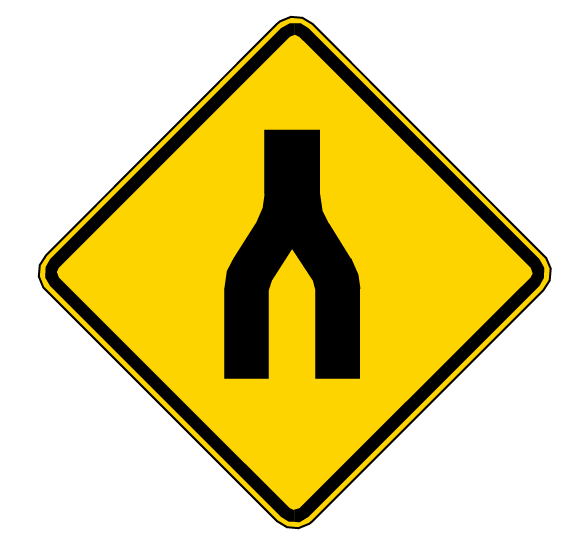
End of divided road.
Divided road begins.
Y-intersection ahead.
This sign warns that the median or separation between directions is ending, so you must be prepared for opposing traffic to merge closer.
You are driving Vehicle B. If you take the right of way, what would happen?
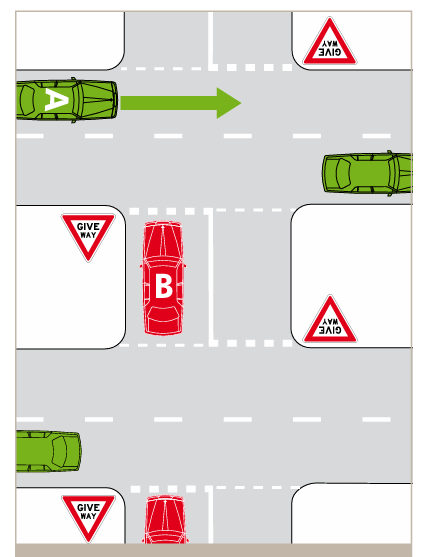
You would go against the give way rule.
You would proceed correctly through the intersection.
You would move only if other vehicles slow down.
Vehicle B is facing a give way sign, so taking priority would violate the rule and create a potential conflict.
When is it legal to drive in the emergency lane on a freeway?
If you are in a hurry.
If your vehicle breaks down.
To overtake slow trucks.
Emergency lanes are strictly for emergency vehicles or when your own vehicle has a mechanical breakdown.
You are driving Vehicle A. If you give way to Vehicle B, what would happen?
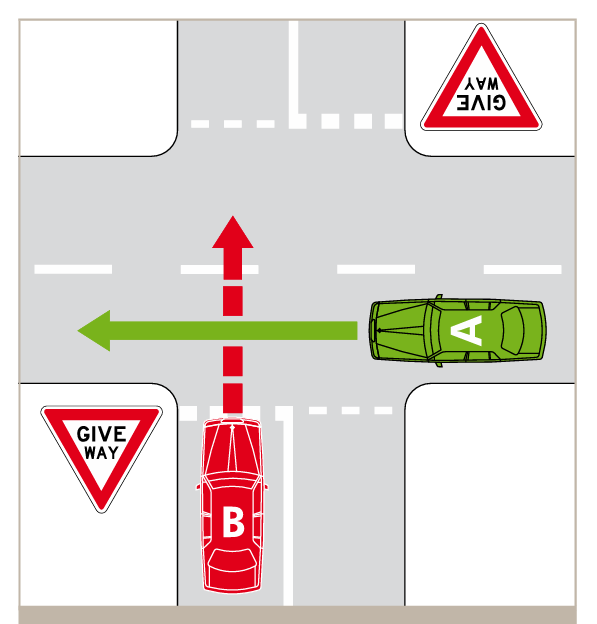
You would disrupt the right-of-way.
You would follow correct road rules.
You would act more cautiously.
Vehicle B must give way in this situation, so yielding unnecessarily would go against the correct right-of-way and disrupt normal traffic flow.
What does this sign indicate?
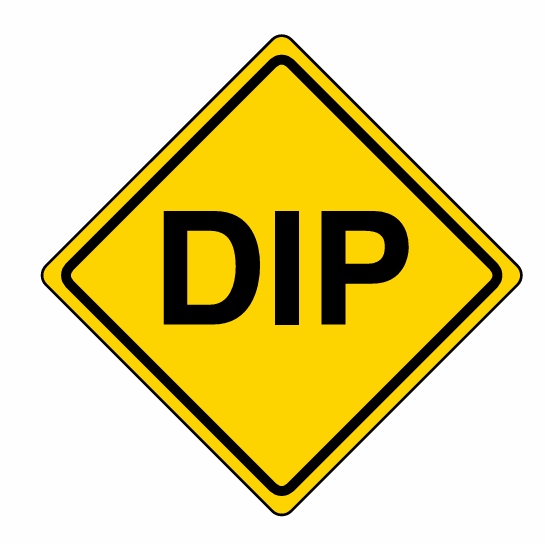
A raised hump ahead.
A narrow bridge ahead.
A low section in the road ahead.
This sign warns that the road dips suddenly, so you must reduce speed to maintain control and avoid damage.
When approaching this sign, how should you drive?
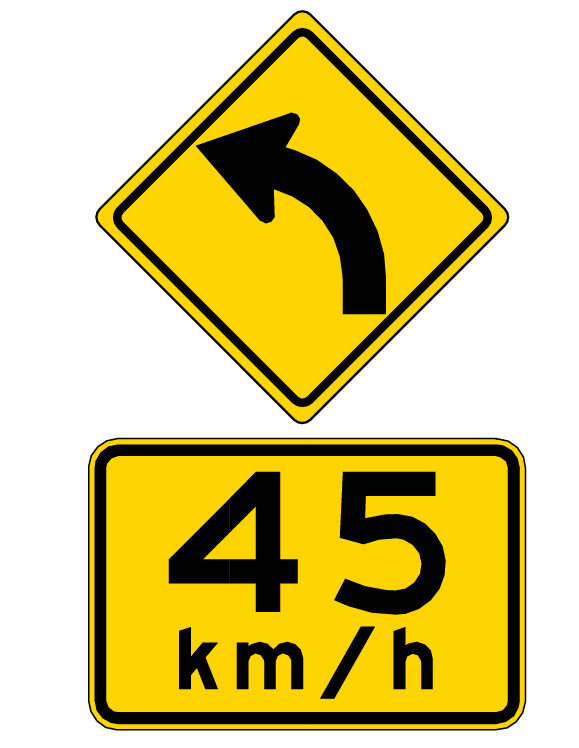
Safe maximum speed in good conditions.
Minimum speed to maintain flow.
Suggested speed for all conditions.
This sign indicates the highest safe speed under good conditions, so you should not exceed it while negotiating the curve.