Syllabus: Your Keys to Driving in QLD (2026)
QLD Road Rules: Full Practice Test C
The Ultimate Challenge. Includes the most difficult Give Way and Hazard scenarios.
Part 1: Give Way
10 High-Difficulty Items
Part 2: Road Rules
20 Niche Regulation Questions
Mastery Set
Covers 100% of Syllabus
⚠️ Mock Exam: Test C mimics the strict pressure of the MVR or PrepL final assessment. We recommend scoring 100% here before sitting the real test.
Start QLD Test C
The final step to your L-Plates
How far apart can two motorcyclists ride side-by-side?
No more than 1.0 metre.
No more than 1.5 metres.
No more than 2.0 metres.
Two motorcyclists can ride side-by-side in a single lane as long as they are no more than 1.5 metres apart.
Where are the main blind spots for a heavy vehicle?
Alongside, front, and behind.
Only directly behind it.
Only on the passenger side.
Heavy vehicles have large blind spots alongside, directly in front, and behind where the driver cannot see.
When you see this sign in a built-up area, it indicates:
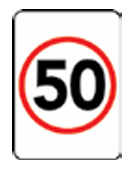
Recommended speed is 50 km/h.
Maximum speed is 50 km/h.
Minimum speed is 50 km/h.
In a built-up area, the default speed limit is 50 km/h. This sign confirms that you must not exceed this maximum speed unless another sign shows a different limit.
Safe following distance for a heavy vehicle is:
At least 2 seconds.
At least 3 seconds.
At least 4 seconds.
Heavy vehicles need more stopping distance, so maintaining at least a 4-second gap helps ensure safe braking and control.
When is it legal to overtake a vehicle on its left?
If the vehicle is driving too slowly.
Overtaking on the left is never legal.
If the vehicle turns right and it's safe.
You may overtake on the left only if the vehicle ahead is turning right or making a u-turn and it is safe to do so.
When you see these hazard markings, you should drive to:

The left of the hazard.
The right of the hazard.
Either side of the hazard.
These chevron hazard markings guide drivers to pass on the right side of the obstruction for safe movement.
In what order should the vehicles go through the intersection?
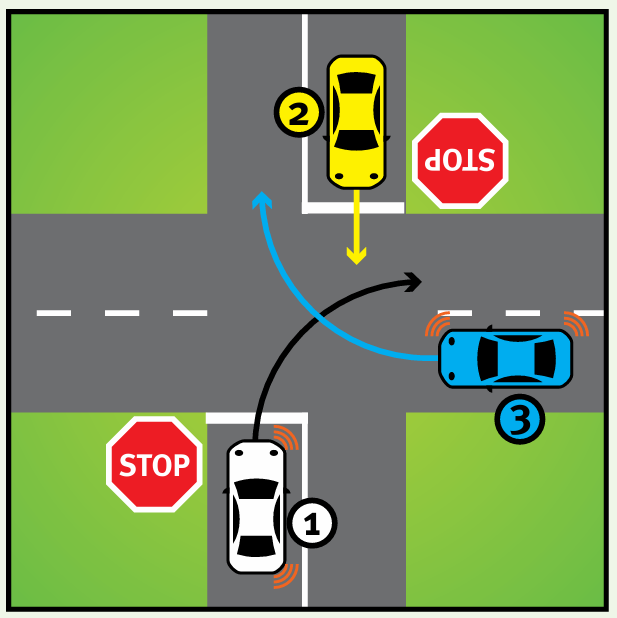
Vehicle 1, then vehicle 2, then vehicle 3.
Vehicle 3, then vehicle 2, then vehicle 1.
Vehicle 3, then vehicle 1, then vehicle 2.
Vehicle 3 proceeds first, then vehicle 2 goes straight, and vehicle 1 turns right after giving way.
What is the rule for reversing your vehicle?
Reversing is only allowed in driveways.
Reverse only when safe and reasonable.
You must use hazard lights when reversing.
You may reverse only when it is safe to do so and only for a distance that is reasonable under the circumstances.
What is required to drive in a Transit Lane T2?
At least two people in the vehicle.
At least three people in the vehicle.
Only heavy vehicles are allowed.
A T2 transit lane requires the vehicle to have at least two people (the driver and at least one passenger) to use it.
Your lane ends and you must cross a dashed line to merge, who gives way?
The vehicle in the continuing lane.
The vehicle in the ending lane.
The vehicle on the right.
If your lane ends and you must cross a dashed line to merge, you must give way to all traffic in the lane you are entering.
What should you do if your vehicle aquaplanes?
Ease off the accelerator.
Brake hard and steer.
Speed up to gain grip.
Gradually reduce speed by releasing the accelerator to allow the tires to regain contact with the road surface.
Vehicle B is entering from a driveway, who must it give way to?
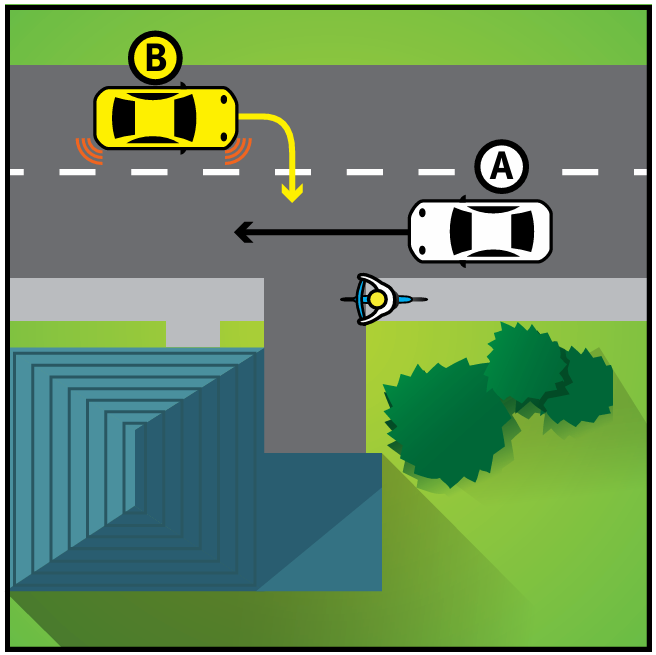
Only Vehicle A.
Only the bicyclist.
Vehicle A and the bicyclist.
When entering a road from a driveway, you must give way to all vehicles, pedestrians, and bicyclists already on the road.
On long trips, recommended breaks are:
1 hour every 10 hours.
20 minutes every 5 hours.
15 minutes every 2 hours.
To prevent fatigue and stay alert, you should take at least a 15-minute break for every two hours of driving.
If this variable speed limit sign is blank, what should you do?
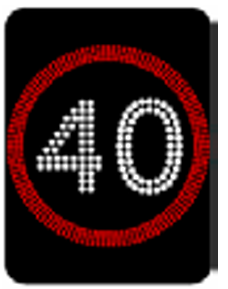
Follow the static speed limit signs.
Follow the last displayed speed.
Drive at any safe speed only.
When an electronic variable speed limit sign is blank, you must follow the speed limit shown on the permanent static signs in that zone.
Before moving off from a parked position, you must signal for:
At least 5 seconds.
At least 2 seconds.
At least 10 seconds.
You must signal for at least five seconds to give other road users enough time to see your intention before you pull out.
When you see this yellow traffic light, you should:
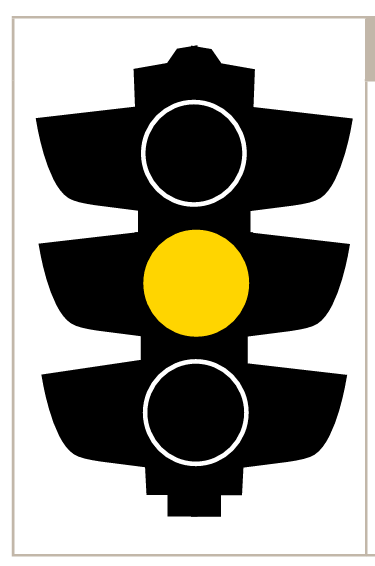
Stop if it is safe to do so.
Speed up to clear the light.
Always stop even if unsafe.
You must stop at a yellow light unless you are too close to the intersection to stop safely without causing a collision.
You are stopped at a children’s crossing with orange flags. When can you drive on?
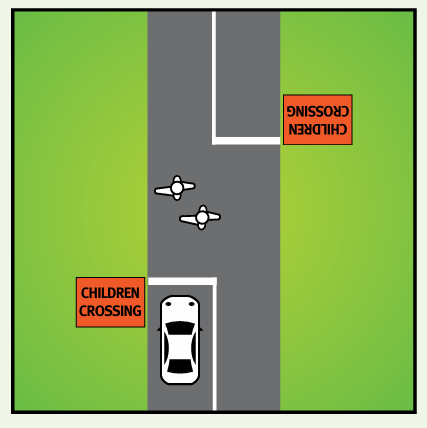
When pedestrians are not in your path.
When crossing is clear and no one is entering.
When pedestrians are about to enter.
You must not move until the crossing is fully clear and no one is about to step onto it.
When a vehicle ahead is slow on a multi-lane road, you should:
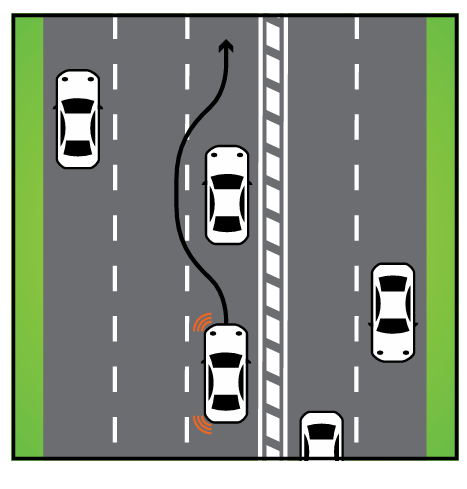
Overtake on the left if safe.
Overtake on the right only.
Stay behind the vehicle only.
On a multi-lane road, you are permitted to overtake a slower vehicle on the left, provided it is safe to do so.
What does this sign represent?
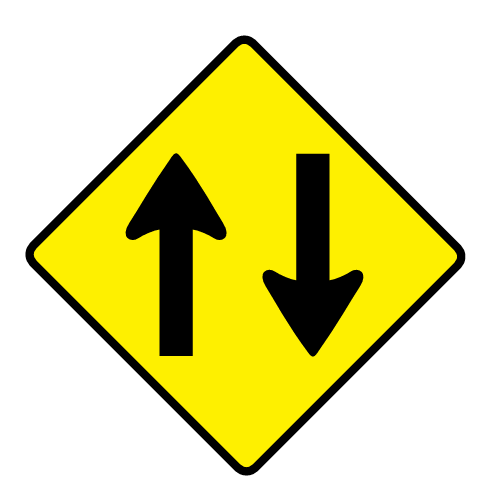
End of two-way traffic.
Traffic merges ahead.
Two-way traffic ahead.
This sign warns you that you are approaching a road where traffic flows in both directions. You must stay to the left and watch for oncoming vehicles.
Both drivers face Stop signs at an intersection. Who goes first?
The driver going straight.
The driver turning right.
Whoever arrived first.
At Stop signs, a vehicle turning right must give way to an oncoming vehicle going straight.
What does this traffic sign mean?
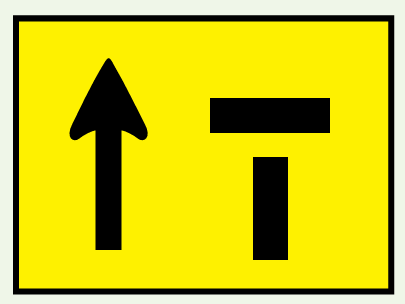
Left lane open, right lane closed.
Left lane closed, right lane open.
T-intersection is directly ahead.
The arrow shows the left lane is open, while the symbol on the right indicates that the lane is closed.
When facing this Stop sign, you must:
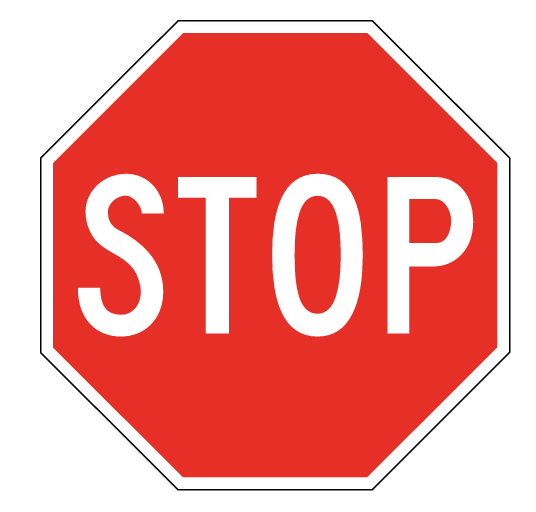
Slow to 5 km/h and then proceed.
Stop only if other traffic is present.
Come to a complete stop and give way.
You must bring your vehicle to a full stop at the stop line and yield to all traffic before moving again.
When being overtaken, you should:
Do not speed up.
Speed up slightly.
Move to the right.
When another vehicle is overtaking you, you must maintain a steady speed and must not speed up until they have completely passed.
At this intersection, which vehicle must give way?
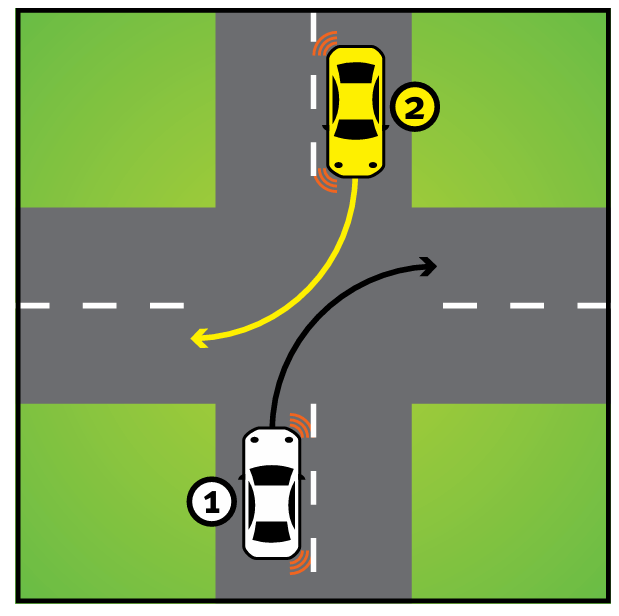
Vehicle 1.
Vehicle 2.
Neither vehicle.
When oncoming vehicles are both turning right, they can pass without giving way as their paths do not conflict.
When can you cross a single continuous dividing line?
To overtake a slow vehicle.
To enter or leave a road.
To make a U-turn.
You may cross a single continuous line to enter or leave a road (like a driveway), but you cannot cross it to overtake or make a U-turn.
If roads are flooded, you should:
Drive slowly through.
Avoid driving on them.
Follow another vehicle.
Flooded roads can hide hazards or wash your vehicle away, so you should avoid driving through them whenever possible.
You see a long truck using two lanes to turn left. What should you do?
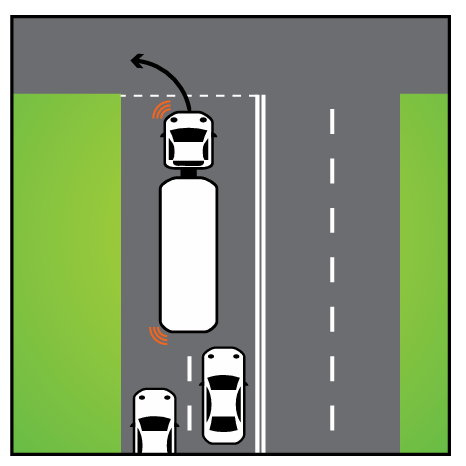
Overtake on the left.
Stay back and let it turn.
Move into the gap beside it.
Long vehicles may need to use more than one lane to turn. You must stay back and give them enough space to complete the turn safely.
What does this sign indicate?
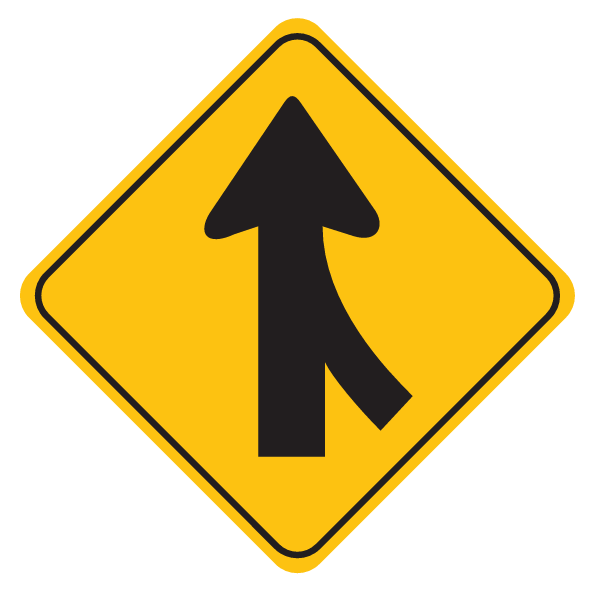
Left lane ends ahead.
Traffic merges from the left.
Traffic merges from the right.
This sign warns that vehicles will merge into your lane from the right side ahead. You should be prepared to adjust your speed.
At this uncontrolled intersection, who must give way to Vehicle 2?
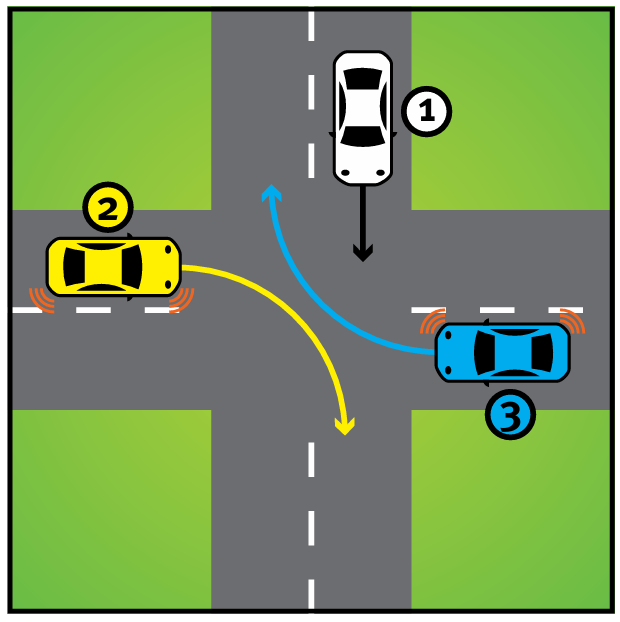
Only Vehicle 3.
Only Vehicle 1.
Both Vehicle 1 and 3.
At an uncontrolled intersection, you must give way to the right. Therefore, Vehicle 1 must give way to Vehicle 2, while Vehicle 3's path does not conflict.
When passing a school bus with flashing lights, you should:
Stop and wait until it moves.
Slow down and pass with care.
Pass at the normal speed limit.
You must reduce your speed and proceed with extra caution because children may be crossing the road near the bus.