Syllabus: WA Drive Safe Handbook (2026)
WA Theory Test: Practice Test A
A full 30-question module covering all essential Western Australian road rules.
General Knowledge
20 Scenarios
Road Rules (Priority)
10 Scenarios
Required Pass
24/30 (80%) Correct
⚠️ Practice Mode: This test is designed for comprehensive learning. It covers the full spectrum of WA driving laws to ensure you are ready for the Department of Transport assessment.
Start WA Practice A
Begin your study session
On a road without marked lanes, you should drive:
As near left as practical.
In the middle of the road.
As far right as possible.
On any road without marked lanes, you must stay as close to the left side as safely possible to allow oncoming traffic to pass.
What does this sign signify?
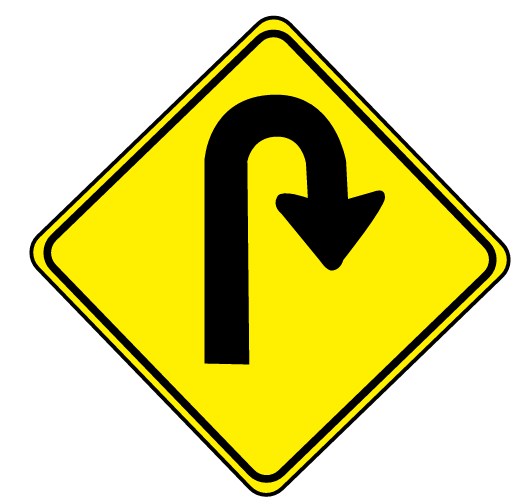
Sharp right turn.
Hairpin bend right.
Winding road right.
This sign warns of a hairpin bend to the right, which is an extremely sharp curve that almost turns back on itself.
At this three-way intersection, who must give way?
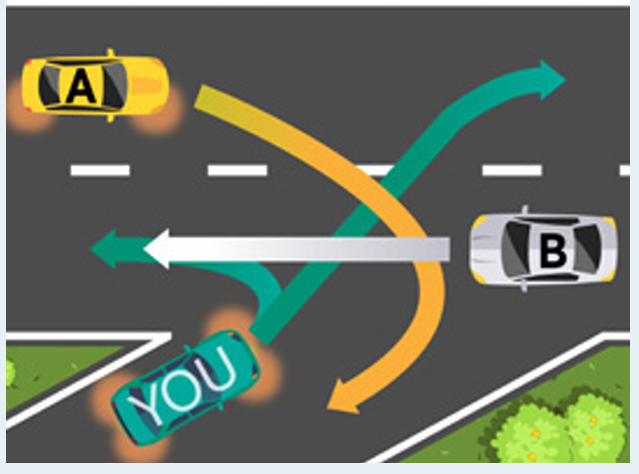
You.
Car A.
Car B.
You must give way to both Car A and Car B because you are on a terminating road, while they are travelling on the continuing road.
At this intersection, who must give way?
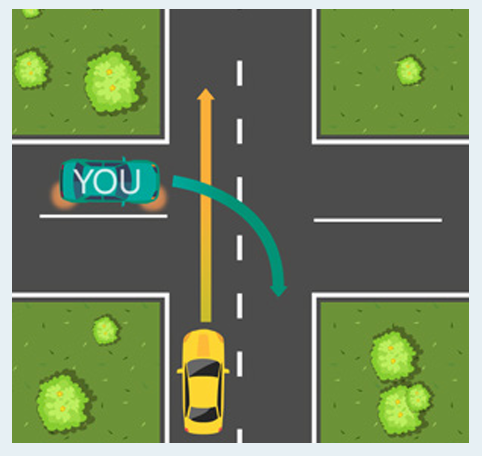
You.
Yellow car.
Both vehicles.
You must give way to the yellow car because it is travelling straight, while you are turning right across its path.
Is it an offence to refuse a random breath test?
Only if you have been drinking.
Yes, it is a serious offence.
Only if you are a novice driver.
Refusing a breath or saliva test is a major legal violation and carries heavy penalties similar to drink driving.
What does this sign represent?
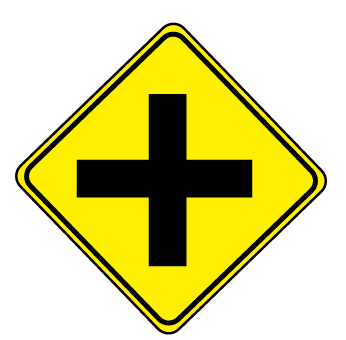
Hospital ahead.
Double T-junction.
Cross roads ahead.
This sign warns you that there is an intersection where two roads cross each other ahead. You should be prepared to give way or stop if necessary.
You must give way to a bus in a built-up area if:
It is moving faster.
It is already in traffic.
It is signaling to pull out.
In built-up areas (70 km/h or less), you must give way to a bus signaling to pull out from a curb or bus stop.
When should you slow down even if the speed limit is higher?
On a straight freeway.
When traffic is light.
When the road is busy.
You must reduce your speed to maintain safety whenever traffic density increases, regardless of the posted speed limit.
Maximum speed for a learner driver in WA?
90 km/h.
100 km/h.
110 km/h.
In Western Australia, learner drivers must not exceed 100 km/h, even where the posted limit is higher.
What does this sign mean?
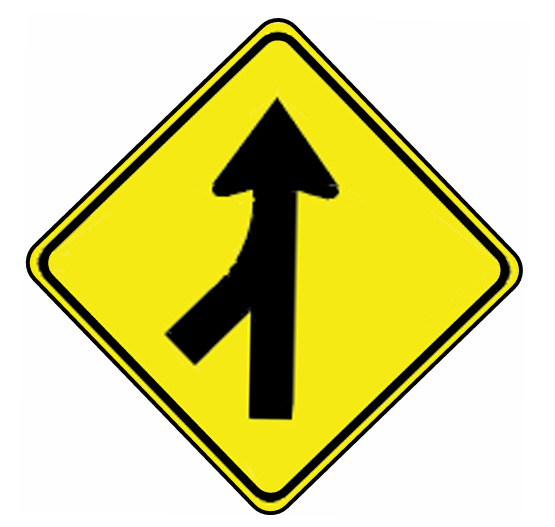
Road narrows ahead.
Traffic merges from right.
Traffic merges from left.
This sign warns that traffic is merging from the left side. You should be prepared to adjust your speed or change lanes to allow vehicles to join the traffic flow safely.
A single continuous white center line means:
Do not cross to overtake.
Overtaking is allowed.
Parking is allowed.
A continuous (solid) line means you must stay to the left and not cross it to overtake or make a U-turn.
What is meant by a speed limit?
Maximum legal speed.
Recommended speed.
Minimum speed.
A speed limit is the absolute legal maximum you can drive when road and weather conditions are perfect.
What does this sign indicate?
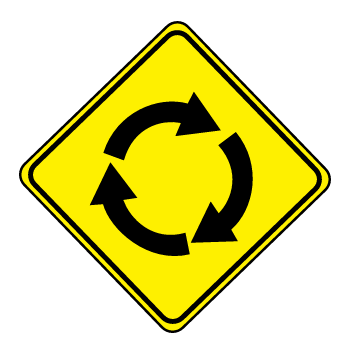
Mini roundabout ahead.
Roundabout ahead.
No through road.
This sign warns of an upcoming roundabout where you must give way to traffic on your right.
On a road with broken white lines, you should:
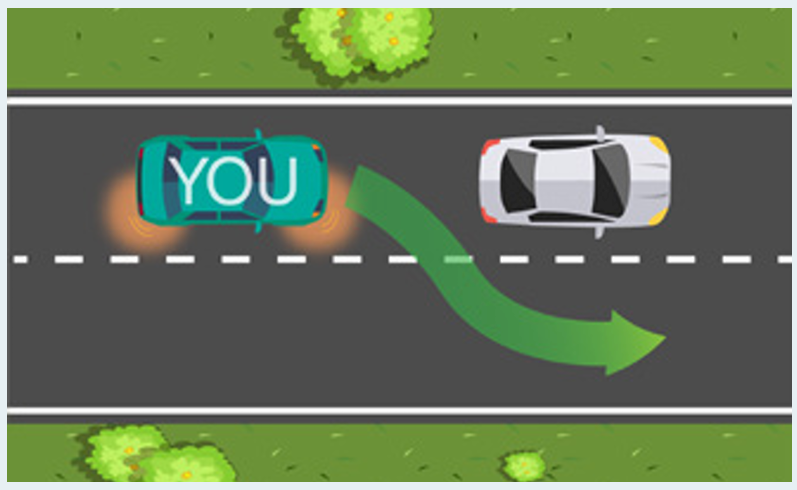
Overtake if safe.
Avoid overtaking.
Stay in your lane.
Broken white lines indicate that you are permitted to cross the line to overtake or change lanes, provided the road ahead is clear and it is safe to do so.
Speeding is reckless under Anti-Hoon laws if you go:
25 km/h over.
45 km/h over.
60 km/h over.
Driving 45 km/h or more above the limit is legally reckless and triggers Anti-Hoon penalties.
If you see this hand signal, the driver intends to:
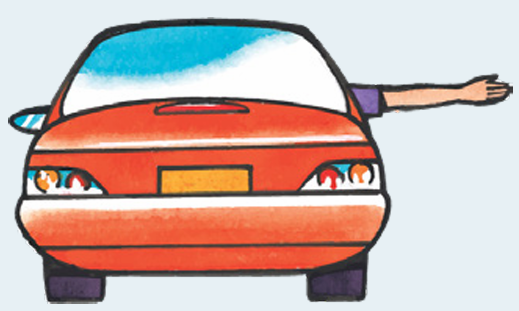
Slow down or stop.
Turn to the left.
Turn right or overtake.
When a driver extends their right arm straight out, it signifies their intention to turn right or move out to overtake.
If a head-on collision is likely, you should steer:
Towards the road center.
To the left, off the road.
To the right into traffic.
Steering to the left is the safest way to avoid a direct impact and prevents you from moving into the path of other oncoming vehicles.
What does this sign represent?
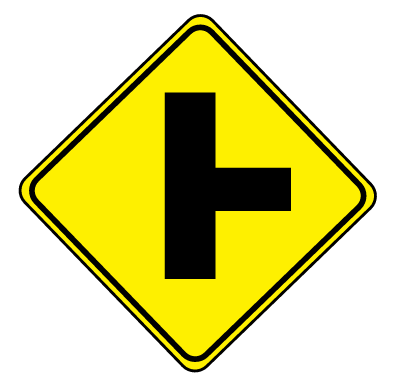
T-Junction.
Side road junction.
Staggered Junction.
This sign warns of a side road joining the main road from the right. You should be alert for vehicles entering or leaving the main road.
Which restraint is required for children under 6 months?
Booster restraint.
Forward-facing restraint.
Rearward-facing restraint.
Infants under 6 months must be secured in a rearward-facing child restraint for safety.
When you see this red light with a green left arrow, you should:
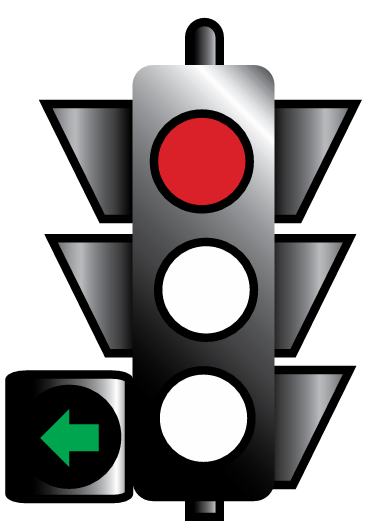
Go straight ahead.
Turn left if safe.
Stop and wait.
A green arrow means you can turn in that direction even if the main light is red, but you must first ensure it is safe and give way to pedestrians.
Which lights should you use when driving in fog?
High beam headlights.
Hazard lights only.
Low beam or fog lights.
Low beams or fog lights are more effective in fog; high beams reflect off the water droplets and reduce your visibility even further.
If your car tyre blows out, you should:
Grip wheel and keep straight.
Brake as hard as possible.
Turn the wheel sharply.
You must hold the steering wheel firmly and keep the vehicle straight to maintain control and avoid skidding during a blowout.
What is a major risk when driving on country roads?
Animals crossing road.
Lack of traffic lights.
Poor road lighting.
Wandering animals are a major hazard on rural roads, especially at dawn and dusk when they are most active.
When must you dip your high beam headlights?
Within 100m of an oncoming vehicle.
Within 300m of an oncoming vehicle.
Within 200m of an oncoming vehicle.
You must switch to low beam when an oncoming vehicle is within 200 metres to avoid blinding the other driver.
When should tyre pressure be checked?
When tyres are cold.
When tyres are hot.
When they look flat.
Checking pressure when tyres are cold provides the most accurate reading as heat from driving increases air pressure.
If you miss your exit on a freeway, you should:
Reverse back to it.
Continue to the next exit.
Stop and wait for a gap.
Never reverse, stop, or attempt a U-turn on a freeway. You must proceed to the next available exit safely.
What is a Pelican signal designed for?
Pedestrian-activated crossing.
Heavy vehicle priority.
Speed enforcement area.
A Pelican signal is a special pedestrian crossing where a flashing yellow light follows the red light, allowing drivers to proceed if pedestrians have finished crossing.
What does this sign mean?
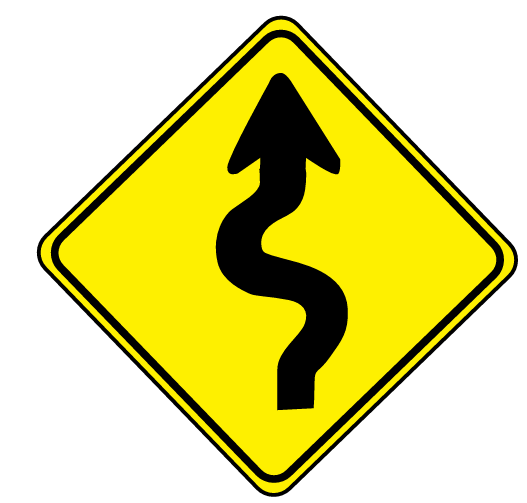
Sharp turns ahead.
Slippery road ahead.
Winding road ahead.
This sign warns of a winding road ahead (a series of bends), requiring you to slow down and drive carefully.
In wet weather, you should keep a following distance of:
At least two seconds.
At least three seconds.
At least four seconds.
In wet weather, you should double the standard two-second gap to at least four seconds to ensure safe braking.
At this intersection, who must give way to you?
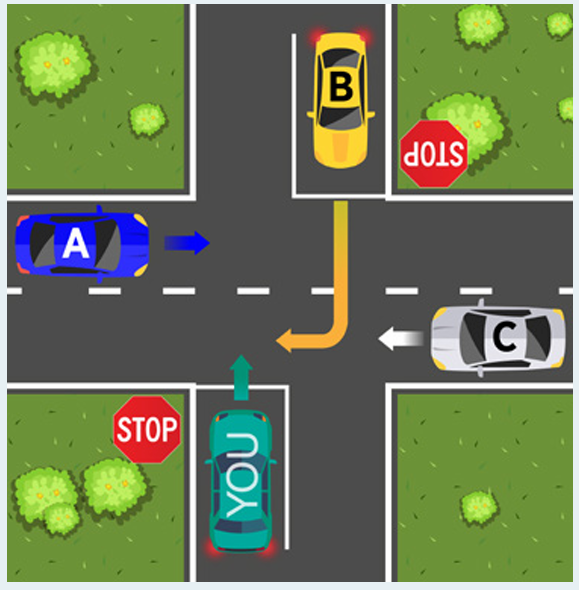
Car A only.
Car B only.
Cars A and C.
Car B must give way because it is at a STOP sign, which requires stopping and giving way to all traffic, including you, while you must give way to Cars A and C.