Syllabus: WA Drive Safe Handbook (2026)
WA Theory: Full Practice Test C
Complete practice set for the Western Australia Learner’s Permit.
Part 1: General Knowledge
20 Practice Questions
Part 2: Road Rules
10 Practice Questions
Question Format
Multiple Choice (3 Options)
⚠️ Practice Mode: This is a relaxed study session. You can complete all 30 questions to review the correct answers, even if you make a mistake.
Start Practice Test C
Ready to master the questions?
What does this sign mean?
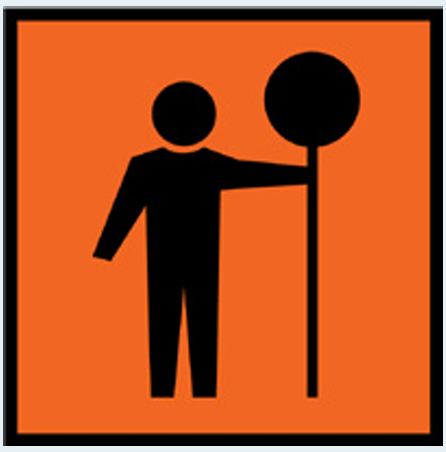
Road workers.
Traffic controller.
Pedestrians.
This sign warns that a traffic controller is directing traffic ahead, so you must be prepared to stop or slow down as instructed.
What does this sign signify?
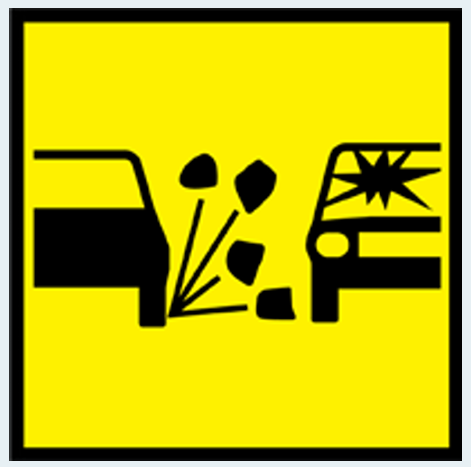
Loose stones ahead.
Falling rocks ahead.
Road works ahead.
This sign warns that loose gravel or stones may be on the road surface, which can reduce grip and be thrown up by vehicles.
A broken white line in the center of the road means:
Do not cross the line.
Overtaking is permitted if safe.
No overtaking is permitted.
A broken white line indicates that you may cross it to overtake or change lanes, provided it is safe and the road ahead is clear.
What does this sign indicate?
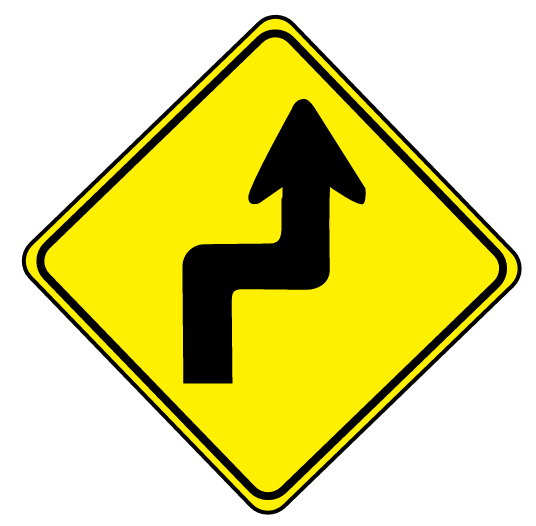
Reverse turn to the right.
Sharp turn to the right.
Winding road ahead.
This sign indicates a double curve (reverse turn) where the road curves first to the right and then to the left.
Temporary speed limits at roadworks apply:
At all times until signs are removed.
Only during work hours.
Only if workers are present.
Temporary speed limits are legal requirements and must be followed at all times, even if no workers are present, to ensure safety on altered road surfaces.
In a 'slip lane', a driver must give way to:
Vehicles from the right only.
Buses and heavy vehicles.
Pedestrians crossing the lane.
A driver using a slip lane must give way to any pedestrian crossing the slip lane.
From the following situation, which one must give way?
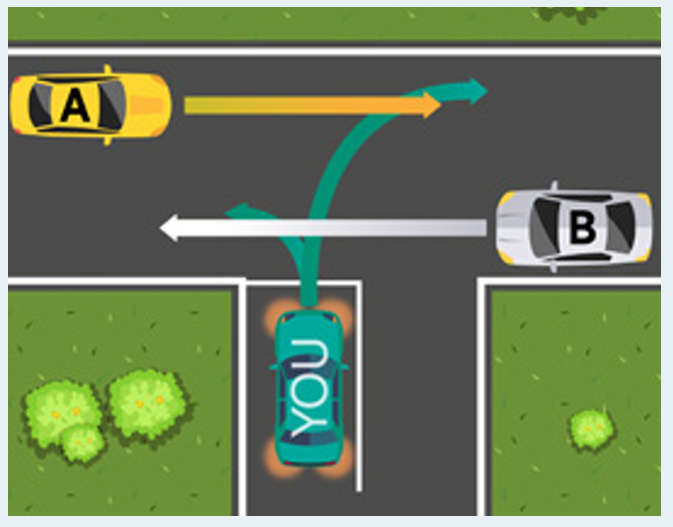
Your car.
Car A.
Car B.
Your car is entering the main road and must give way to vehicles already on the road, including Car A and Car B.
Based on this situation, which vehicle must give way?
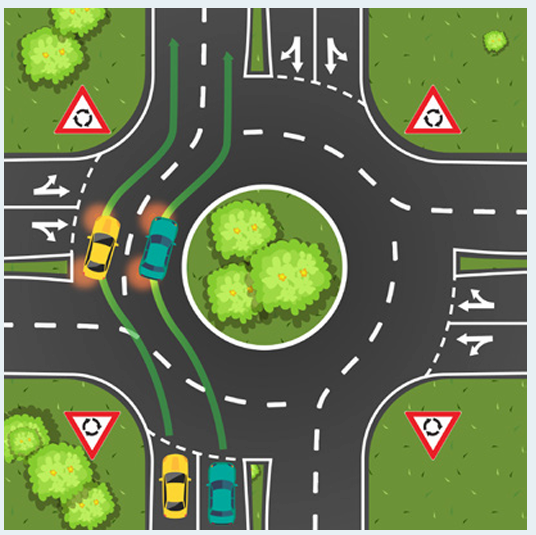
Yellow car.
Blue car.
Neither car.
Both vehicles are travelling in the same lane and their paths do not conflict, so neither needs to give way.
In situations A and B, which shows the correct way for you to exit a freeway?
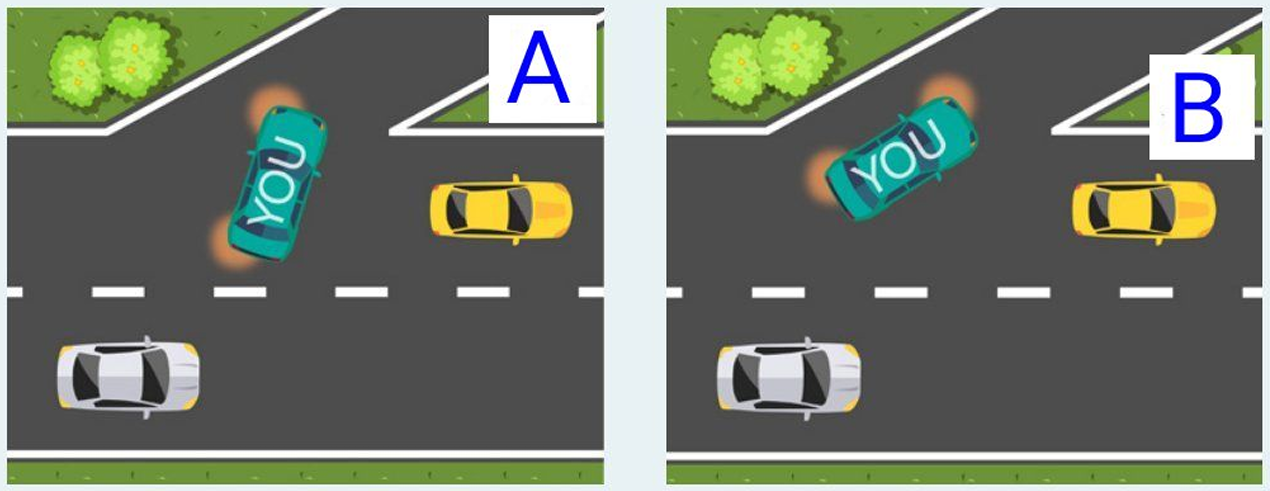
Situation A.
Situation B.
Both A and B.
You should move into the exit lane early and leave the freeway smoothly, as shown in situation B.
The purpose of the 'Two-Second' rule is to:
Reduce braking effort.
Keep a constant speed.
Maintain a safe following distance.
The two-second rule ensures you have enough space to stop safely if the vehicle ahead brakes suddenly.
The only thing that can sober you up after drinking alcohol is:
A cold shower.
Strong coffee.
Time.
No amount of coffee, cold showers, or food will sober you up; only time allows the liver to break down the alcohol in your system.
From the below situation, which car must give way?
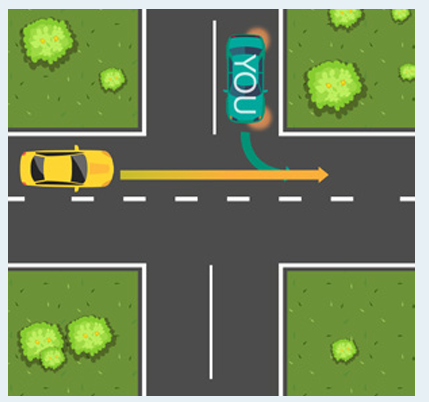
Your car.
Yellow car.
Both cars.
Your car is turning left into the road and must give way to the yellow car already travelling on the main road.
When you see this sign, you should:
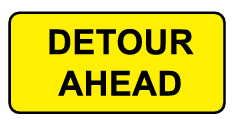
Drive slowly and proceed.
Use the temporary route.
Stop and turn around.
This sign indicates that traffic is diverted ahead, so you cannot continue on the usual road and must follow the temporary route.
Where must 'L' plates be displayed?
Front only.
Rear only.
Front and rear.
When a learner is driving, 'L' plates must be clearly visible from both the front and the rear of the vehicle.
Minimum legal tyre tread depth in WA:
1.0 mm.
1.5 mm.
2.0 mm.
Tyres must have a minimum tread depth of 1.5 mm across the surface that contacts the road to ensure proper grip and safety.
When making a U-turn at a roundabout, which signal should you use on entry?
Left indicator.
Right indicator.
No indicator until exit.
A U-turn at a roundabout is treated as a right turn. You must indicate right on approach and continue to signal right until you are ready to signal left to exit.
How should you treat cyclists on the road?
They have equal road rights.
They must use the footpath.
They must give way to all cars.
Cyclists have the same right to use the road as other vehicles, and drivers must share the road safely.
What does this sign indicate?
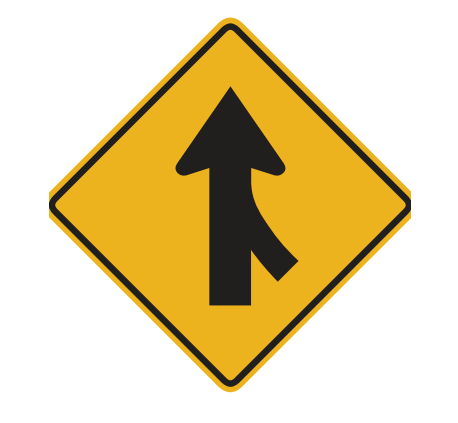
Side road junction.
Traffic merges from the left.
Traffic merges from the right.
This sign warns that another lane is joining your road from the right. Drivers should adjust their speed and position to let merging traffic enter safely.
Why do heavy vehicles need longer following distances?
They have better visibility.
They take longer to stop.
They travel at higher speeds.
Because of their massive weight, heavy vehicles need much more time and distance to come to a complete stop compared to lighter vehicles.
When you see this green light with a red arrow, you should:
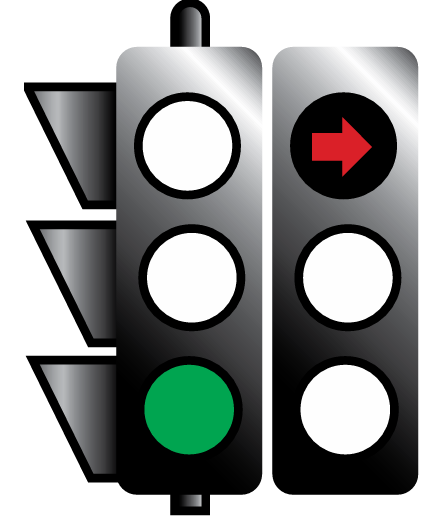
Go straight only.
Turn in the arrow direction.
Stop and wait.
A green light allows you to go straight, but a red arrow means you must not turn in that direction.
If your vehicle stalls on a railway track, you should:
Stay in the car and try to restart it.
Get everyone out and move away.
Wait for assistance to arrive.
If your vehicle stalls on a railway track, the priority is safety. Evacuate all passengers immediately and move well away from the tracks.
The minimum sleep to avoid fatigue while driving is:
6 hours.
4 hours.
8 hours.
At least 6 hours of sleep is needed to avoid fatigue, though more sleep is recommended for safe driving.
If dazzled by oncoming headlights, you should:
Switch on high beam.
Slow down and look left.
Focus straight ahead.
If dazzled by headlights, you should slow down and look toward the left side of the road to avoid glare and maintain your position in the lane.
How should you enter a road from a driveway?
Sound your horn and proceed.
Speed up to match the traffic.
Yield to pedestrians and traffic.
When entering a road from a driveway, you must give way to pedestrians on the footpath and all vehicles on the road you are joining.
On a multi-lane road, when can you pass on the left?
If the vehicle ahead is turning right.
You can never pass on the left.
Only when you are in a hurry.
On a multi-lane road, you can pass on the left when the vehicle ahead is stationary or signaling to turn right, provided it is safe to do so.
The last rule in the 'Ten Rules to Safe Driving' is:
Drive at a safe speed.
Know your vehicle.
Be polite and considerate.
The last rule in the 'Ten Rules to Safe Driving' states that you must be polite and considerate toward other road users to improve safety for everyone.
How does alcohol affect your driving ability?
Improves reaction time.
Improves decision making.
Slows reaction time.
Alcohol is a depressant that slows the brain and central nervous system, leading to slower reaction times, impaired judgment, and poor coordination.
If you are being tailgated, you should:
Brake suddenly to scare them.
Switch your lights on and off.
Increase the gap ahead.
Increasing the gap in front of you gives you more time to react safely, which reduces the need for sudden braking and encourages the tailgater to pass.
What does this sign represent?
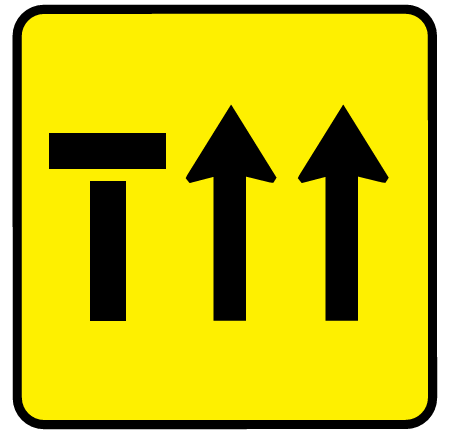
Right lane closed ahead.
Left lane closed ahead.
All lanes closed ahead.
This sign shows that the left lane ends ahead and traffic must merge into the remaining open lane.
If you see this hand signal, the driver intends to:
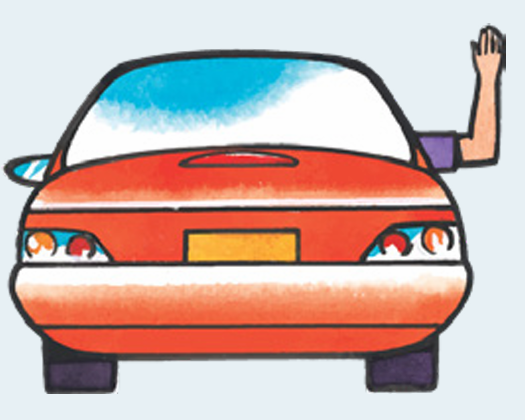
Turn left.
Turn right.
Stop.
An arm extended and bent upwards at a right angle indicates the driver's intention to turn left.