Syllabus: SA Driver’s Handbook (2026)
SA Theory: Full Practice Test C
Complete practice set for the Service SA Learner’s Theory Test.
Part 1: Give Way
8 Mandatory Questions
Part 2: Road Rules
42 Practice Questions
Question Format
Multiple Choice (50 Total)
⚠️ Practice Mode: This is a relaxed study session. You can complete all 50 questions to review the correct answers, even if you make a mistake.
Start Practice Test C
Ready to master the questions?
When are you allowed to cross a double unbroken (solid) white line?
To overtake a slow truck if the road is clear.
To enter a driveway or avoid an obstruction.
To perform a U-turn when there is no traffic.
You must not cross double solid lines except to enter or leave a property, or to safely go around an obstacle blocking your lane.
What is the requirement for a child under 6 months of age?
An approved rear-facing restraint.
An approved forward-facing restraint.
An approved booster seat.
Infants under 6 months must be secured in a rear-facing restraint because it provides the best protection for their head and neck.
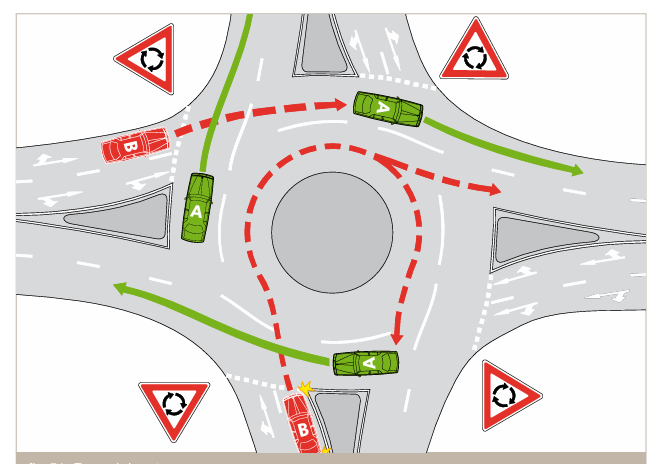
In this roundabout, which vehicle must give way?
Vehicle B.
Vehicle A.
Both vehicles.
Vehicle B must give way to vehicles already in the roundabout, including Vehicle A, before entering.
When must you use your indicators when leaving a roundabout?
Only if there is traffic behind you.
Whenever it is practical to do so.
Only when taking the first exit.
You must signal left before exiting a roundabout to inform other road users of your intentions.
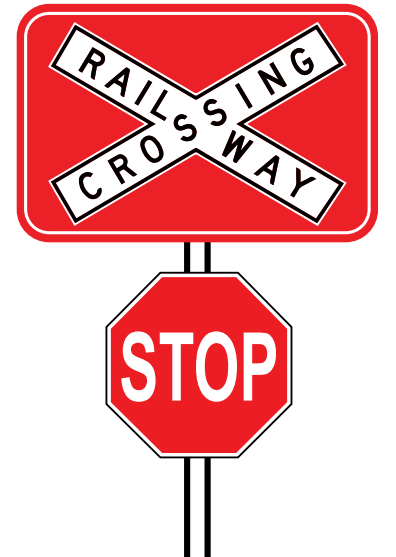
At a railway crossing with a STOP sign, what must you do?
Stop, then proceed when safe.
Slow to 10 km/h and go.
Stop only if a train is present.
A STOP sign at a railway crossing requires you to come to a complete stop and only proceed when it is safe.
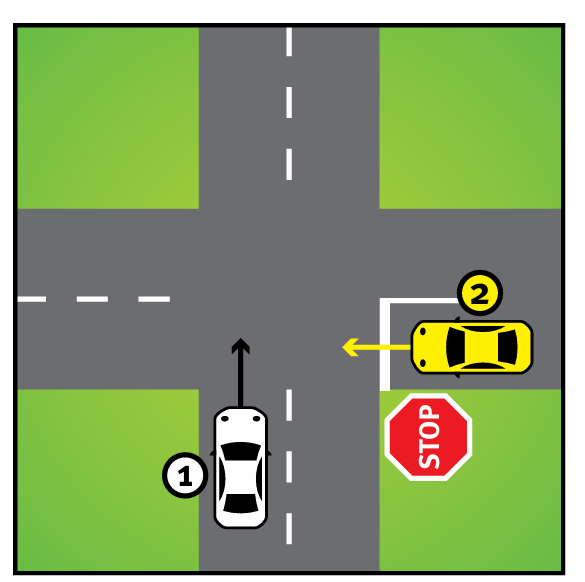
In this situation, which vehicle must give way?
Vehicle 1.
Vehicle 2.
Both vehicles.
Vehicle 2 must stop at the stop sign and give way, while vehicle 1 can proceed as it has priority.
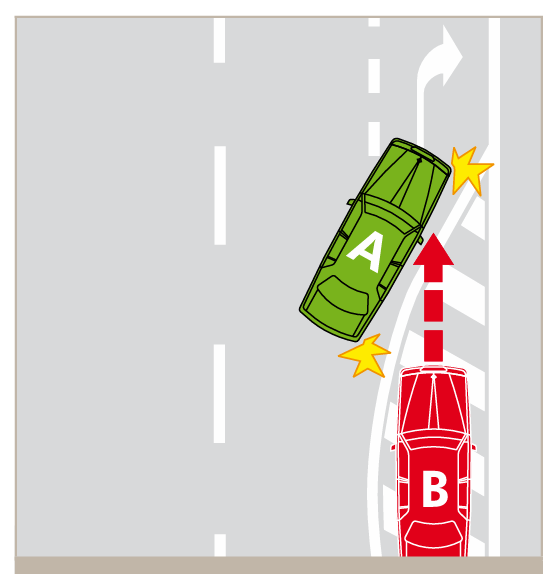
Which vehicle must give way in this situation?
Vehicle A.
Vehicle B.
Both vehicles.
Vehicle B must give way because it is moving from a painted (hatched) area and merging into the lane. Vehicle A is already in the lane, so B must merge safely behind A.
What should you do before changing lanes?
Speed up to stay ahead of the traffic in the next lane.
Turn quickly as soon as you see a small gap.
Check mirrors, signal, and check your blind spot.
Before moving, you must ensure the lane is clear by checking mirrors and looking over your shoulder to see vehicles in your blind spot.
What should you do if you miss your exit on a freeway?
Stop on the shoulder and wait for a gap to reverse back.
Carefully perform a U-turn through the median strip.
Drive to the next exit and find a safe way back.
Freeways are high-speed roads; reversing or making U-turns is extremely dangerous and illegal. Always continue to the next available exit.
What is the speed limit in a built-up area if there are no signs?
40 km/h.
50 km/h.
60 km/h.
In South Australia, the default speed limit for any built-up area without speed limit signs is 50 km/h.
In this situation, which vehicle has the right of way?
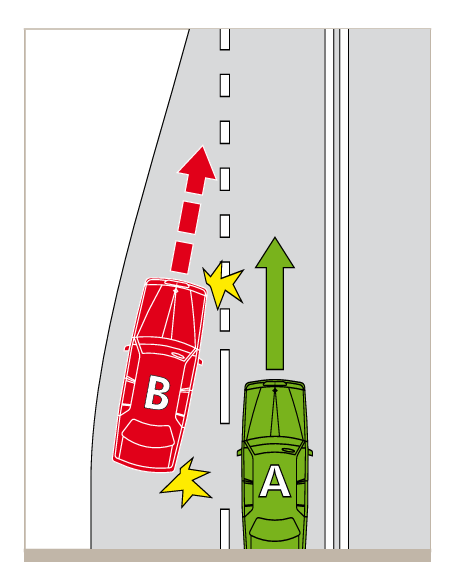
Green vehicle.
Red vehicle.
The vehicle on the left.
The green vehicle has the right of way as it is already in the lane, while the red vehicle is merging and must give way.
If turning right at a roundabout, you must signal:
Only right while inside the roundabout.
Right on approach but no exit signal is required.
Right on approach and left before exiting.
You must signal right as you approach and then signal left just before you exit the roundabout to clear traffic.
What does this sign indicate?
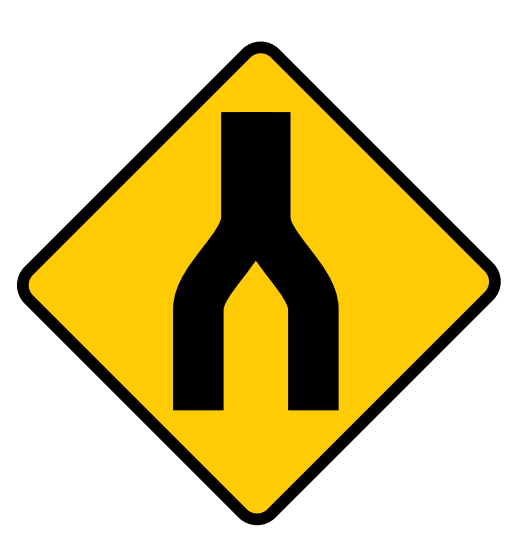
Road divides ahead.
Divided road ends.
Road narrows ahead.
This sign warns that the divided road is ending and traffic from both directions will merge onto a single roadway, requiring extra caution.
You are driving vehicle A. You must give way to:
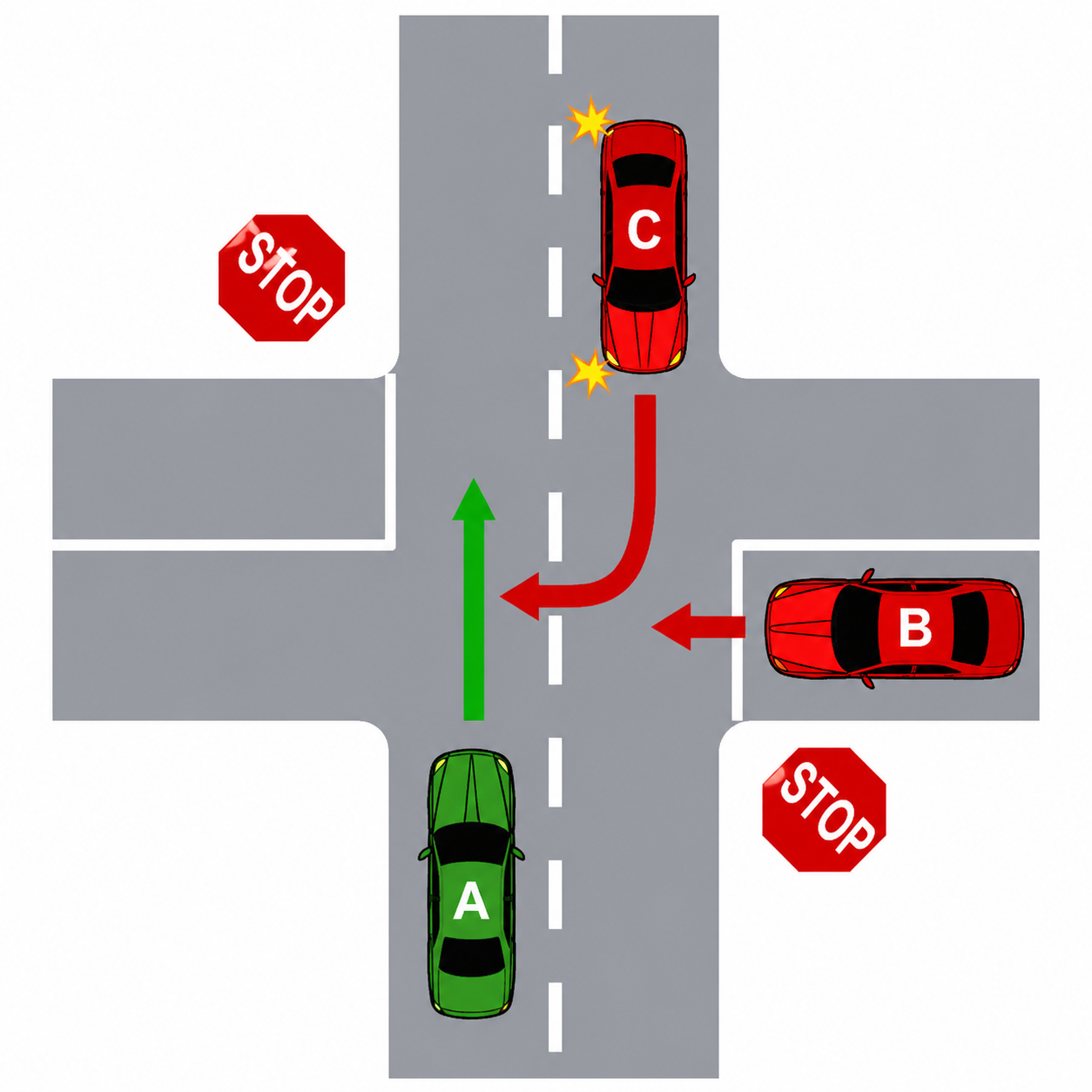
Vehicle B only.
Vehicle C only.
Neither vehicle B nor C.
Vehicles B and C face stop signs, so they must give way to vehicle A on the continuing road.
Who must give way in this merging situation?
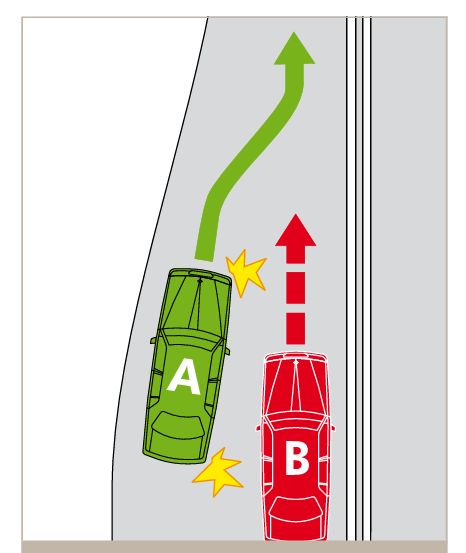
Vehicle B.
Vehicle A.
Both vehicles.
When lanes merge without line markings, the vehicle behind must give way. Vehicle B is behind, so it must give way to Vehicle A.
What does this sign indicate?
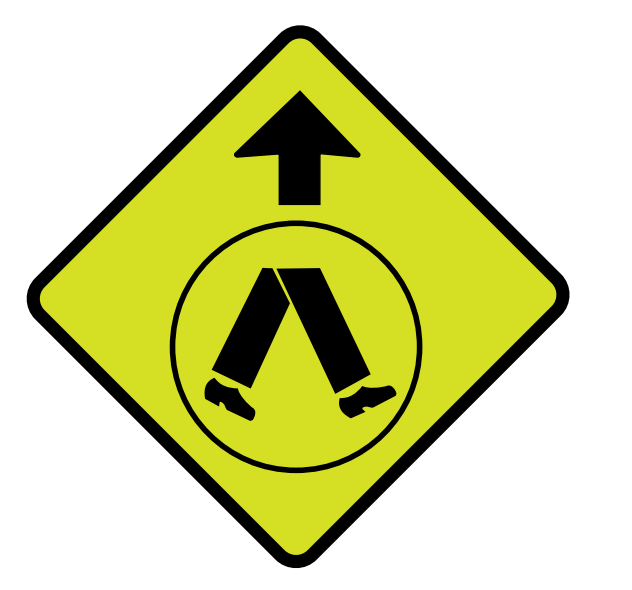
Pedestrian crossing ahead.
Footpath only ahead.
Pedestrians prohibited.
This sign warns that a pedestrian crossing is ahead, so drivers must slow down and be ready to stop for people crossing.
You are driving Vehicle A. If you give way to Vehicle B, what would happen?
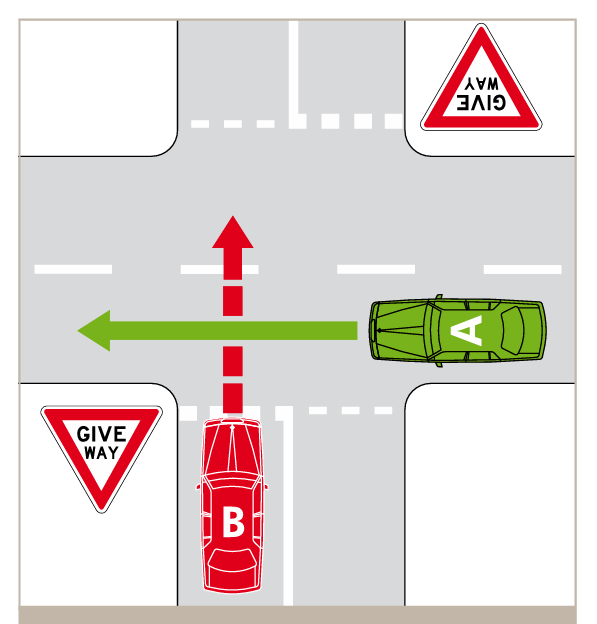
You would disrupt the right-of-way.
You would follow correct road rules.
You would act more cautiously.
Vehicle B must give way in this situation, so yielding unnecessarily would go against the correct right-of-way and disrupt normal traffic flow.
Where there are double dividing lines, you may park:
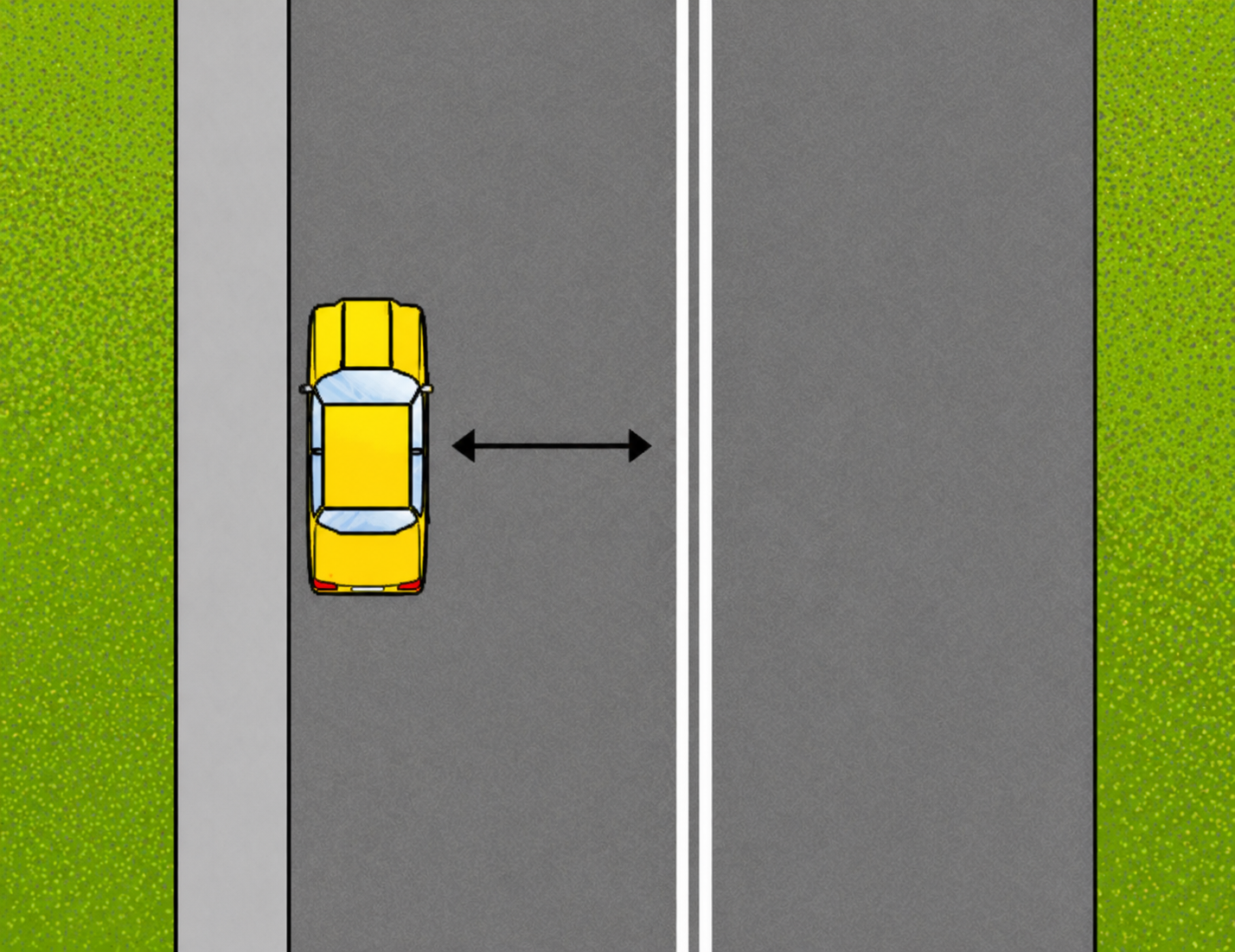
At least two metres from the dividing lines.
At least three metres from the dividing lines.
One metre from the dividing lines.
You must leave at least three metres of clear space between your car and the double lines to allow other vehicles to pass without crossing them.
What does a yellow (amber) traffic light mean?
Speed up immediately to clear the intersection before it turns red.
Stop, unless it is unsafe to do so.
Proceed with caution only if no other vehicles are approaching.
You must stop at a yellow light unless you are too close to the intersection to stop safely without causing a collision.
What does this green light with a red arrow mean?
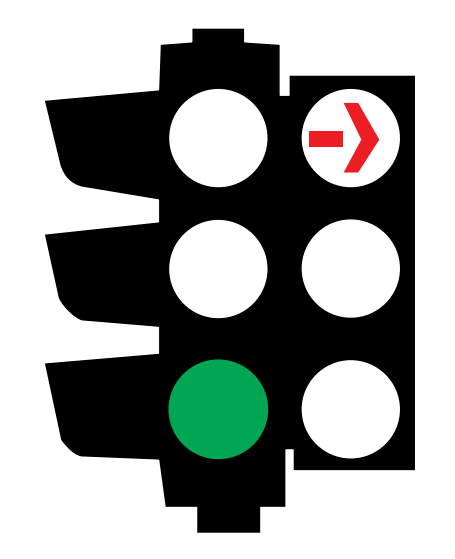
You may turn in the arrow direction.
You must stop completely.
You must not turn in the arrow direction.
A red arrow prohibits turning in that direction even if the green light allows you to proceed straight.
What does this sign mean?
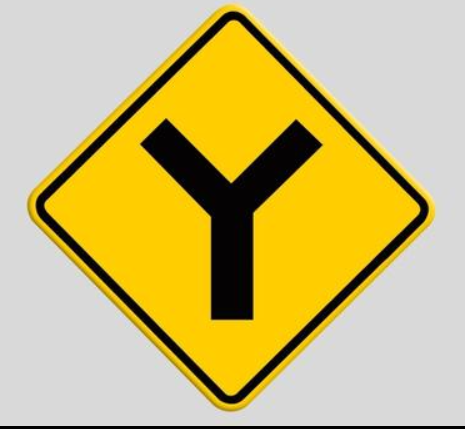
Divided road ends.
Road divides ahead.
Y-junction ahead.
This sign warns that the road ahead splits into two separate directions, forming a Y-shaped junction where drivers must choose a direction.
Can you use a bike lane to overtake a vehicle turning right?
Yes, but for no more than 50 metres.
No, bike lanes are strictly for bicycles only.
Yes, as long as you do not hinder any cyclists.
Drivers are permitted to enter a bicycle lane for up to 50 metres to overtake a vehicle that is turning right or making a U-turn.
What is the speed limit when passing a school bus with flashing lights?
40 km/h.
50 km/h.
25 km/h.
When passing a school bus displaying flashing lights, you must slow down to 25 km/h. This applies in both directions unless there is a median strip. It protects children getting on or off the bus.
When can you double-park (park next to another parked car)?
If you are just quickly dropping someone off.
If you have your hazard lights on to warn others.
Never.
Double-parking is illegal because it blocks the flow of traffic, reduces visibility for other drivers, and can create dangerous situations on the road.
Based on this situation, which vehicle must give way?
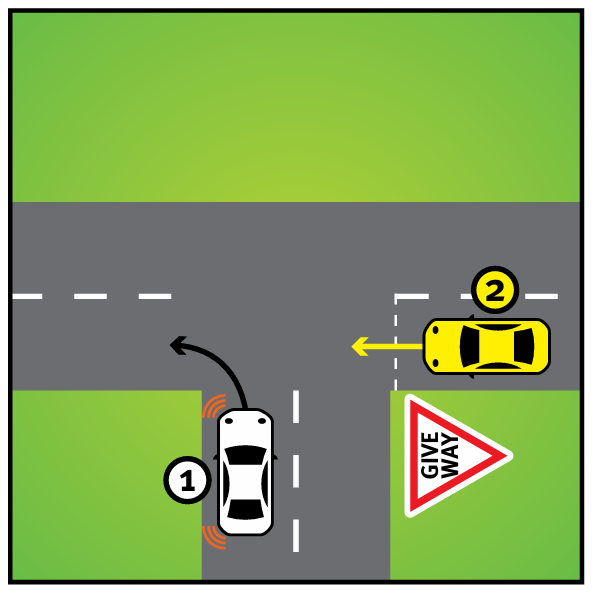
Vehicle 1.
Vehicle 2.
Both vehicles.
Vehicle 2 must give way because it is facing a give way sign before entering the intersection.
What is the main reason for a 'three-second' gap in wet weather?
To allow for increased braking distance.
To avoid water splashing the windscreen.
To maintain a constant fuel speed.
Wet roads reduce tire grip, so a larger gap is essential to stop safely if the car ahead brakes suddenly.
What should you do for an emergency vehicle with sirens/lights?
Move out of its path as soon as it is safe.
Stop immediately in your lane to let it pass.
Speed up to find a better place to pull over.
Give way by moving to the left to create a clear path for the emergency vehicle to pass safely.
What does this sign represent?
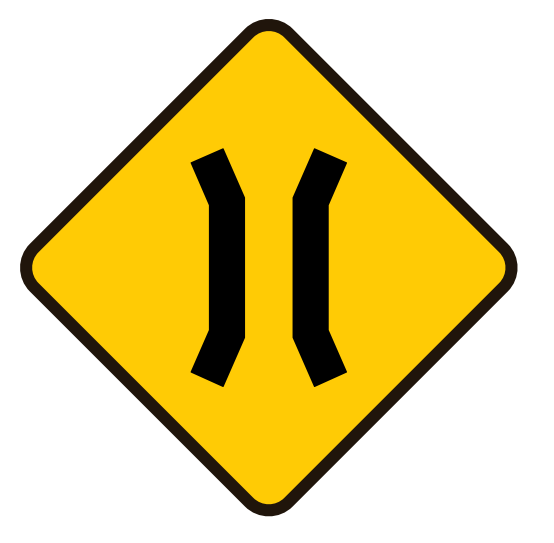
Road narrows ahead.
Two-way traffic ahead.
Narrow bridge ahead.
This sign warns that the bridge ahead is narrower than the road, so drivers must slow down and be cautious of oncoming traffic.
When making a U-turn, you must give way to:
Vehicles approaching from your right.
All vehicles and pedestrians.
Only vehicles with the right of way.
You must give way to all other traffic and pedestrians before starting a U-turn to ensure complete safety.
When must you give way to a tram?
Only when the tram driver rings the bell or signals.
Only at intersections where there are no traffic lights.
At all times when the tram is moving.
Trams are large and cannot stop quickly or steer, so you must always give way to them.