Syllabus: ACT Road Rules Handbook (2026)
ACT Knowledge Test: Practice Test B
Complete practice set for the Access Canberra Road Rules Test.
Part 1: Mandatory Questions
4 Practice Questions
Part 2: Road Rules
31 Practice Questions
Question Format
Multiple Choice (35 Total)
⚠️ Practice Mode: This is a relaxed study session. You can complete all 35 questions to review the correct answers, even if you make a mistake.
Start Practice Test B
Ready to master the questions?
When traffic is stationary, which of these statements is true?
People cycling must also be stationary.
People cycling must dismount and walk.
People cycling can proceed on the left hand side of a stationary vehicle.
Cyclists are legally allowed to "lane filter" or pass stationary or slow-moving vehicles on the left, provided it is safe to do so.
One in three fatal crashes in the ACT is speed related. What is the speed limit where there are street lights and/or buildings along the road but no speed limit signs?
50 km/h.
40 km/h.
100 km/h.
In the ACT, the default speed limit for built-up areas (areas with street lights or buildings) is 50 km/h unless a different limit is signed.
Which of these statements is true? Small children, especially toddlers:
Can be impossible to see from inside a car, especially if they are directly behind it.
Move fast and will run away from a moving vehicle.
Know not to play on driveways.
Small children are difficult to spot in blind spots around a vehicle. You should always walk around your car and check the area before reversing.
What does this sign mean?
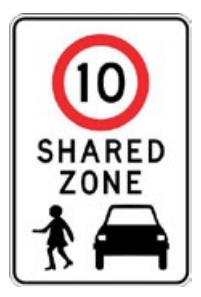
A maximum of 10 cars and pedestrians may enter the area.
This zone is shared by pedestrians and motor vehicles. Motor vehicles should travel no more than 10km/h and give way to pedestrians.
Pedestrians must give way to motor vehicles and bicycles.
In a Shared Zone, the speed limit is 10 km/h and drivers must yield to pedestrians at all times.
When you wish to turn left at a roundabout you indicate:
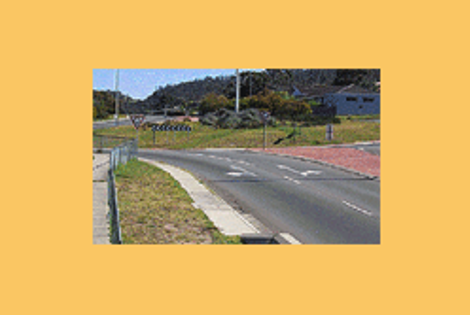
Left only after you enter the roundabout.
Only if you think it necessary.
Left from start to finish.
When turning left at a roundabout, you must indicate left as you approach it and continue indicating until you have completed the turn and exited the roundabout.
What does this sign mean?
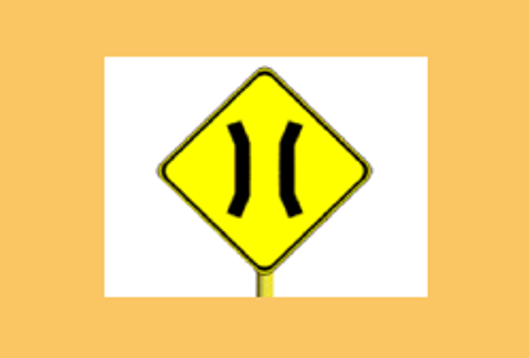
Two lane traffic ahead.
One way traffic ahead do not overtake any other vehicles.
Narrow bridge ahead, room for only two vehicles. Slow down and drive carefully.
This warning sign indicates the road narrows for a bridge. You should reduce your speed and be prepared for limited space.
You have just parked your car on a road. Before opening your door, you should:
Check that you have not parked within 5 metres of a bus stop.
Check that you have everything that you need.
Check your mirrors and blind spot for bicycle riders.
You must always look for passing cyclists or other traffic before opening your car door to avoid causing a collision. This is often referred to as the "Dutch Reach" technique.
If you are convicted of dangerous driving:
You could lose your licence and may be sent to prison.
You could only be fined and given demerit points.
You could be given demerit points only.
Dangerous driving is a serious criminal offence. Conviction often leads to mandatory licence disqualification and, depending on the severity, a prison sentence.
For Learner and Provisional licence holders, the maximum legal alcohol concentration (BAC) level may be exceeded after:
Two drinks.
One drink.
Three drinks.
Learner and Provisional licence holders must maintain a zero BAC. This means even a single drink can cause you to exceed your legal limit.
What does this sign mean?
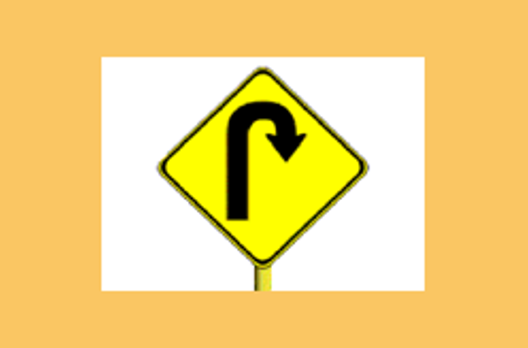
Turn around and go back, you are going the wrong way.
No right turn allowed.
Sharp bend to the right ahead. Slow down and drive carefully.
This warning sign indicates a sharp curve ahead. You must reduce your speed to navigate the bend safely.
Another vehicle is overtaking you on your right. You commit a traffic offence if you:
Speed up while the other vehicle is on your right.
Keep the same speed.
Slow down while the other vehicle is on your right.
It is illegal and dangerous to increase your speed when another vehicle is attempting to overtake you. You must maintain a steady speed or slightly decrease it to help them pass safely.
If an overtaking vehicle signals that it must move in, in front of you, you should:
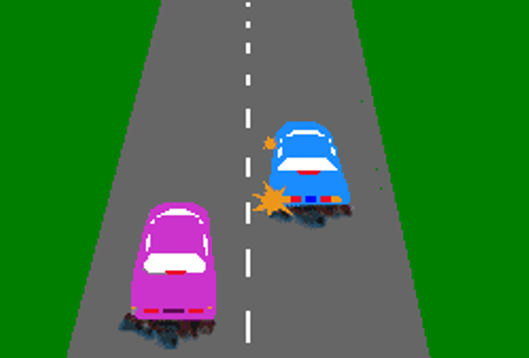
Prepare to slow down to allow room.
Speed up to allow the other vehicle to move in behind you.
Maintain the posted speed limit because that is what the sign says.
If a vehicle overtaking you needs to pull back into your lane, you must be ready to decelerate to provide a safe gap for them to enter.
What does this sign mean?
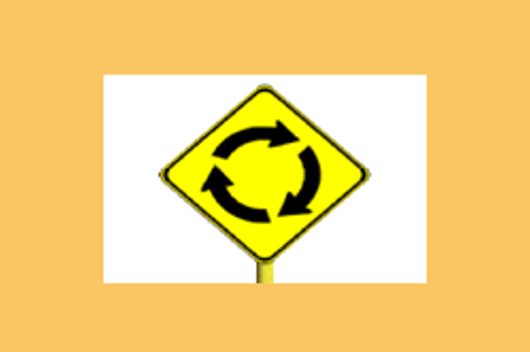
Detour ahead - turn around or take another road.
Traffic hazard ahead - drive carefully.
Roundabout ahead - be prepared to give way to any vehicle in the roundabout.
This sign warns of an upcoming roundabout. You must slow down and prepare to yield to traffic already in the circle.
You are driving the car in the diagram. You must stop:
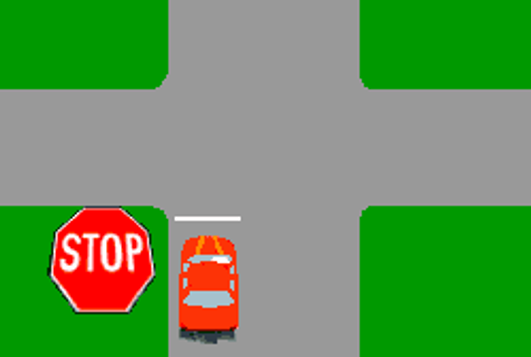
Even when there is no other traffic.
Only if there is a car on your right or left.
Only if there is danger of a collision with another vehicle.
A STOP sign means you must come to a complete halt at the line, regardless of whether you can see other vehicles. You must remain stationary until it is safe to proceed.
When driving near parked vehicles, you should:
Stop, if you see a car with its right-hand indicator on.
Check for parked vehicles with indicators on, or children about to step out on the road.
Sound your horn and flash your headlights to warn drivers not to pull out.
You must stay alert for any signs that a vehicle is about to pull out or that a person might emerge from between parked cars.
You are in the car approaching the intersection shown. You should:
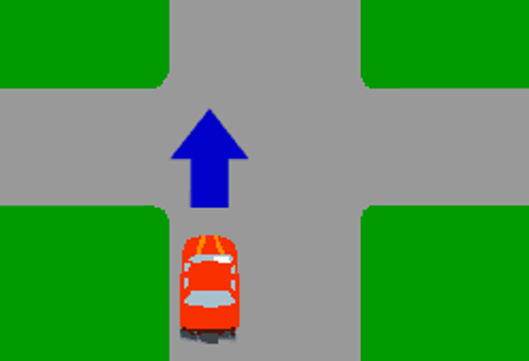
Drive carefully and approach at a speed which gives you good time to avoid traffic which might suddenly appear.
Come to a complete stop before you come to the intersection.
Flash your lights to let other vehicles know that you are coming.
When approaching an unmarked intersection, you must slow down and be prepared to give way to any vehicle that may appear from your right or left.
What does this sign mean?
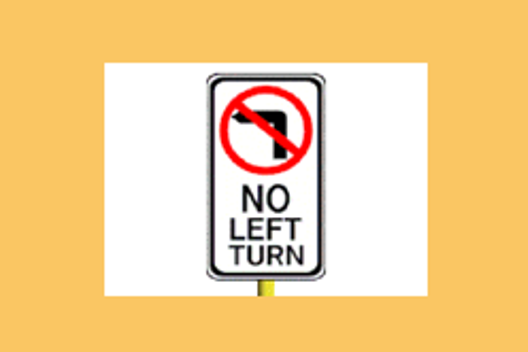
You must not turn to the left or the right.
You must not turn to the right.
You must not turn to the left.
This regulatory sign prohibits drivers from making a left turn at the intersection or opening where it is displayed.
If you take certain medicine and then drink alcohol:
The alcohol will lessen the effect of the medication.
It will calm your nerves.
It can have a bad effect on your driving ability.
Alcohol and certain medicines can react with each other, significantly increasing impairment and making it very dangerous to drive.
The most effective device for protecting passengers when in an accident is:
Safety door latches.
Seat belts.
Padded instrument panels.
Seat belts keep you in your seat and significantly reduce the risk of injury during a crash.
If you breakdown on a highway or freeway, you should:
Move over to the left of the road.
Stay where you are and wait for a tow truck.
Move into the right-hand lane, so you can be seen.
For safety, you should move your vehicle as far to the left as possible, ideally onto the shoulder, and use your hazard lights to warn other drivers.
What should you do on approaching a railway level crossing displaying a STOP sign?
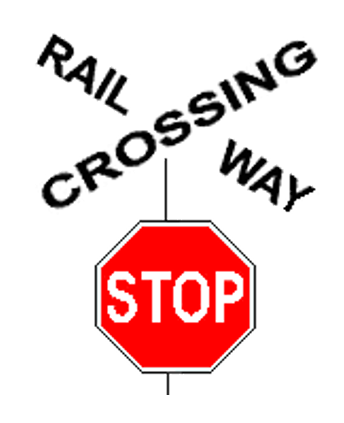
Slow down to 10 km/h, then proceed through the crossing.
Stop, only if a train is at the crossing.
Stop at all times and proceed when safe to do so.
You must stop completely at the sign and only cross when the tracks are clear.
What may you do at an intersection with traffic lights at which this sign is displayed?
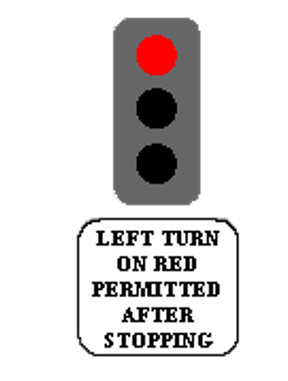
You should slow down and check if anyone is coming before turning left.
If the lights are red you must first stop, then you may turn left if it is safe to do so.
You may turn left only if a green arrow is shown.
This sign allows you to make a left turn on a red light, but only after coming to a complete stop and yielding to all other traffic and pedestrians.
Is it correct that drugs such as cold and flu pills, codeine and sedatives can combine to affect your ability to drive safely?
No.
Yes, but only if you drink alcohol when taking them.
Yes.
Combining different medications can significantly impair your concentration and reaction times, making driving dangerous.
These markings on the road indicate:
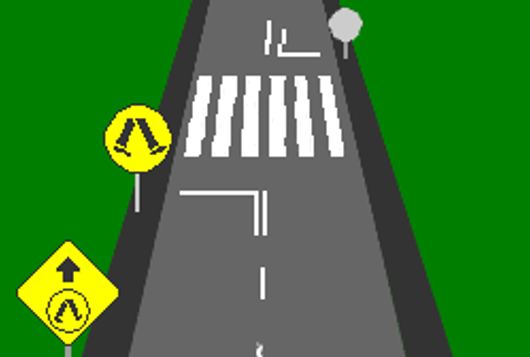
Places where you can park.
Places where pedestrians have special rights.
Places where special speed limits apply.
These markings and signs identify a pedestrian (zebra) crossing. Drivers must give way to any pedestrian who is on the crossing.
When drivers have been drinking, the crashes they are involved in are generally:
Less serious.
More serious.
About the same.
Alcohol significantly impairs judgment, reaction time, and coordination, which often leads to higher-speed impacts and more severe injuries.
A car is carrying a driver and 3 adult passengers. There are seat belts in all seating positions. By law, seat belts must be worn by:
Only the driver.
Only the driver and front seat passenger.
All four people.
Every person in the vehicle must wear a seat belt if one is available for their seat. The driver is legally responsible for ensuring all passengers are properly restrained.
Where there are double dividing lines, you may park:
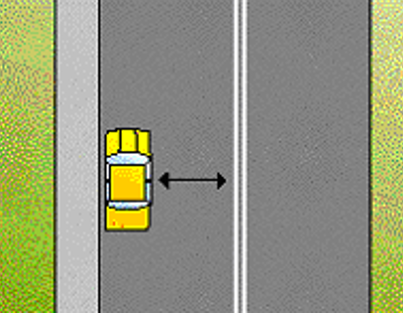
At least three metres from the dividing lines.
At least two metres from the dividing lines.
One metre from the dividing lines.
When parking on a road with double lines, you must leave at least 3 metres of space between your vehicle and the lines so other cars can pass safely.
Why should you avoid heavy braking on a wet road?
If the wheels lock up your handbrake may not work.
Your wheels may skid and cause a loss of control.
You might wet pedestrians walking along the footpath.
Heavy braking on wet surfaces reduces tire grip, which can cause the wheels to lock and the vehicle to slide.
You are in the car marked A, you may overtake the vehicle in front:
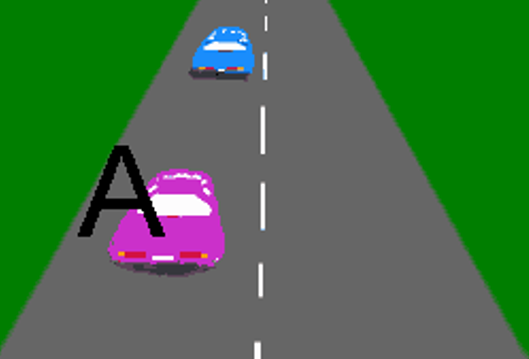
Not at anytime.
On either side.
Only on its right-hand side.
On a road with a broken center line, you must overtake on the right when it is safe and the way is clear.
When driving on a dark day, what should you do?
Keep your sunglasses on to cut down headlight glare.
Turn on your lights to low beam.
Turn on your hazard warning lights.
On a dark or overcast day, turning on your low beam headlights helps other drivers see you more clearly and improves your own view of the road.
If you are taking any sort of medicine, you should:
Only drive during the day after taking the medicine or drug.
Only drive a motor car not a heavy vehicle.
Find out from your doctor or chemist whether the medicine or drug will affect your driving and act accordingly.
Many medicines can cause drowsiness or slow your reaction time. It is your responsibility to consult a professional to ensure it is safe to drive.
As a pedestrian, if you must walk along the road, you should walk:
On the left-hand side, with the traffic.
On the side with the least traffic.
On the right-hand edge of the road, facing oncoming traffic.
Walking on the right side lets you see oncoming vehicles clearly and allows you to move off the road quickly if a car gets too close.
You should not drive across a railway level crossing when:
You are towing a caravan.
Traffic is blocking the other side.
A station is nearby.
You must never enter a level crossing unless there is enough space for your entire vehicle to clear the tracks on the other side. Getting stuck on the tracks due to traffic is extremely dangerous.
What does this sign mean?
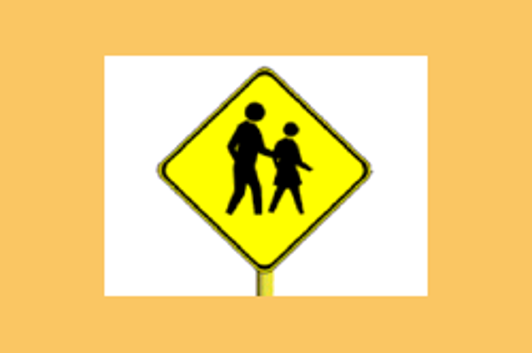
Slow down and look out for pedestrians crossing the road ahead.
Stop and help aged pedestrians across the road.
Hospital ahead, slow down and proceed with caution.
This is a warning sign for a pedestrian crossing or an area where people frequently cross. You must reduce speed and stay alert for pedestrians.
How should you overtake a pedal cyclist?
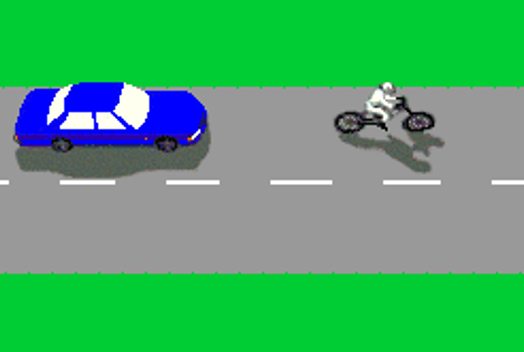
The same as you would another car, with safety.
Drive as close as possible to the cyclist so he or she will move over and let you pass.
Sound your horn to warn the cyclist to get off the road.
Cyclists are considered vehicles and have the same rights to the road; you must overtake them safely and provide sufficient clearance.