Syllabus: ACT Road Rules Handbook (2026)
ACT Knowledge Test: Practice Test C
Complete practice set for the Access Canberra Road Rules Test.
Part 1: Mandatory Questions
4 Practice Questions
Part 2: Road Rules
31 Practice Questions
Question Format
Multiple Choice (35 Total)
⚠️ Practice Mode: This is a relaxed study session. You can complete all 35 questions to review the correct answers, even if you make a mistake.
Start Practice Test C
Ready to master the questions?
What does this sign mean?
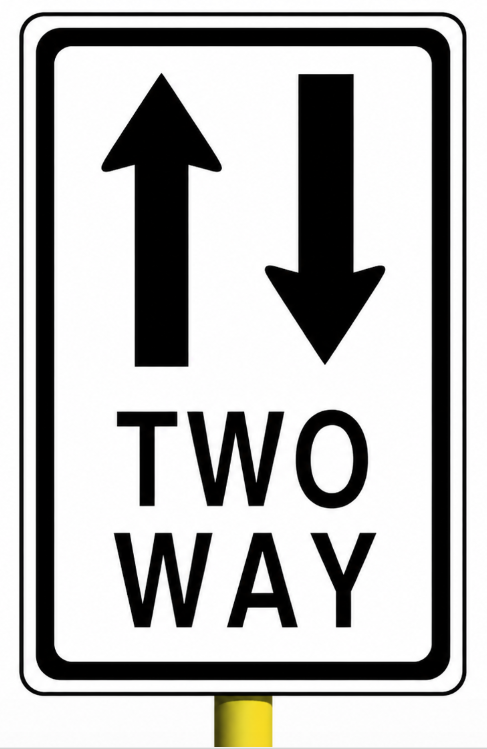
No turns permitted.
Traffic travels in each direction.
Double lane bridge ahead.
This sign warns you that the road ahead has traffic moving in both directions, often appearing when a one-way street or a divided highway ends.
What must you do when you approach a stop sign?
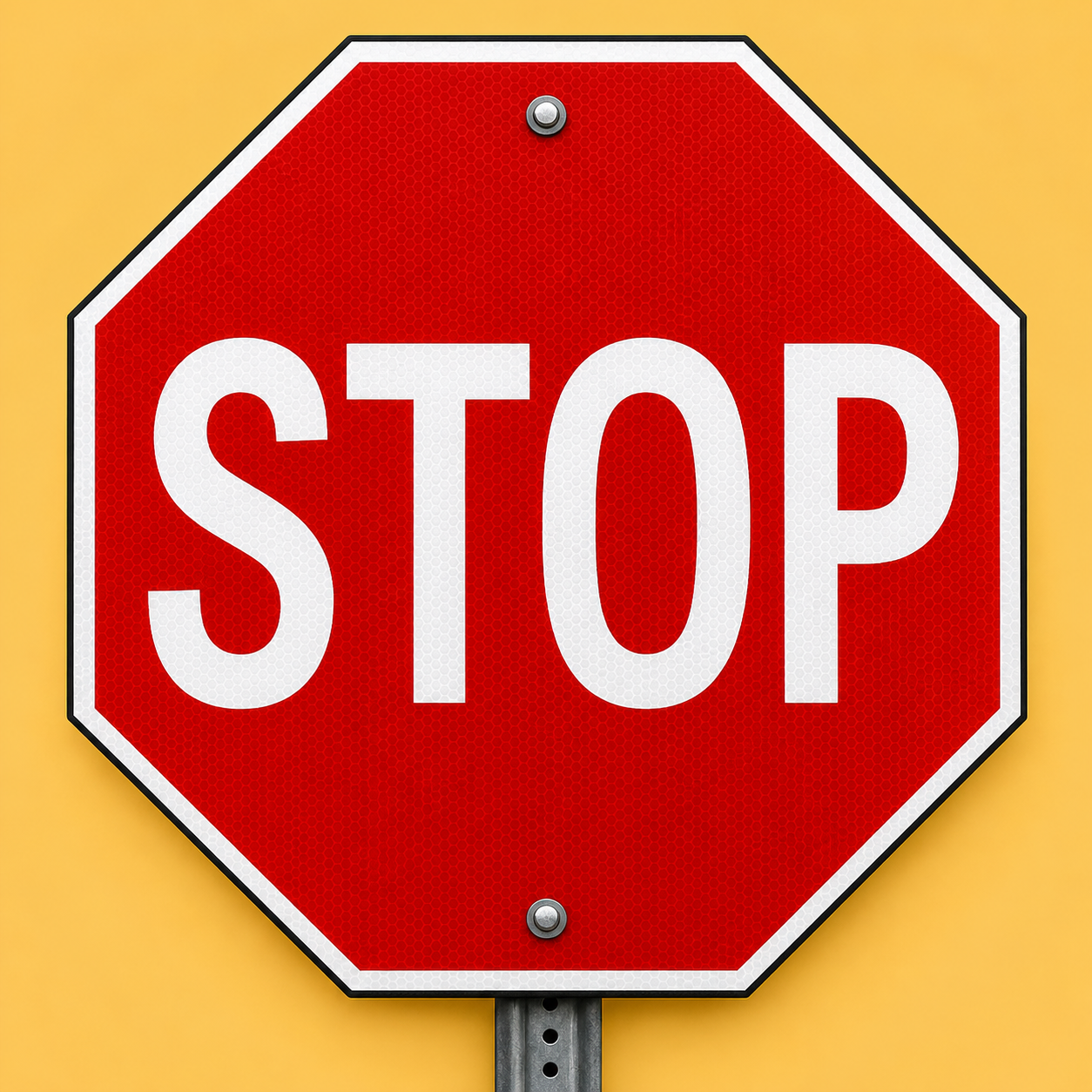
You must bring your vehicle to a complete stop with no part of the vehicle over the unbroken hold line on the road surface.
You are permitted to stop not more than one car length over the hold line.
You may roll through the stop sign at no more than 5 kph provided the road is clear of traffic.
A Stop sign requires a total cessation of movement behind the line. Even if the road looks clear, "rolling stops" are illegal.
Motorcycle lane filtering is permitted in the ACT when the traffic speed is not exceeding 30km/h and:
It is safe to do so by a fully licensed rider.
Motorcyclists want to travel between lanes of moving traffic to get ahead.
Motorcyclists needs to get past a bus or heavy vehicle.
In the ACT, lane filtering is only allowed for fully licensed motorcyclists when it can be done safely at low speeds.
One in three fatal crashes is speed related. What is the speed limit where there are no speed limit signs and no street lights or buildings?
40 km/h.
60 km/h.
100 km/h.
In the ACT, the default speed limit on an open road where there are no signs, street lights, or buildings is 100 km/h.
When driving in wet weather, you should:
Drive in the middle of the road to avoid splashing pedestrians on the footpath.
Stop and help aged pedestrians across the road.
Watch out for pedestrians, who may hurry and take risks.
In wet weather, pedestrians often focus on staying dry and may move quickly or cross unpredictably, making them harder to spot.
Driver fatigue can be prevented by which of the following:
Drinking at least one litre of strong coffee every two hours.
Opening the cabin vents fully.
Taking a break from driving every few hours.
Regular rest breaks are the only effective way to prevent fatigue and ensure you remain alert while driving.
You should angle park:
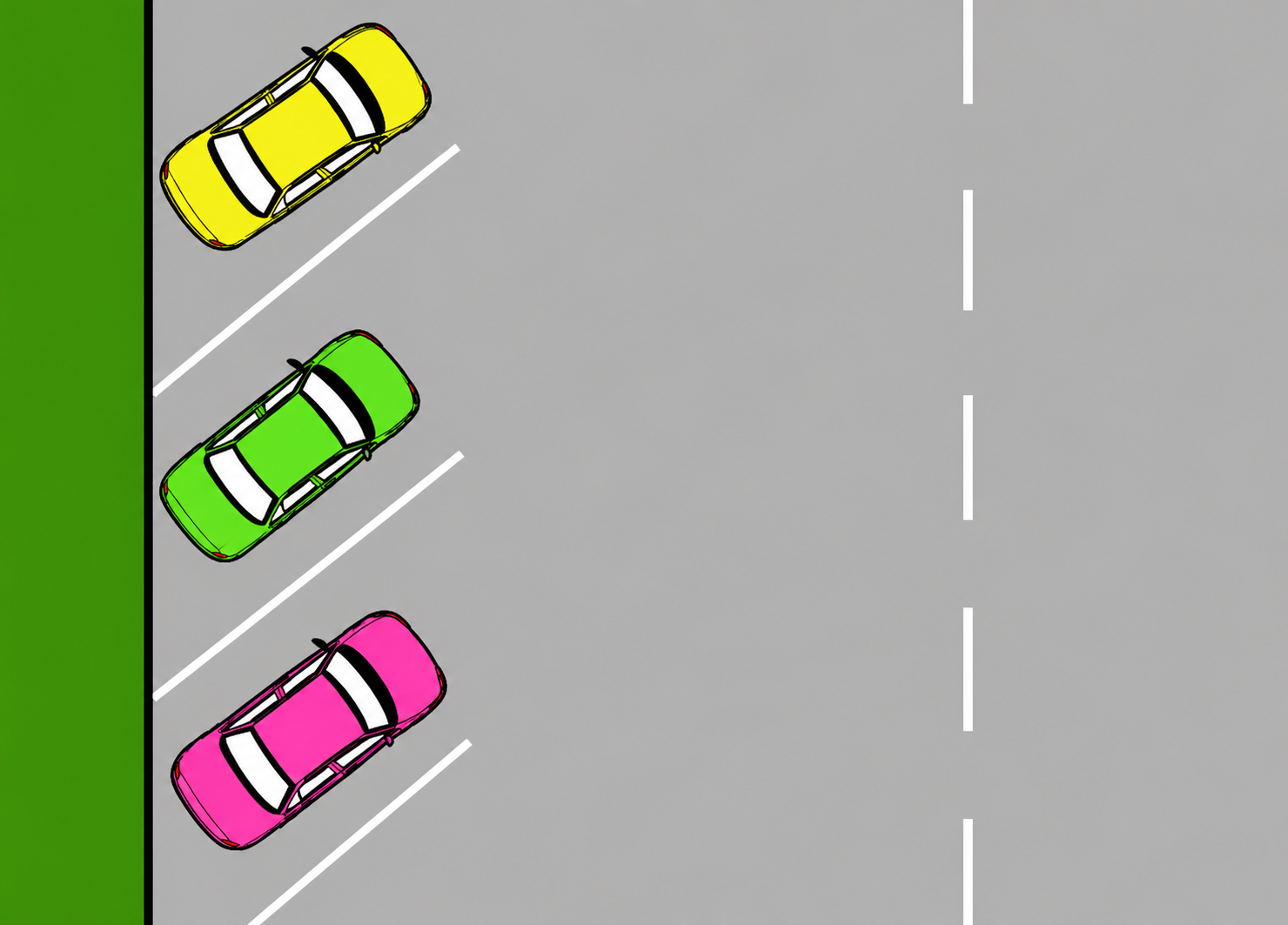
Where there are markings or a sign indicating angle park.
Where the road is very wide.
Where there is plenty of room from the centre line.
You must only angle park in areas specifically designated by road markings or signs; otherwise, parallel parking is the default requirement.
This intersection does not have any traffic lights or signs. You are in car A and want to turn right. When can you go?
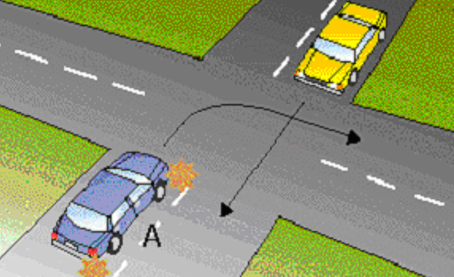
As soon as you have indicated you are turning right.
Before the car going straight ahead has passed.
After the car going straight ahead has passed.
At an uncontrolled intersection, if you are turning across the path of an oncoming vehicle that is going straight, you must give way to that vehicle.
Before taking any drugs and then driving it is most important to:
Plan to have some other person with you.
Have some food in your stomach.
Know what the effects of the drug are.
Drugs can impair your driving skills, so you must know their side effects before driving.
Alcohol is a depressant. This means:
It slows down how quickly your brain works.
It speeds your brain up so you can work better.
It makes you calm down and think more clearly.
As a depressant, alcohol affects the central nervous system, slowing down your reactions, coordination, and ability to process information quickly.
As you approach an intersection, you should check for traffic on your left and right:
Only when the traffic is heavy.
Only when you approach a stop sign.
At all times before entering the intersection.
You must always scan for hazards and other vehicles before entering an intersection to ensure it is clear and safe, regardless of signs or traffic density.
In which of the situations shown are you permitted to do a U-turn?
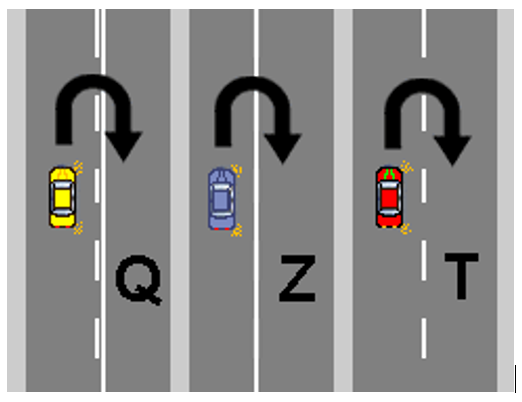
Only turn shown in situation T is permitted.
Turns shown in situations Q and T are permitted.
Turns shown in situations T and Z are permitted.
You are allowed to cross a single broken line (T) or a single broken line to the left of a continuous line (Q) to perform a U-turn. However, you must never cross a solid continuous line (Z) to make a U-turn.
You are driving in town and see a bus on the other side of the road at a bus stop. Why should you drive carefully?
The bus may have broken down.
The bus may suddenly move off.
Pedestrians may appear from behind the bus and move onto the road.
You must be cautious around buses because people often step out into traffic from behind or in front of the vehicle.
Seat belts and child restraints (eg baby capsules and child seats):
Are only needed for children under 12 months of age.
Must always be worn properly and adjusted securely.
Must be worn on short trips only.
It is a legal requirement for all passengers to be appropriately restrained at all times while the vehicle is in motion to ensure safety in the event of a crash or sudden stop.
When you are driving on an interstate freeway, which of the following are you allowed to do?
Make a U turn.
Drive in the left lane.
Reverse your vehicle.
You are allowed to drive in the left lane; however, making U-turns or reversing is strictly prohibited on freeways.
To reduce the effect of alcohol before driving or riding you should:
Wait. The time depends on how much you have had to drink.
Drink black coffee.
Have a glass of water.
Only time can lower your Blood Alcohol Concentration (BAC). Coffee, water, or food do not speed up the process of alcohol leaving your system.
What does this sign mean?
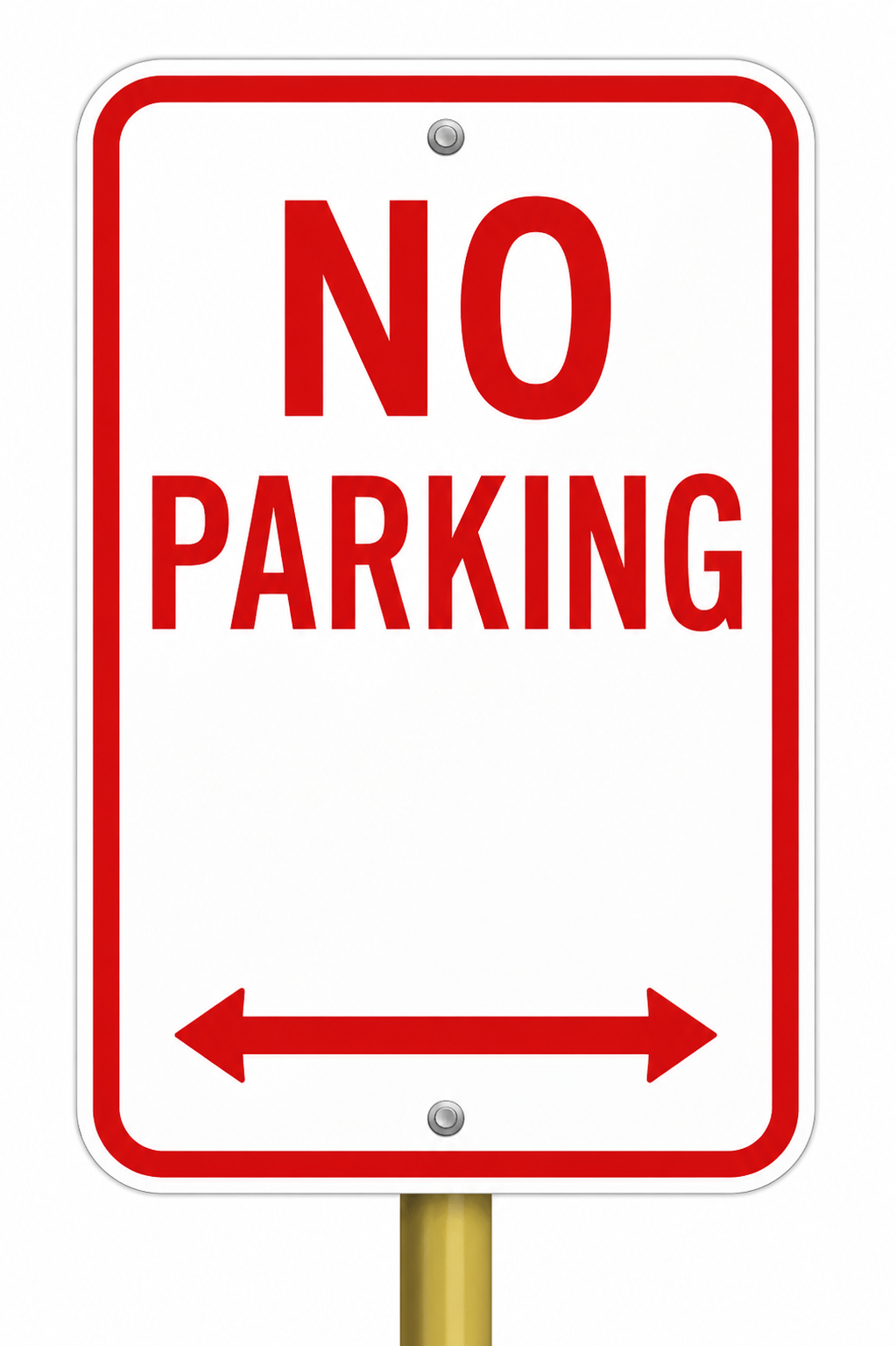
You may not stop at the kerb at any time.
You may stop if actually picking up or setting down passengers or goods.
You may park, but for not more than 15 minutes.
A "No Parking" sign means you can stop to drop off or pick up passengers or goods, but you must not leave the vehicle unattended or stay longer than two minutes.
When there are three lanes on a highway or freeway:
The right lane is for avoiding most traffic.
The right lane is for emergency vehicles only.
The right lane is reserved for overtaking.
On roads with three lanes and a speed limit over 80 km/h, you must stay out of the right lane unless you are overtaking, avoiding an obstruction, or traffic is congested.
It is an offence for a Learner or Provisional licence holder to drive or ride if the alcohol concentration (BAC) level exceeds:
Zero.
0.02.
0.05.
Learner and Provisional drivers are subject to a zero blood alcohol concentration limit. This means you must not have any alcohol in your system while driving.
A GIVE WAY sign at an intersection means that you must:
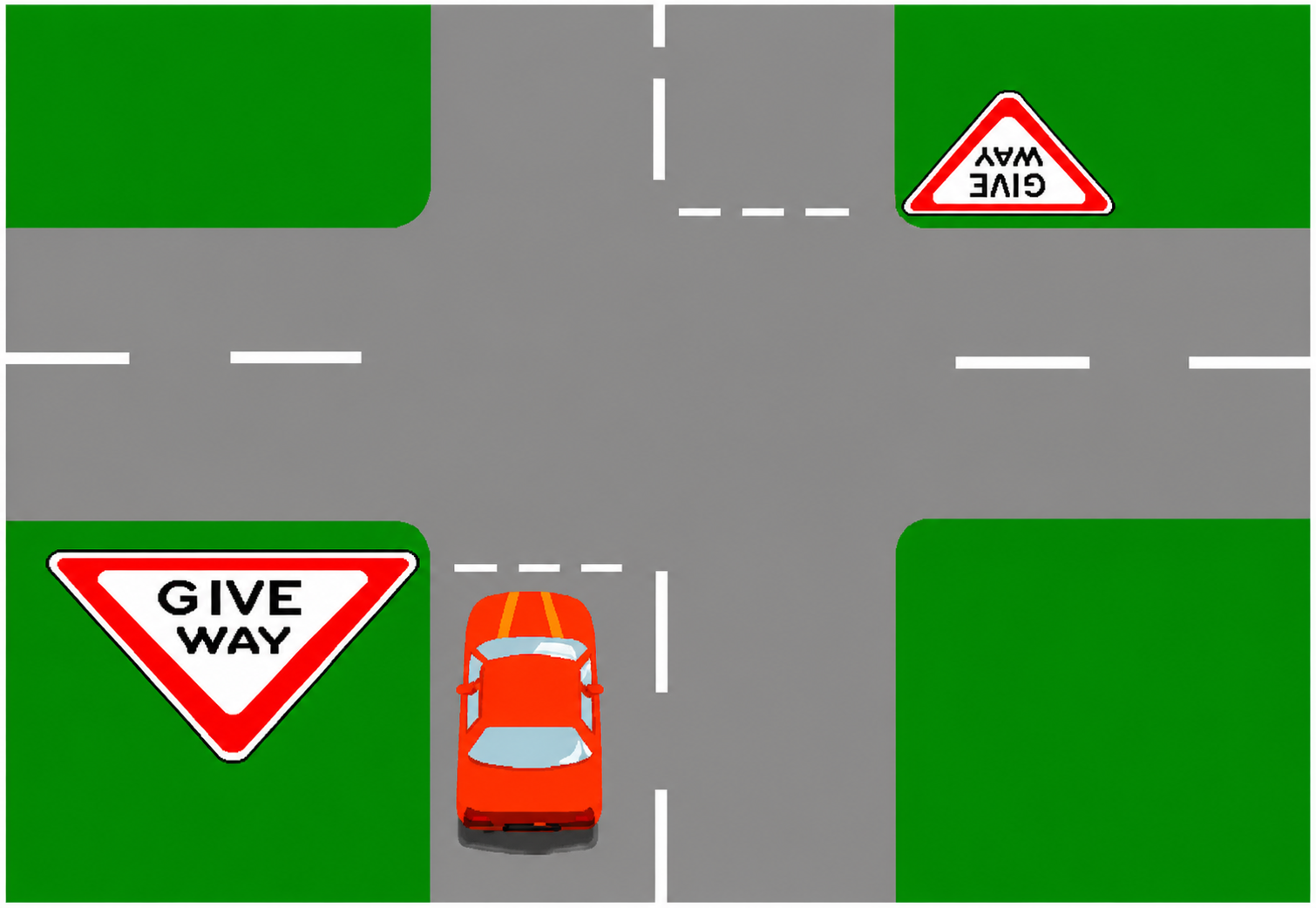
Stop completely at all times and you have no right of way.
Be ready to stop and give way to all other traffic if there is danger of a collision.
Slow down and only give way to traffic on your right.
Unlike a Stop sign, you don't have to come to a full stop if the road is clear, but you must slow down and be prepared to stop for any cross traffic.
What does this sign mean?
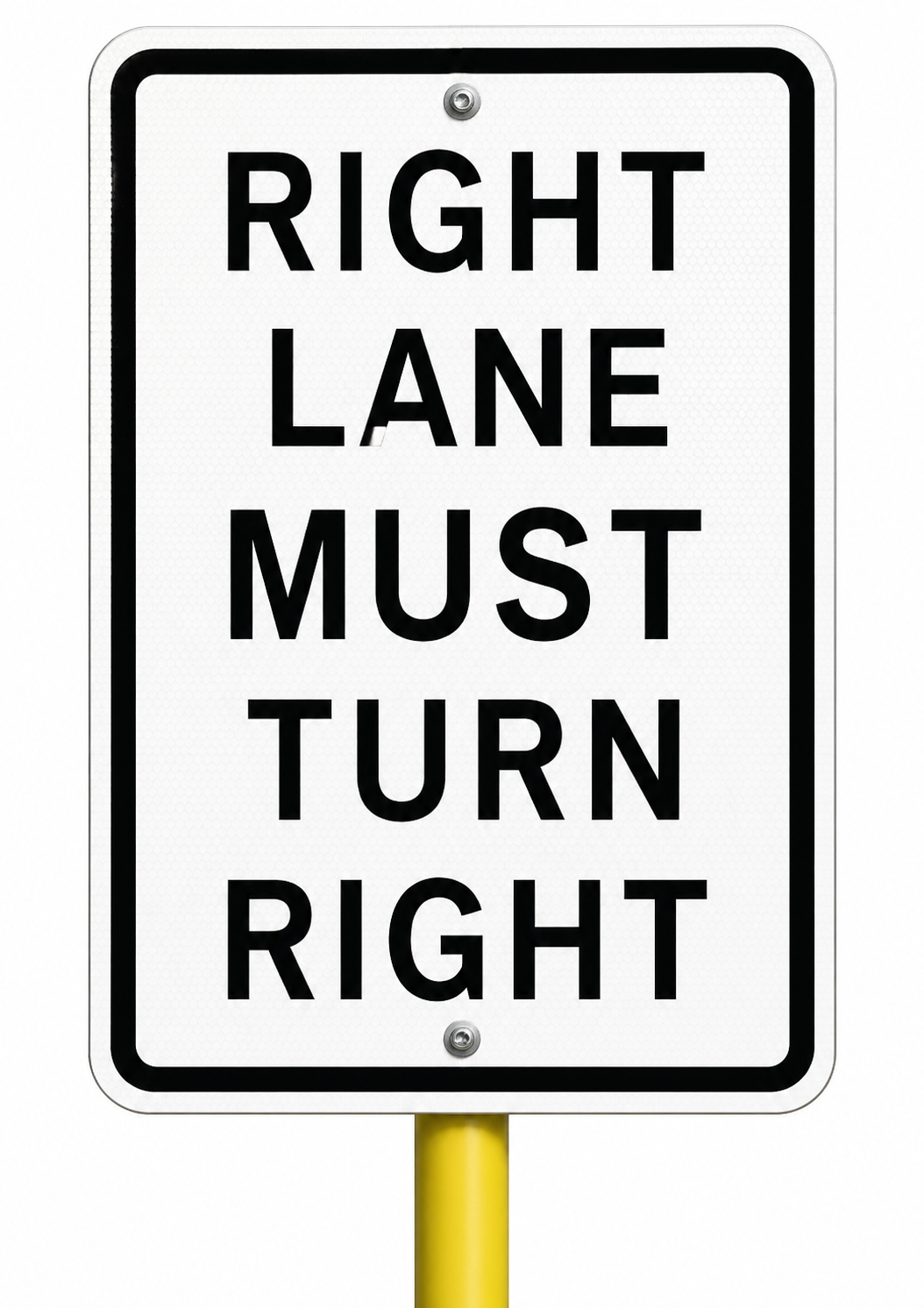
Right lane traffic may turn right or go straight ahead at the next intersection.
One way traffic ahead.
All right lane traffic must turn right at the next intersection.
This is a regulatory sign that mandates a specific action. If you are in the right lane, you are not permitted to go straight; you must complete a right turn at the upcoming intersection.
You are at an intersection and want to turn left. The traffic light is green but the pedestrian light is also green. What should you do?
Proceed to turn left, giving way to any pedestrian at or near the road that you are entering.
Stop and wait for the pedestrian light to change to red.
Sound your horn to let any pedestrian know that you are turning left.
When turning at an intersection, you must always give way to pedestrians who are crossing the road you are turning into.
In wet weather when it becomes hard for you to see, you should:
Turn on your headlights, slow down, and double your following distance behind the vehicle in front.
Turn your headlights on high beam.
Flash your headlights to warn other drivers.
Low visibility and slippery roads require extra space and better lighting to stay safe and avoid collisions.
Which of the following statements is correct?
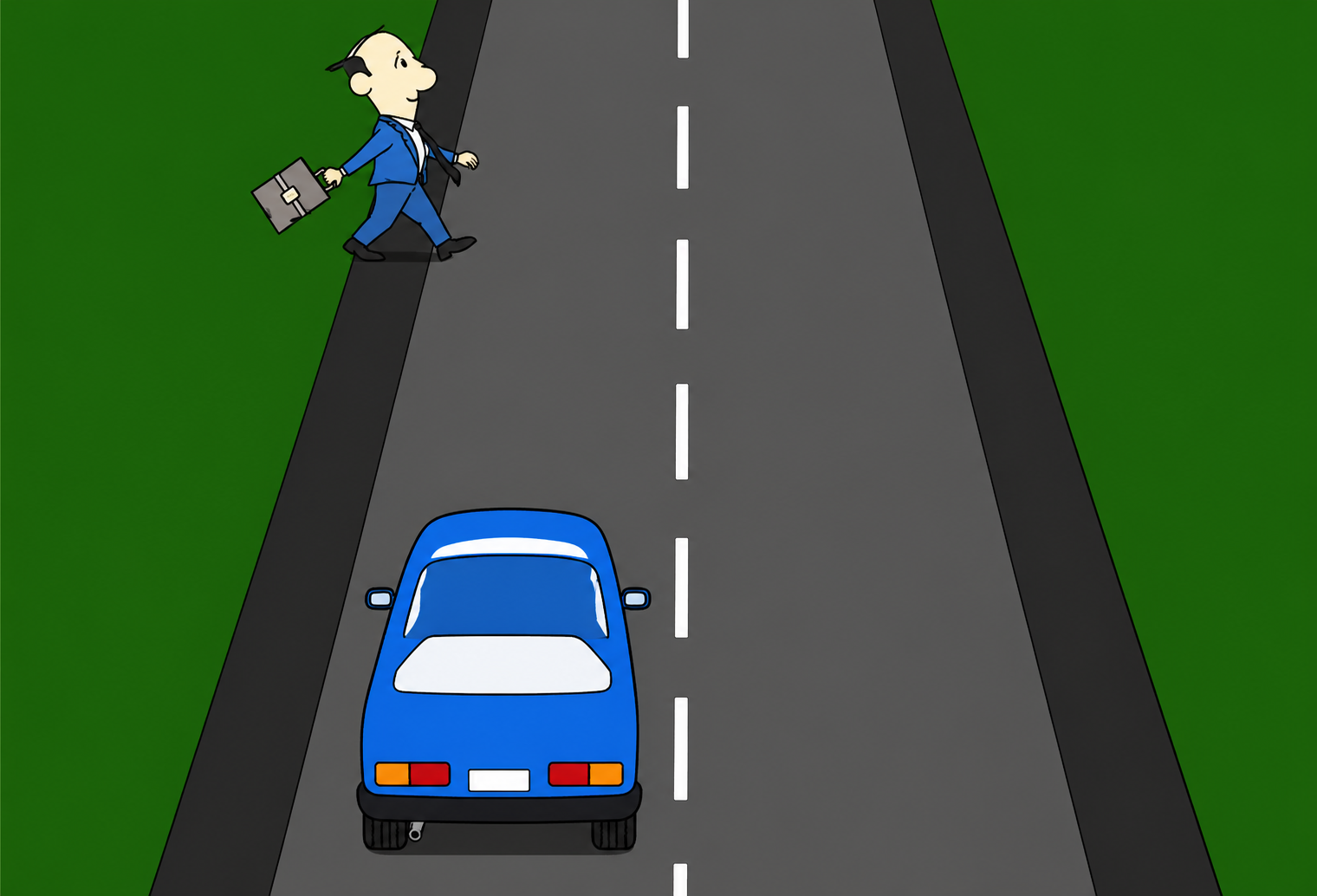
You must give way to pedestrians if there is a danger of a collision.
Pedestrians must cross the road only at marked crossings and intersections.
You do not have to give way to adults crossing at children's crossings.
Safety is the top priority. Regardless of whether a pedestrian is crossing at a designated spot or not, a driver must do everything possible to avoid a collision.
What does this sign mean?
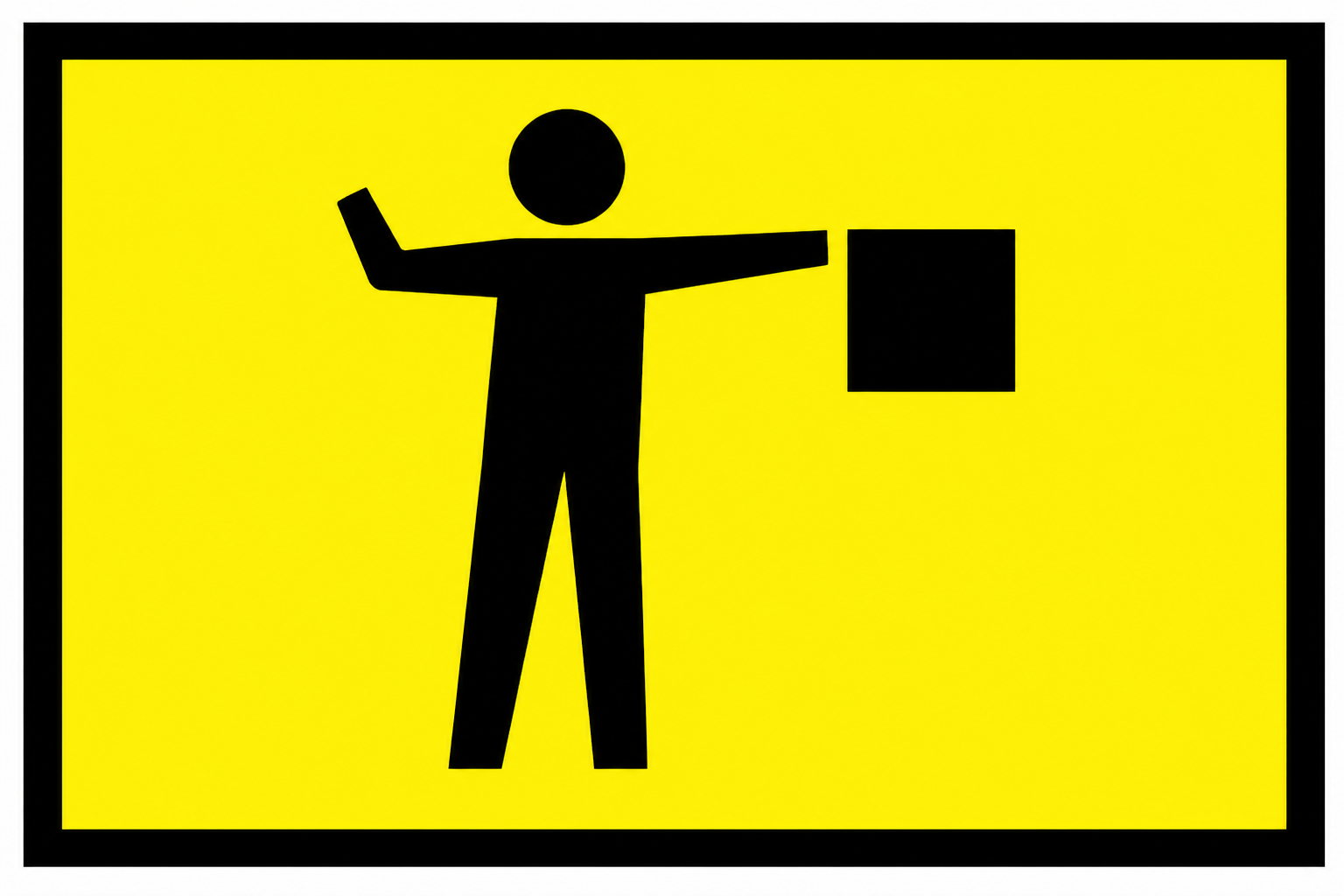
School children crossing the road ahead. Prepare to stop.
Traffic lights out of order. Police on duty ahead.
Traffic controller ahead. Slow down and be prepared to stop.
This sign indicates that there is a traffic controller (often at a construction site or roadwork) ahead. You must follow their hand signals and be ready to stop if required.
You want to turn right at an intersection and see this traffic light. You should:
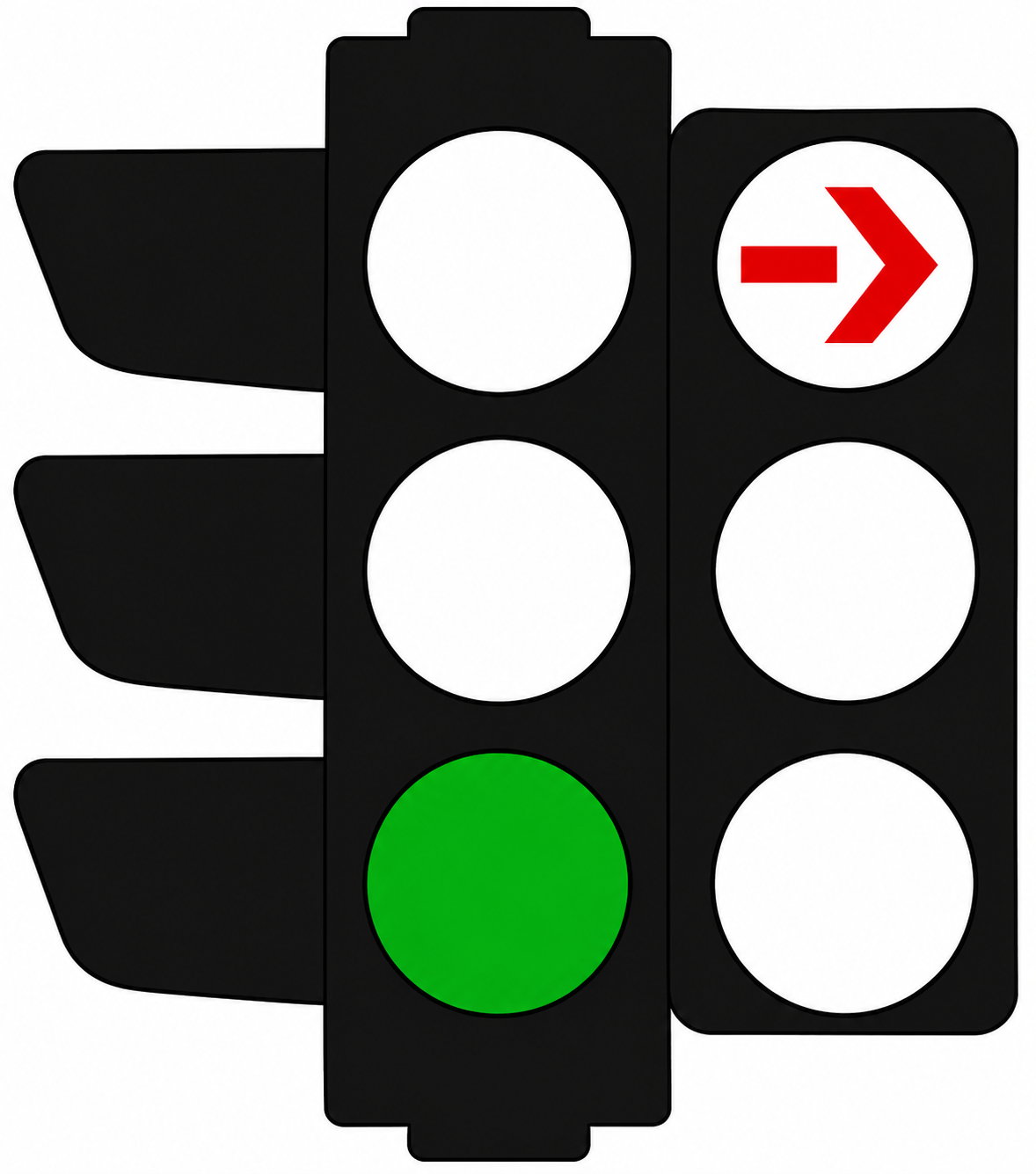
Stay behind the stop line until the green arrow shows.
Move forward slowly.
Enter the intersection and wait for the green arrow.
A red right-turn arrow means you must not turn right or enter the intersection to wait, even if the main traffic light is green. You must wait behind the stop line until the red arrow disappears or turns green.
What does this sign mean?
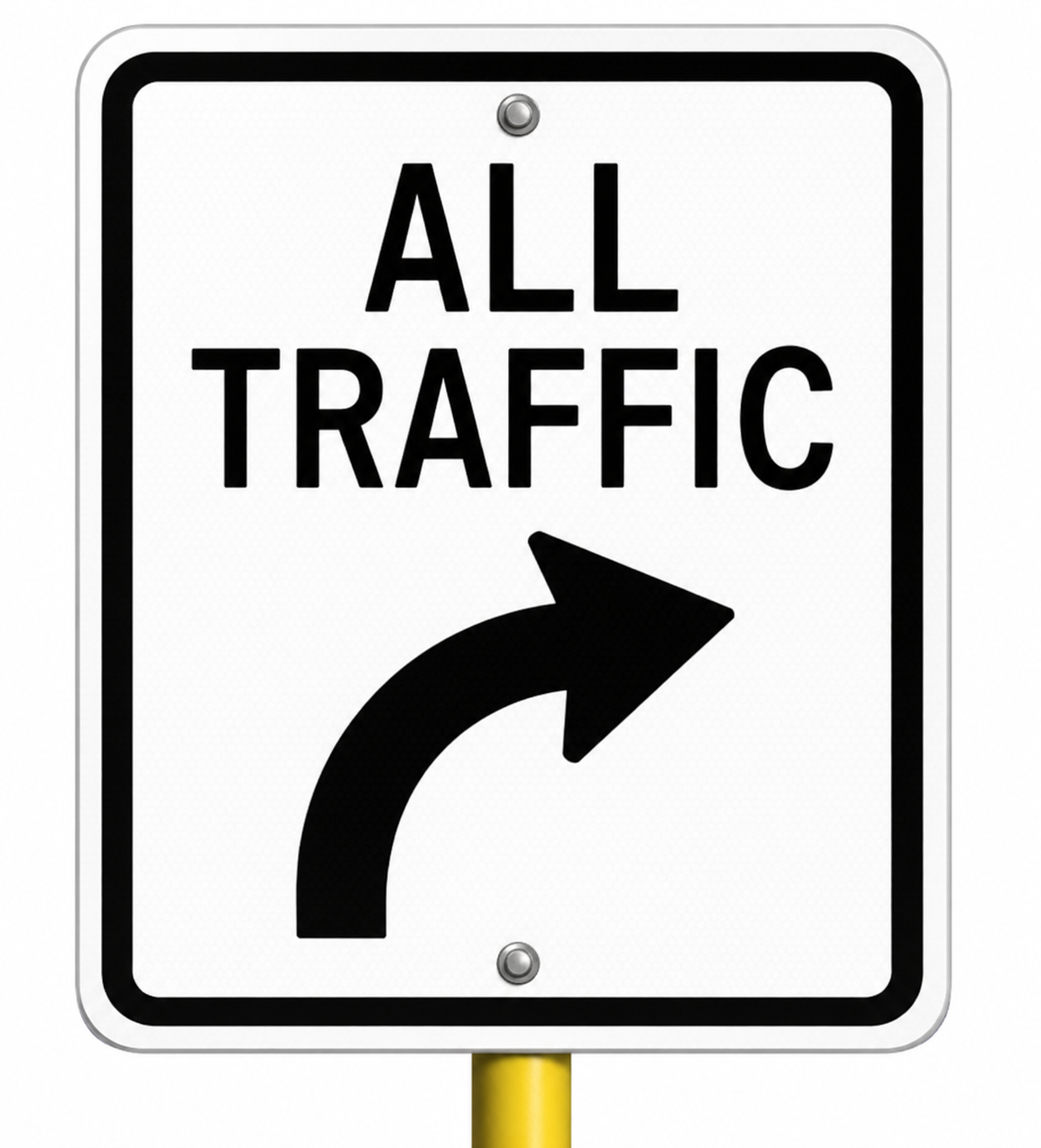
Follow the arrow unless you are turning left.
Road curves to the right ahead.
All traffic must travel in the direction of the arrow.
This is a mandatory instruction sign. Every vehicle reaching this point must turn in the direction indicated by the arrow, usually to maintain a safe and orderly flow of traffic.
Which one of the following statements is correct? Seat belts:
Do not have to be used in the rear seat.
Save lives and prevent injury.
Are not necessary for good drivers.
Seat belts are essential safety devices that significantly reduce the risk of death and serious injury during a collision.
When driving in wet weather, your vehicle will:
Take longer and further to stop, so slow down.
Stop in the same distance as on a dry road.
Handle better, so you can go faster.
Wet roads reduce tire grip, increasing your stopping distance significantly.
At traffic lights what is meant when a red light appears?
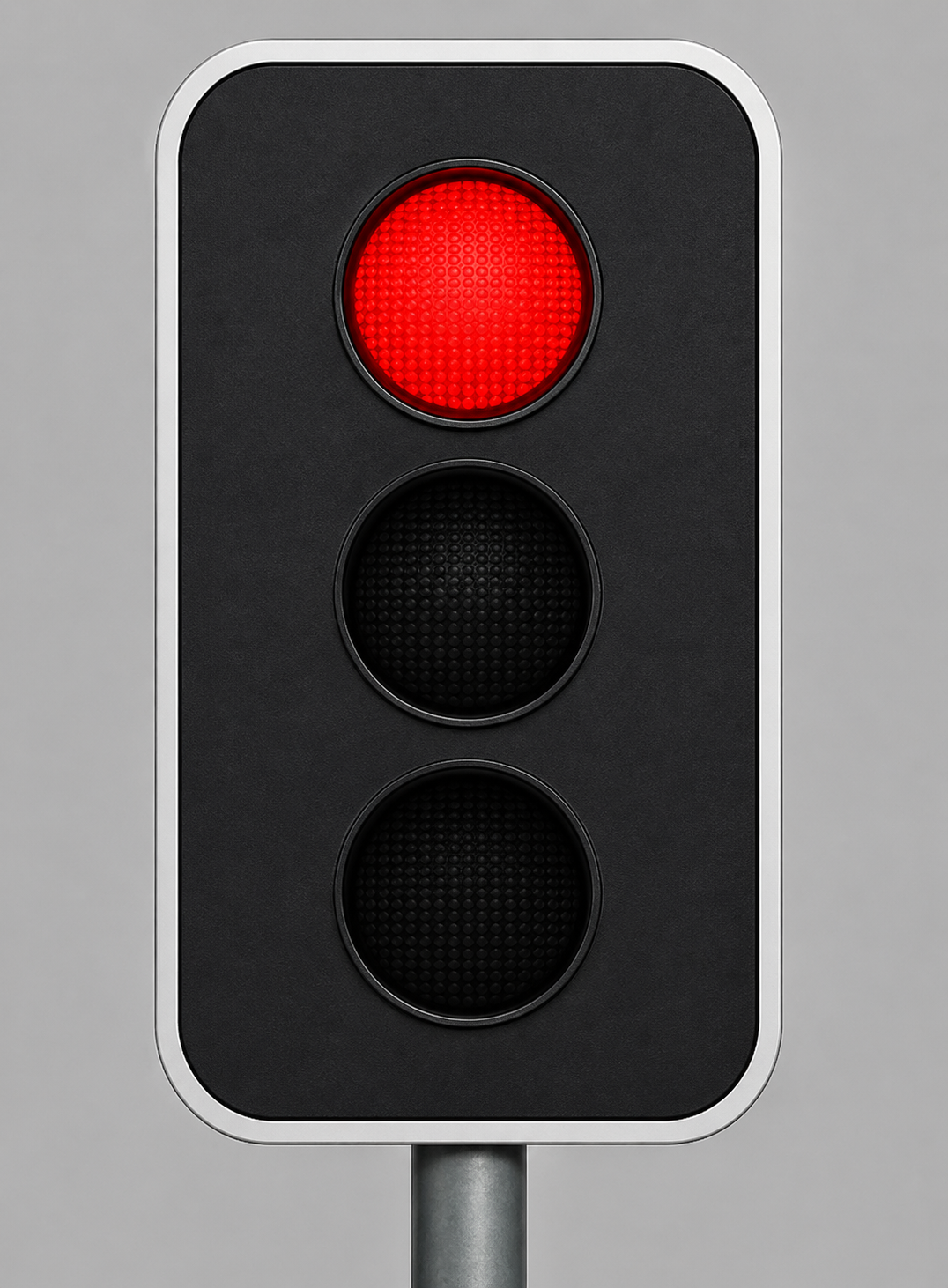
Stop, wait behind the stop line until the lights change to amber.
Stop, wait behind the stop line until the lights change to green.
Stop, make sure there is no traffic, then drive straight ahead.
A red light means you must come to a complete stop behind the stop line. You cannot proceed until the light turns green.
When you come to an intersection and the road beyond is blocked with vehicles going in the same direction, what should you do?
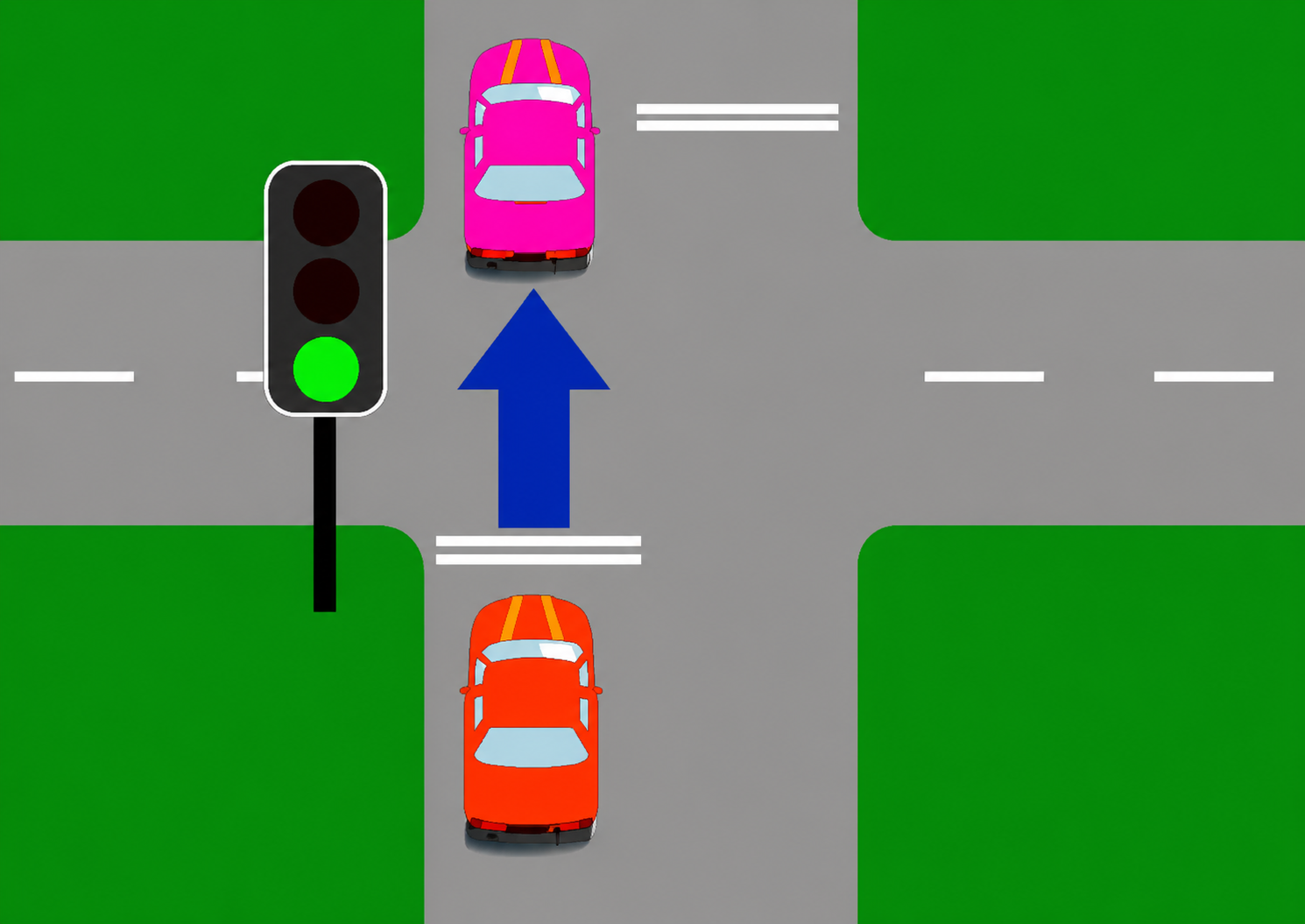
Proceed if there is no traffic on your right.
Wait until there is room for you to completely cross the intersection.
Travel into the intersection and wait until traffic ahead moves.
You must not enter an intersection if you cannot clear it completely. This prevents "blocking the box," which stops cross-traffic from moving when the lights change.
You are going to turn right from a one-way street. Where should you be when you start your turn?
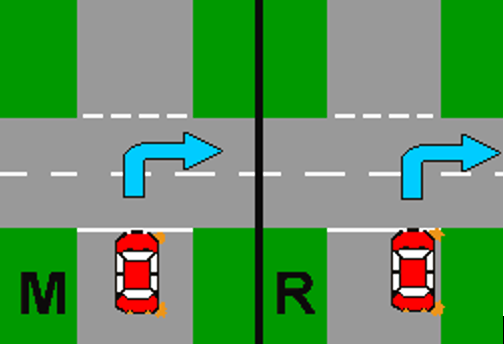
Position R. As close as possible to the right side of the road.
Any position if it is safe to do so.
Position M. In the middle of the road.
When turning right from a one-way street, you must position your vehicle in the far right lane to ensure a safe turn and allow other traffic to pass on your left.
If you are taking a drug for the first time, you should:
Take less than the recommended amount, if you are going to drive.
Drive 10-15 km/h slower than other traffic.
Not plan on driving.
Since you don't know how a new drug will affect your driving, you should avoid driving entirely until you are sure it's safe.
Which of the following statements is true? At intersections you should look for motorcyclists because:
They are harder to see.
They may want to turn.
They may slow down to let you turn.
Motorcycles have a smaller profile than cars, making them easier to overlook in traffic or blind spots, especially at intersections.
You are travelling in the left lane and wish to turn right at the intersection. You move to the right lane and a driver behind sounds their horn at you. What have you done wrong?
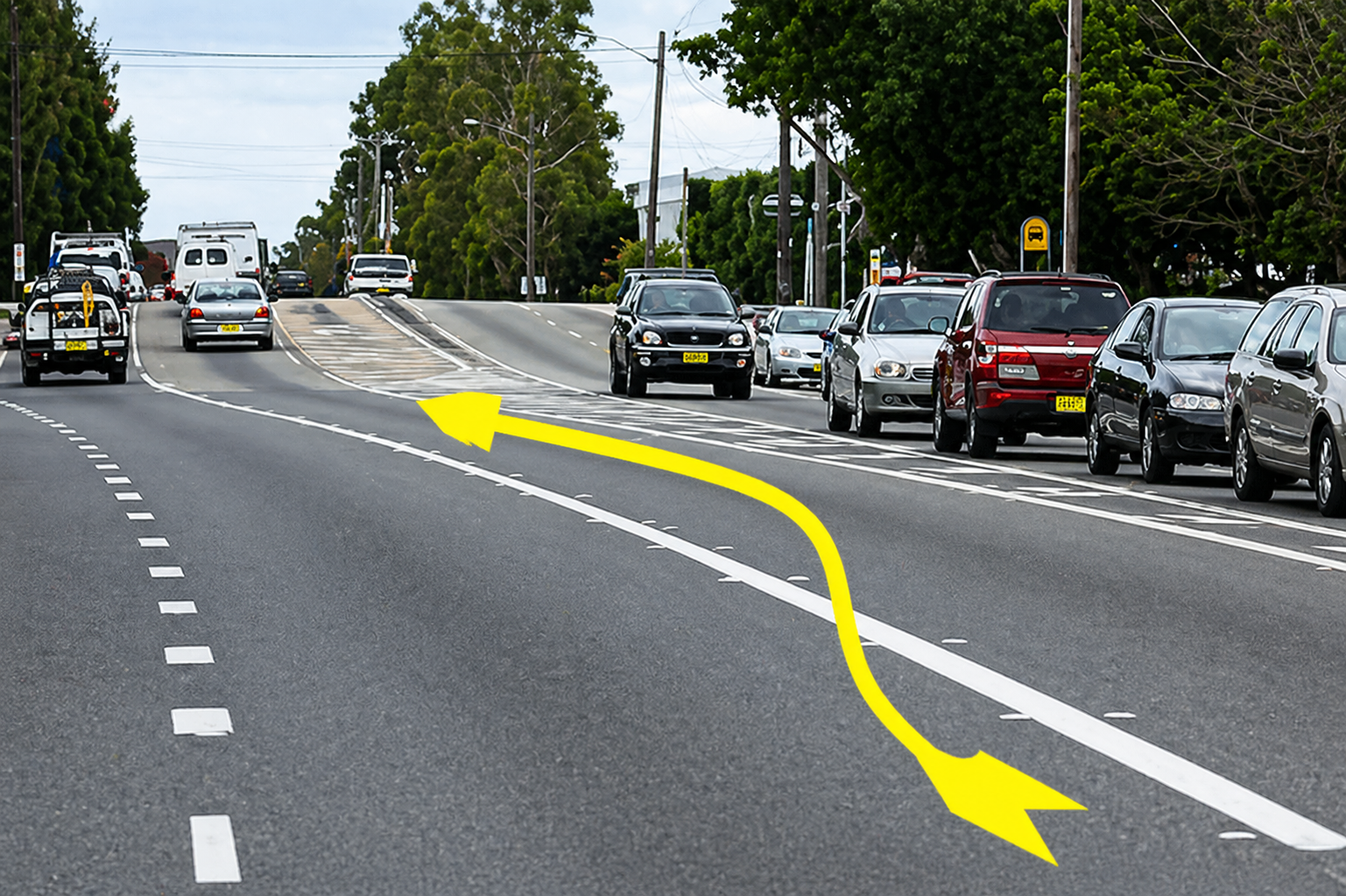
Changed lanes unnecessarily.
Crossed an unbroken lane line.
Driven too slowly.
It is illegal to cross a solid white (unbroken) line. These lines are typically used near intersections to discourage late, and often dangerous, lane changes.