Syllabus: NSW Road User Handbook (2026)
NSW DKT: Full Free Practice Test A
Foundational practice module for the official Service NSW Driver Knowledge Test.
Part 1: General Knowledge
15 Practice Questions
Part 2: Road Safety
30 Practice Questions
Question Format
Multiple Choice (3 Options)
⚠️ Practice Mode: This is a relaxed study session. You can complete all 45 questions to review the correct answers and gain confidence for the official exam.
Start DKT Test A
Ready to begin your first simulation?
Where must a learner driver's supervisor sit?
In the front or back seat.
In the seat next to the driver.
Directly behind the driver.
The supervisor must sit in the front passenger seat next to the learner to provide immediate guidance and intervene if an emergency occurs.
At this intersection, which vehicle must give way?
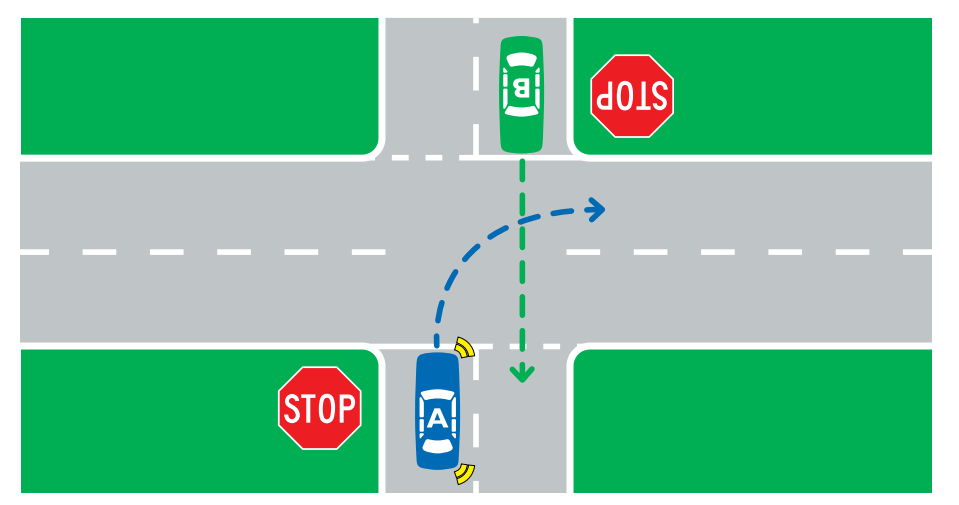
Vehicle A.
Vehicle B.
Neither vehicle.
Vehicle A must give way because it is at a STOP sign and must yield to all traffic on the intersecting road before turning.
In this situation, which vehicle must give way?
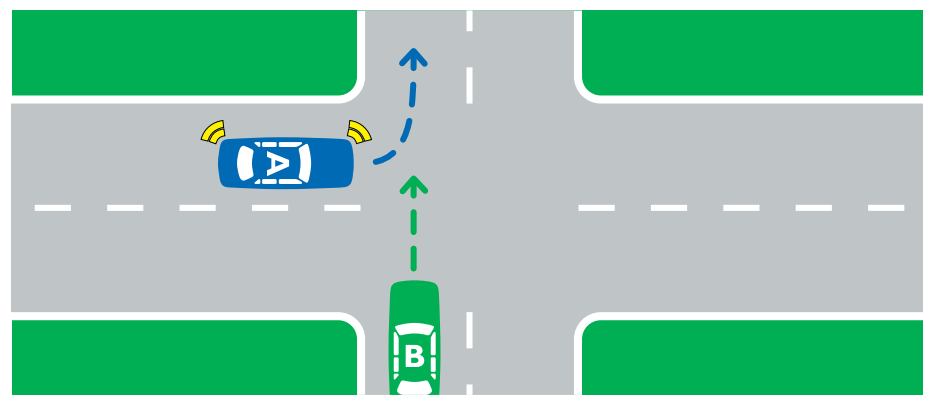
Vehicle A.
Vehicle B.
Neither vehicle.
Vehicle A must give way because it is turning left and must give way to the vehicle approaching from the right going straight.
What does this sign mean?
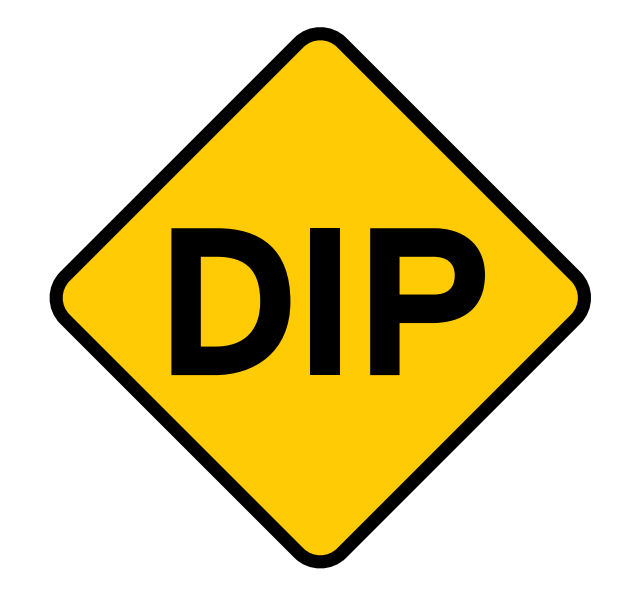
Sudden low point in the road.
Do not use high beam.
Uneven road ahead.
This sign warns of a dip or low section in the road, so drivers should slow down and be prepared for a sudden change in road level.
What is the penalty for driving with illegal drugs present in your system?
Only a verbal warning.
Mandatory vehicle impoundment.
A fine and loss of license.
If you are caught driving with illegal drugs in your system, you will face significant legal penalties including a monetary fine and the disqualification of your driver's license.
At an intersection with no signs or lights, you give way to:
Vehicles on your left.
No one, just go.
Vehicles on your right.
At an uncontrolled intersection (one without signs, traffic lights, or a roundabout), the basic rule is to give way to any vehicle approaching from your right.
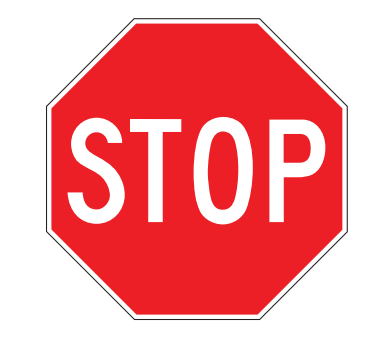
What must you do when you see a STOP sign at an intersection?
Slow down and proceed if clear.
Stop only if other vehicles are present.
Come to a complete stop before proceeding.
A STOP sign requires you to fully stop at the line or intersection and proceed only when it is safe.
How many log book hours must a learner under 25 complete?
50 hours.
100 hours.
120 hours.
Learner drivers under 25 years of age must complete at least 120 hours of supervised driving, including 20 hours of night driving, before taking the driving test.
What does this sign represent?
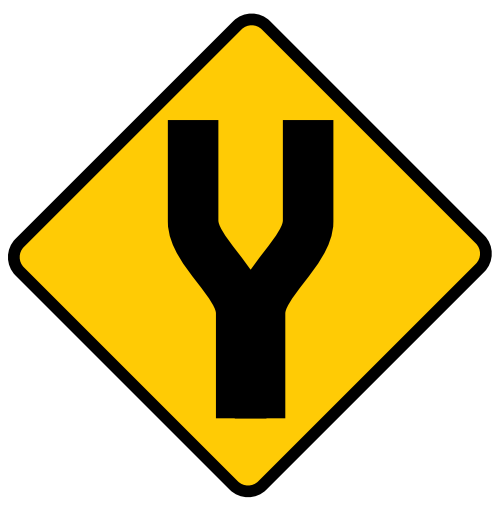
Road divides ahead.
Divided road ends.
Y-junction ahead.
This sign warns that the road ahead splits into two separate one-way directions, so drivers must choose the correct side to continue safely.
In good conditions, what gap should you keep from the vehicle ahead?
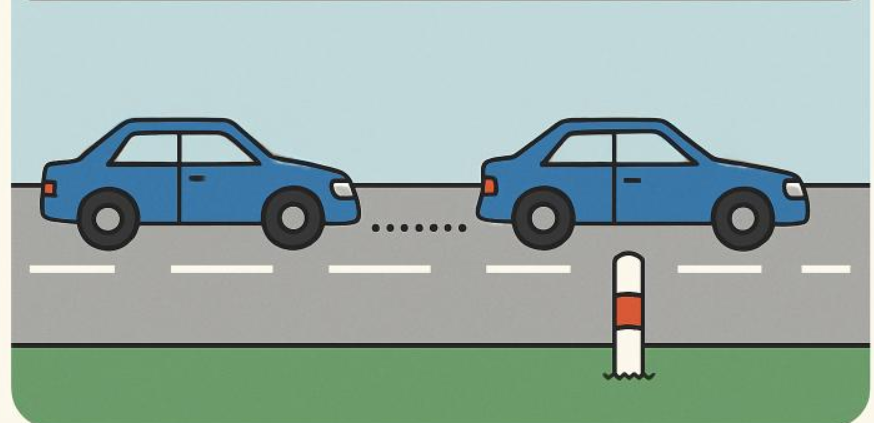
1 second.
2 seconds.
3 seconds.
In good driving conditions, a minimum 3-second gap helps ensure enough time to react and stop safely if the vehicle ahead slows suddenly.
Two vehicles are at GIVE WAY signs on opposite sides of an intersection. Vehicle A turns left and Vehicle B turns right. Who must give way?
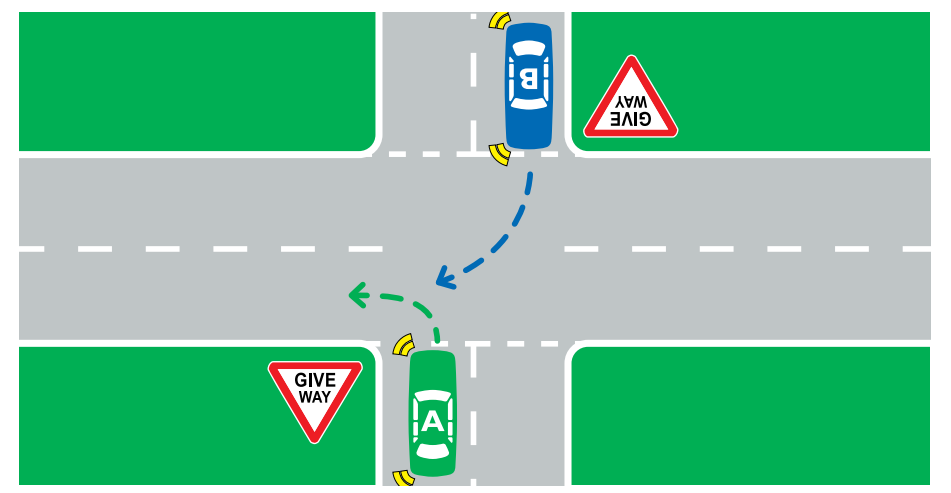
Vehicle B.
Vehicle A.
Both vehicles.
When both face Give Way signs, the vehicle turning right must give way to the vehicle turning left as it crosses its path.
What is the maximum speed limit for learner drivers?
80 km/h.
90 km/h.
100 km/h.
Regardless of the posted speed limit on the road, learner drivers in NSW must never exceed the maximum learner speed limit of 90 km/h.
Fatigue-related crashes are how much more likely to be fatal?
Equally likely.
Three times as likely.
Twice as likely.
Fatigue-related crashes are twice as likely to be fatal because a tired driver's reaction time is significantly delayed, often preventing them from braking at all before an impact.
How close can you park behind another vehicle when parallel parking?
As close as you like without touching.
Within 1 metre.
At least 2 metres away.
When parallel parking, you must leave no more than 1 metre from the vehicle in front or behind to ensure efficient use of parking space.
When can a private car travel in a lane marked by this sign?
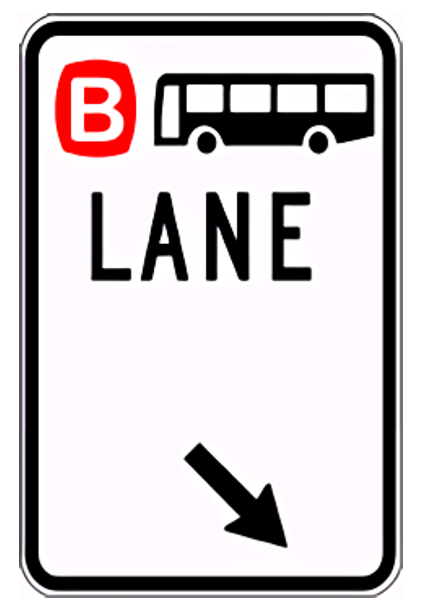
Only within 100 metres of making a turn.
When carrying at least two passengers.
Only to overtake another vehicle.
Drivers of private vehicles are permitted to drive in a bus lane for up to 100 metres only if they are intending to turn left or right.
At what age can you apply for a 10-year full driver licence?
18 to 25 years.
21 to 44 years.
25 to 60 years.
In NSW, you must be at least 21 years old and under 45 years old to be eligible to apply for or renew a 10-year unrestricted driver licence.
Can you park on a median strip or traffic island?
Yes, if space is available.
Yes, for a short time only.
No, not permitted.
Parking on a median strip or traffic island is prohibited because it can obstruct traffic flow and create safety hazards for road users.
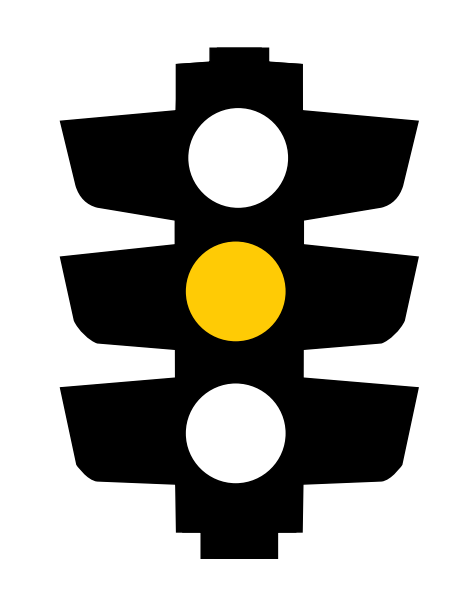
A yellow traffic light means you must:
Speed up to beat the red light.
Continue at the same speed.
Stop, unless it is unsafe to do so.
A yellow light is a warning that the light is about to change to red. You must stop your vehicle before reaching the stop line unless you are so close to the intersection that stopping would be unsafe or cause a crash.
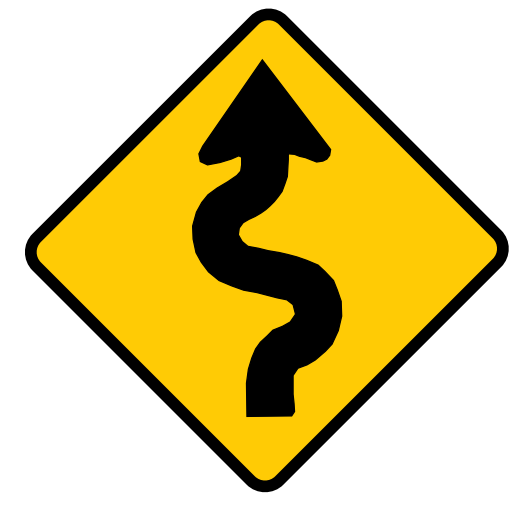
What does this sign mean?
First left then right turn.
Slippery road ahead.
Winding road ahead.
This sign warns you that the road ahead has a series of curves or is "winding." You should slow down and drive carefully as visibility and handling may be affected.
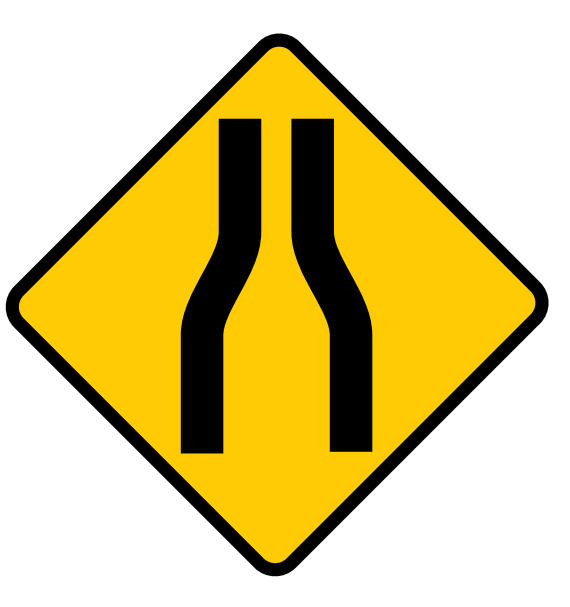
What does this sign mean?
Two-way traffic ahead.
Road narrows ahead
Narrow bridge ahead
This sign warns that the road becomes narrower on both sides, so drivers must reduce speed and be cautious of reduced space.
What is the speed limit in a school bus stop zone when lights flash?
25km/h.
40km/h.
50km/h.
You must slow down to 40km/h when passing a school bus with flashing lights to protect children who may be crossing the road.
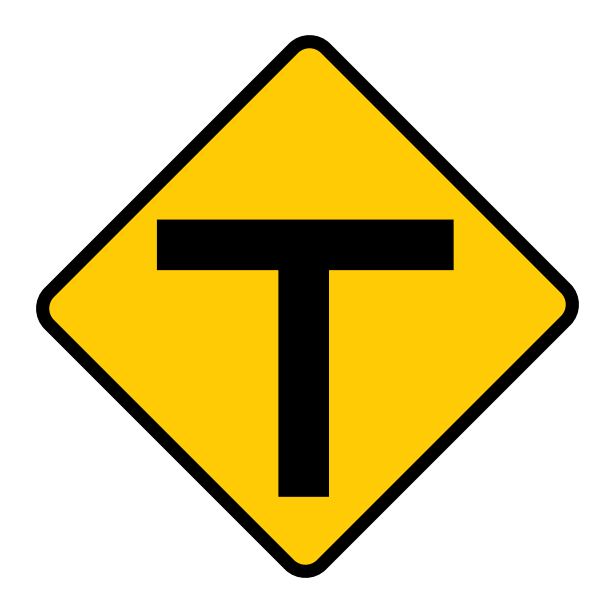
What does this warning sign represent?
The road turns into a highway.
Traffic merges from the left.
The road you are on ends.
The road you are traveling on terminates. You must turn left or right and give way to traffic on the through-road.
If you intend to turn left, are you required to give a signal?
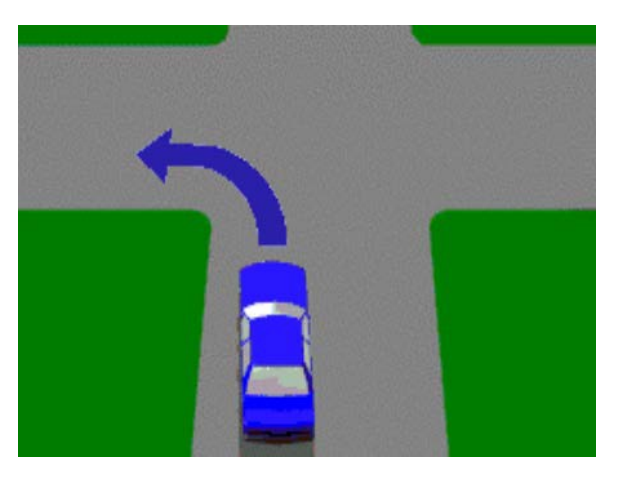
Yes, always.
Only if other vehicles are nearby.
Only at traffic lights.
You must signal before turning left to inform other road users of your intention and help prevent confusion or collisions.
What is the mobile phone restriction for P1 and P2 drivers?
No use while driving.
Only for navigation.
Hands-free only.
P1 and P2 drivers are not allowed to use a mobile phone in any way while driving, including hands-free or Bluetooth functions.
Two vehicles approach from opposite directions. Vehicle A is turning right and Vehicle B is going straight. Who must give way?
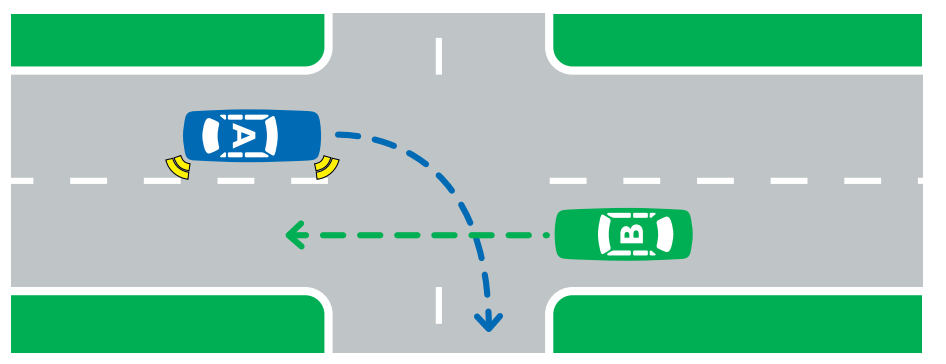
Vehicle A.
Vehicle B.
Both vehicles.
A vehicle turning right must give way to oncoming traffic going straight because it crosses their path.
What does this sign indicate?
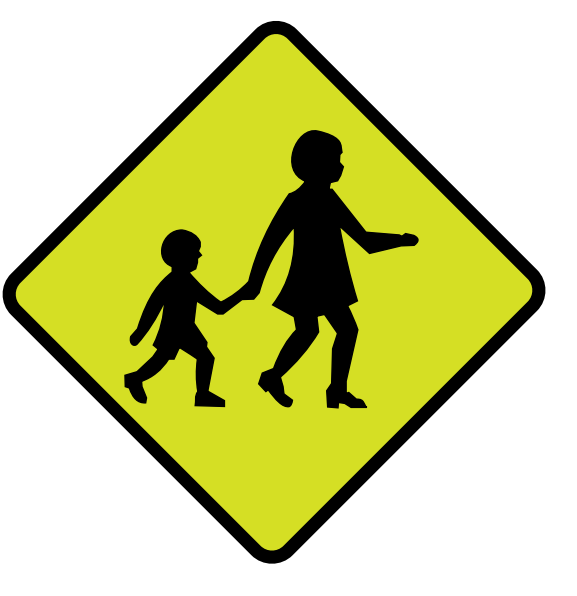
School zone ahead.
Children crossing ahead.
Pedestrian crossing only.
This sign warns that children may be crossing the road ahead, so drivers must slow down and be prepared to stop.
What is the legal BAC limit for Learner and Provisional drivers?
0.02.
0.05.
Zero.
Learner and Provisional drivers are subject to a strict zero alcohol limit, meaning they cannot have any alcohol in their system while driving.
What is the requirement for a child up to 6 months old?
Forward-facing seat.
Approved booster seat.
Approved rear-facing child car seat.
For maximum safety, infants up to the age of six months must be secured in a properly fastened and adjusted approved rear-facing restraint.
What type of collision occurs when a driver loses control on a gravel shoulder?
Head-on collision.
Run-off-road crash.
Rear-end collision.
When a vehicle's wheels drop onto a gravel or unsealed shoulder, it can cause the driver to lose control and the vehicle to leave the roadway entirely, resulting in a run-off-road crash.
When must you notify Transport for NSW about a medical condition?
Only when asked by police.
When applying for or holding a licence.
Only after an accident.
You must declare any medical condition that could affect your driving safety at the time of application or as soon as a condition develops.
How long can you drive in NSW with an Interstate licence?
6 months.
12 months.
3 months.
If you move to NSW from another Australian state, you must transfer your interstate licence to a NSW licence within three months of residing there.
What is the minimum age to take the Driving Test for a P1 licence?
16 years.
17 years.
18 years.
In NSW, drivers must be at least 17 years old and have held a learner licence for the required period before they can take the driving test for a P1 licence.
If two cars approach an intersection from opposite directions and both want to turn right:
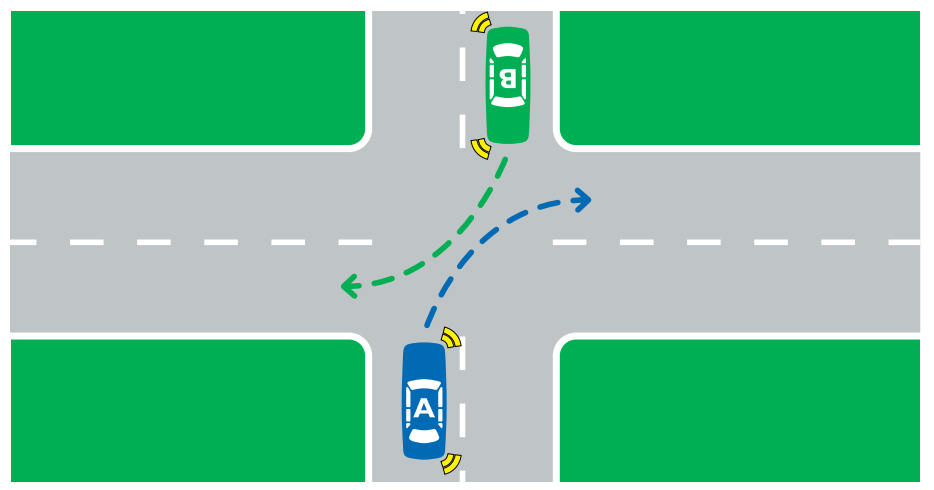
The car on the right goes first.
Only one can turn at a time.
They can both turn safely.
Both vehicles can usually turn simultaneously by passing in front of each other without crossing each other's path.
What is the default speed limit in built-up areas with street lights?
40km/h.
60km/h.
50km/h.
In built-up areas with street lights and no speed limit signs, the default speed limit is 50km/h to ensure the safety of all road users.
What does GLS stand for in the licensing process?
General Licensing System.
Graduated Licensing Scheme.
Guided Learner Scheme.
The Graduated Licensing Scheme is a staged system that helps new drivers safely gain experience before progressing to a full licence.
When turning left, you must give way to any pedestrians crossing:
The road you are leaving.
The road you are entering.
Only at marked crossings.
When turning into a new road, you must give way to any pedestrians who are already crossing that road.
How many adults can a Class C vehicle seat (including the driver)?
Up to 8.
Up to 10.
Up to 12.
A Class C (car) licence allows you to drive vehicles that seat up to 12 adults, including the driver, provided the vehicle does not exceed 4.5 tonnes GVM.
Before moving away from the kerb, what is the final check you should make?
Check over your shoulder.
Adjust your seat.
Fasten your seat belt.
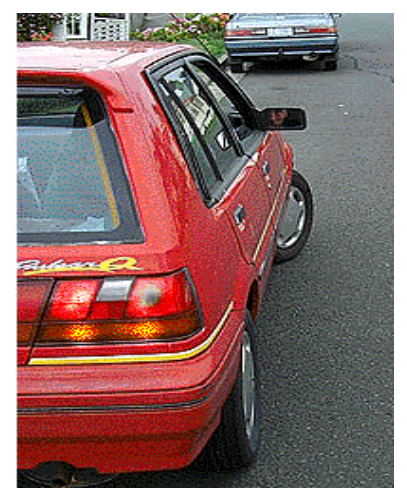
Before moving into traffic, you must check your blind spot over your shoulder to ensure no vehicles or cyclists are approaching.
What should you do in a Shared Zone when pedestrians are present?
Give way to them.
Sound your horn.
Maintain 20km/h.
In a Shared Zone, pedestrians have the right of way, and drivers must always yield to them while maintaining a very low speed.
How many hours can it take for BAC to return to zero after heavy drinking?
12 hours.
8 hours.
Over 18 hours.
Alcohol is processed by the body at a slow, fixed rate, and after heavy drinking, it can take more than 18 hours for your blood alcohol concentration to completely return to zero.
A sign showing a 'Side road junction' means:
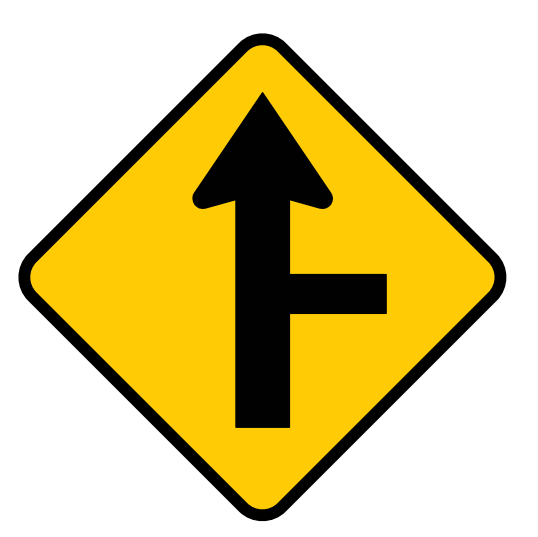
The road is closed ahead.
You must turn into the side road.
A road joins from the side.
This sign warns you that another road meets the one you are on from the side, so you should be alert for traffic entering or leaving the main road.
What does this sign indicate?
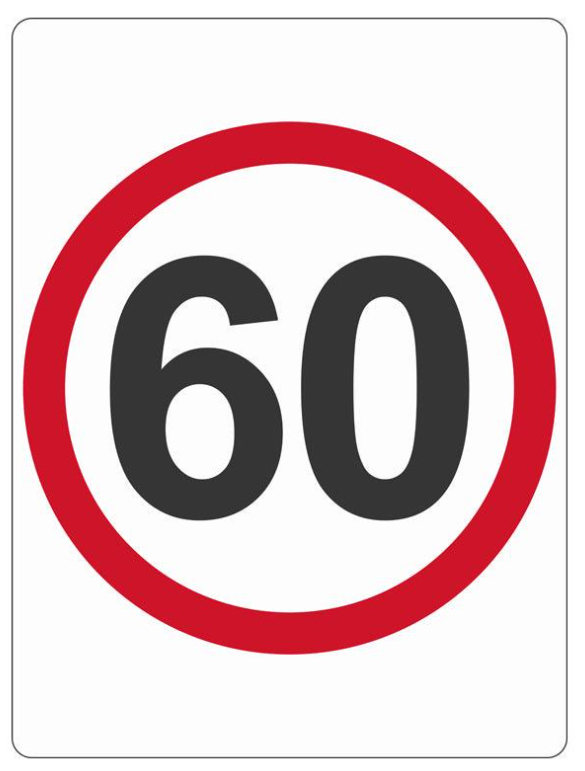
You are not to exceed 60 km/h.
You can go faster than 60 km/h.
You are on Highway 60.
This sign sets the maximum legal speed at 60 km/h, and drivers must not exceed this limit under normal conditions.
What must you do when you see a KEEP LEFT sign?
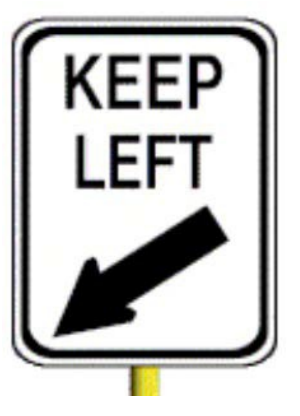
Keep to the left unless overtaking.
Stay on the left side of the road or obstacle.
Move left only when traffic is heavy.
A Keep Left sign requires you to pass to the left of a traffic island or obstruction at all times.
Can a child under 4 years sit in the front seat of a car with two rows?
Yes, always.
Only if the driver is a parent.
No, never.
For safety reasons, children under the age of 4 are strictly prohibited from sitting in the front seat of any vehicle that has two or more rows of seats.
Where there are double dividing lines, how far must you park from the lines?
At least two metres.
At least three metres.
One metre.
You must leave at least 3 metres between your vehicle and double dividing lines so other vehicles can pass safely without crossing the lines.