Syllabus: NT Road Users’ Handbook (2026)
NT Theory: Full Practice Test A
Complete practice set for the Northern Territory Learner’s Theory Test.
Part 1: General Knowledge
20 Practice Questions
Part 2: Road Rules
10 Practice Questions
Question Format
Multiple Choice (30 Total)
⚠️ Practice Mode: This is a relaxed study session. You can complete all 30 questions to review the correct answers, even if you make a mistake.
Start Practice Test A
Ready to master the questions?
Driving faster than the maximum speed limit is -
Never legally permitted.
Only permitted when other vehicles are going faster than the speed limit.
Permitted only when passing another vehicle.
Speed limits are the maximum legal speed you can drive in good conditions. Exceeding the limit is illegal at all times, even when overtaking or keeping up with the flow of traffic.
When approaching a marked pedestrian crossing and no pedestrians are in sight, you should:
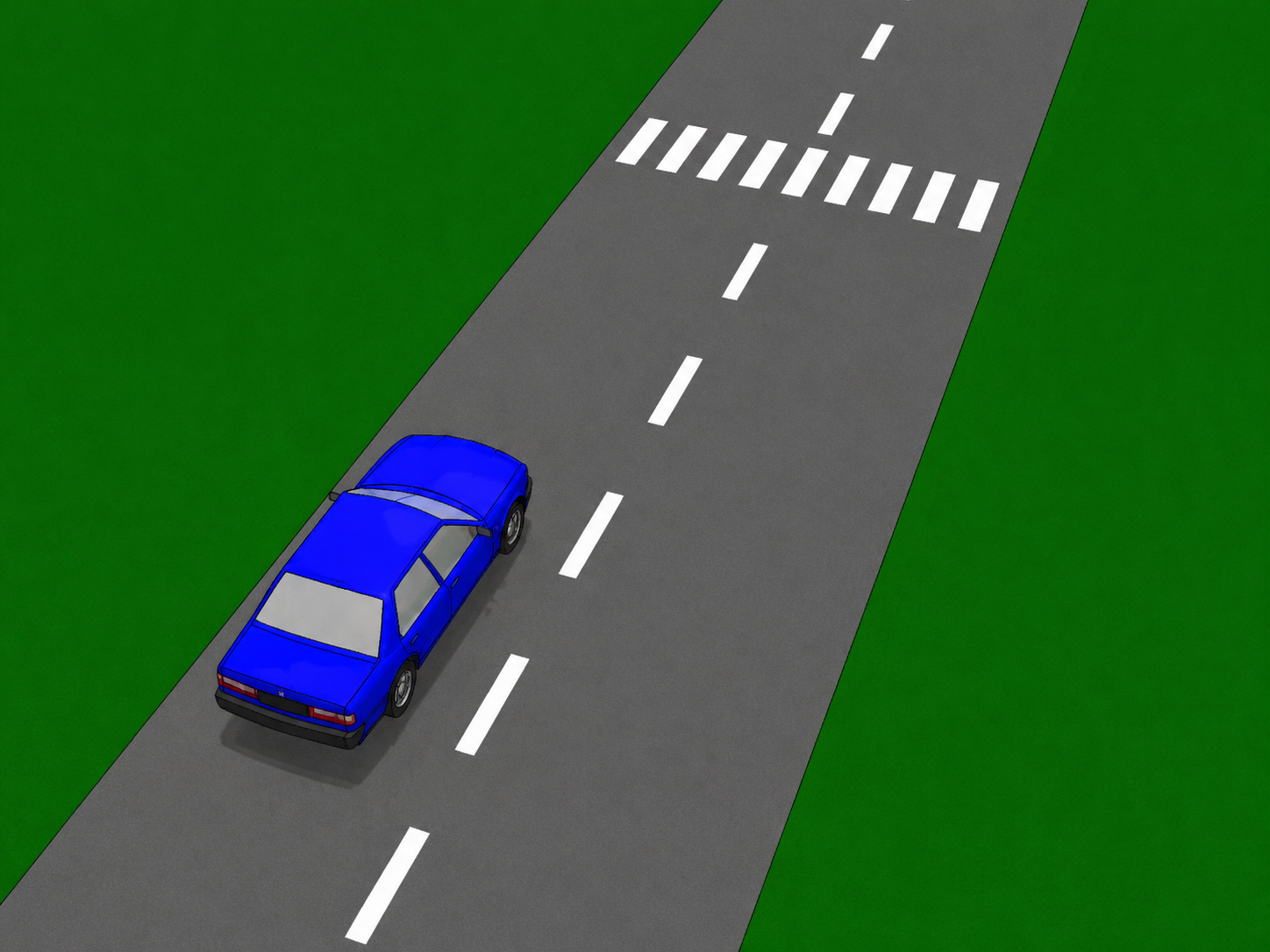
Come to a complete stop before the crossing.
Go faster, in case a pedestrian steps onto the crossing.
Slow down and be ready to make a safe stop.
Even if you don't see anyone, you should approach with caution and at a speed that allows you to stop safely if a pedestrian suddenly appears or starts to cross.
What should you do if you see this sign?
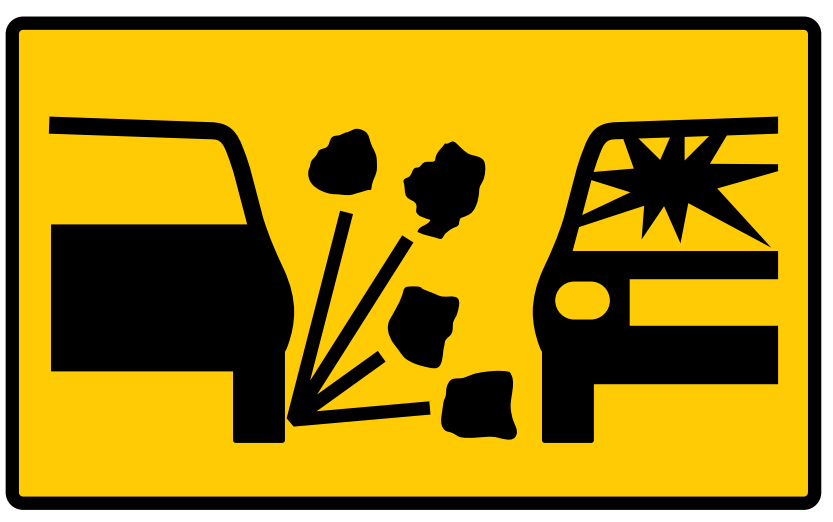
Slow down and watch out for loose stones.
Speed up to avoid damage from loose stones.
Visit the windscreen repair shop ahead.
This sign warns of loose stones; slowing down prevents them from flying up and causing damage.
You should not drive across a railway level crossing when:
You are towing a caravan.
A station is nearby.
Traffic is blocking the other side.
You must not enter a level crossing if the road beyond the crossing is blocked by traffic, as you could become stranded on the tracks.
If you are convicted of dangerous driving:
You could be given demerit points only.
You could lose your licence and may be sent to prison.
You could only be fined and given demerit points.
Dangerous driving is a serious criminal offense; penalties often include mandatory license disqualification and potential imprisonment.
When you come to an intersection and the road beyond is blocked with vehicles going in the same direction, what should you do?
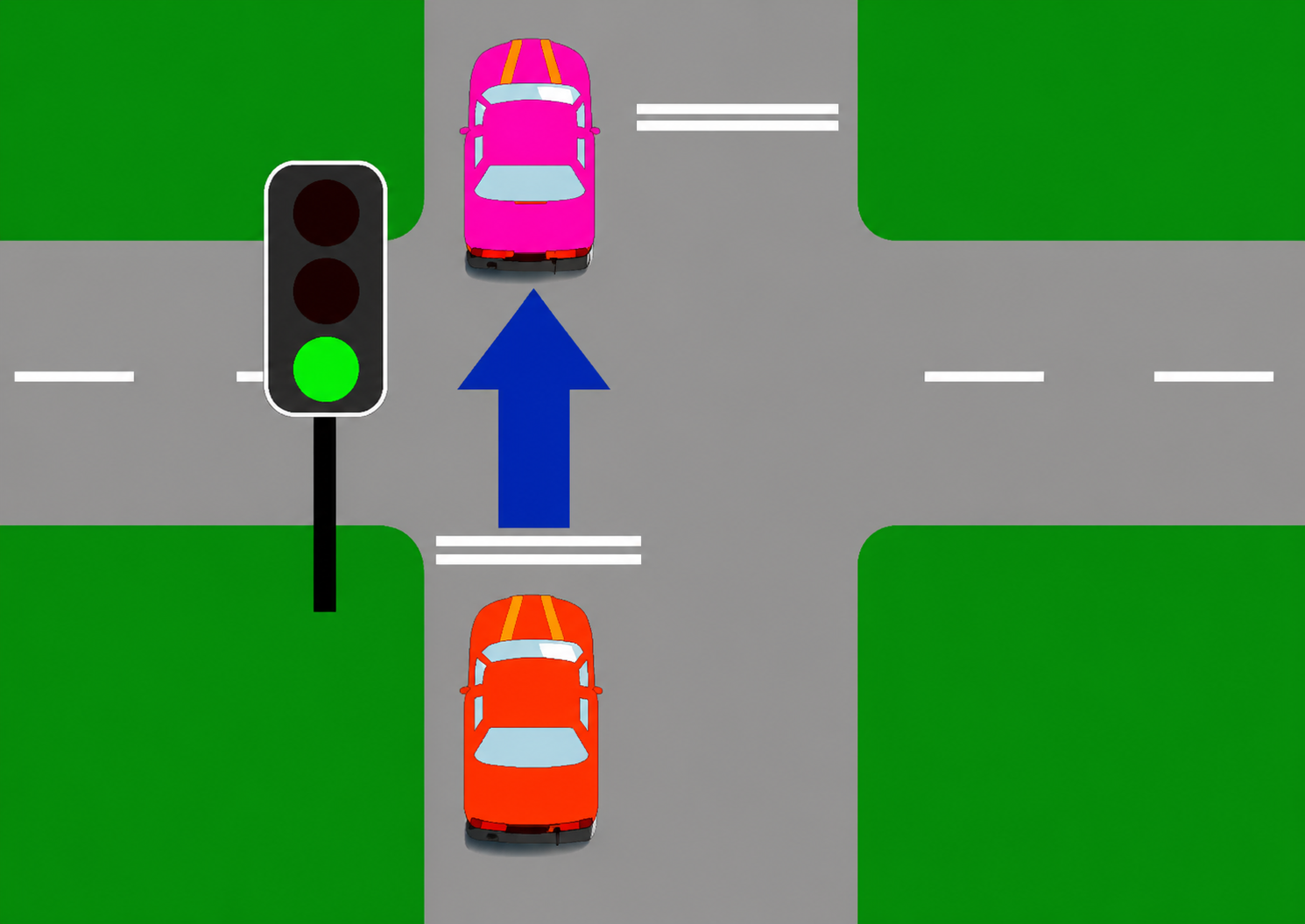
Travel into the intersection and wait until traffic ahead moves.
Wait until there is room for you to completely cross the intersection.
Proceed if there is no traffic on your right.
You must not enter an intersection if you cannot clear it completely, as stopping in the middle blocks cross-traffic and creates gridlock.
If you get sleepy while driving, out of the following, which is it best to do?
Stop, rest, and change drivers if possible.
Turn on the heater.
Turn on the radio very loud.
Taking a break or switching drivers is the only effective way to manage fatigue, as temporary distractions like loud music cannot overcome the body's need for sleep.
You are going to turn right from a one-way street. Where should you be when you start your turn?
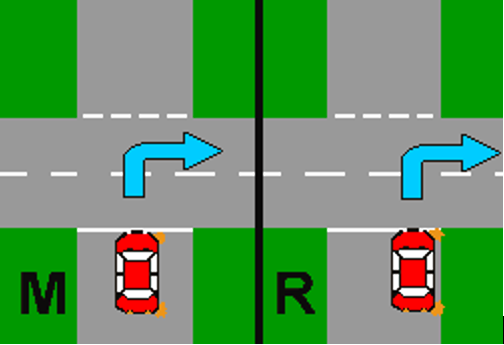
Any position if it is safe to do so.
Position M. From the middle of the road.
Position R. As close as possible to the right side of the road.
On a one-way street, you must turn from the far right lane to ensure you don't cut across other lanes of traffic.
You should use your right-hand indicator when:
You intend to move or turn to the right, at any time.
You are about to stop.
You intend to slow down.
You must always use your right-hand indicator to clearly communicate your intention to other road users before moving or turning toward the right.
Where there are double dividing lines, you may park:
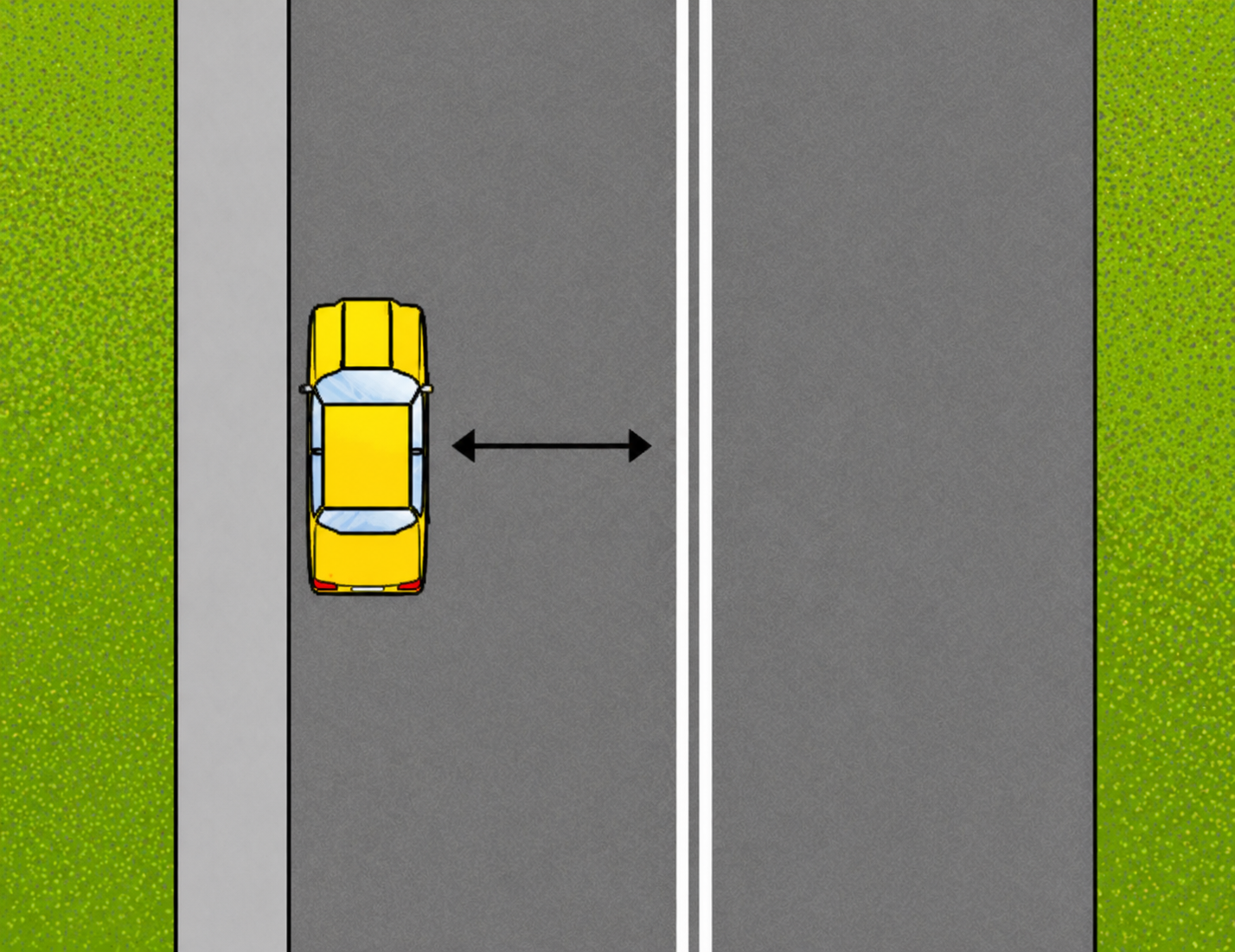
At least two metres from the dividing lines.
At least three metres from the dividing lines.
One metre from the dividing lines.
You must leave at least three metres of clear space between your car and the double lines to allow other vehicles to pass without crossing them.
When you see this sign you must:
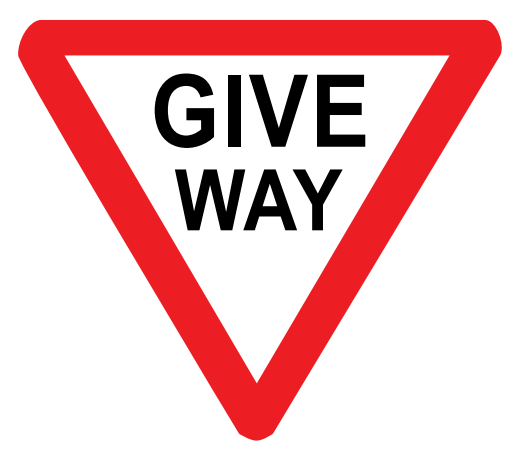
Slow down and be prepared to give way to traffic on your right only.
Stop and give way to all traffic even if the intersection is clear.
Slow down and be prepared to stop and give way to all traffic.
This sign requires you to yield to all traffic on the intersecting road, stopping if necessary to avoid a collision.
When it is very foggy during the day or night and your vehicle has no fog lights, you should:
Follow closer to other vehicles.
Put on your high beam lights.
Slow down and use your low beam headlights to make your vehicle seen.
Low beams direct light downward, reducing glare reflected by fog and helping other drivers see you. High beams reflect off fog and can blind you.
As you approach an intersection, you should check for traffic on your left and right:
Only when the traffic is heavy.
At all times before entering the intersection.
Only when you approach a stop sign.
Constantly scanning for traffic in both directions before entering an intersection is essential to anticipate potential hazards and ensure a safe crossing.
If you are driving through a road work zone in the left hand lane and you see this sign you should:
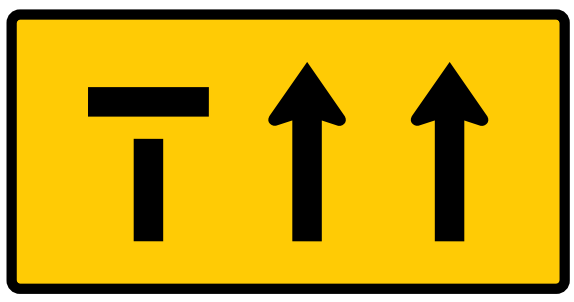
Stop and wait for directions.
Merge to the right and give way to other traffic.
Speed up to get in front of any cars traveling in the right hand lane.
This sign indicates that the left lane is ending due to roadworks, requiring you to safely merge into the adjacent right lane while yielding to traffic already in that lane.
This intersection does not have any traffic lights or signs. You are in car A and want to turn right. When can you go?
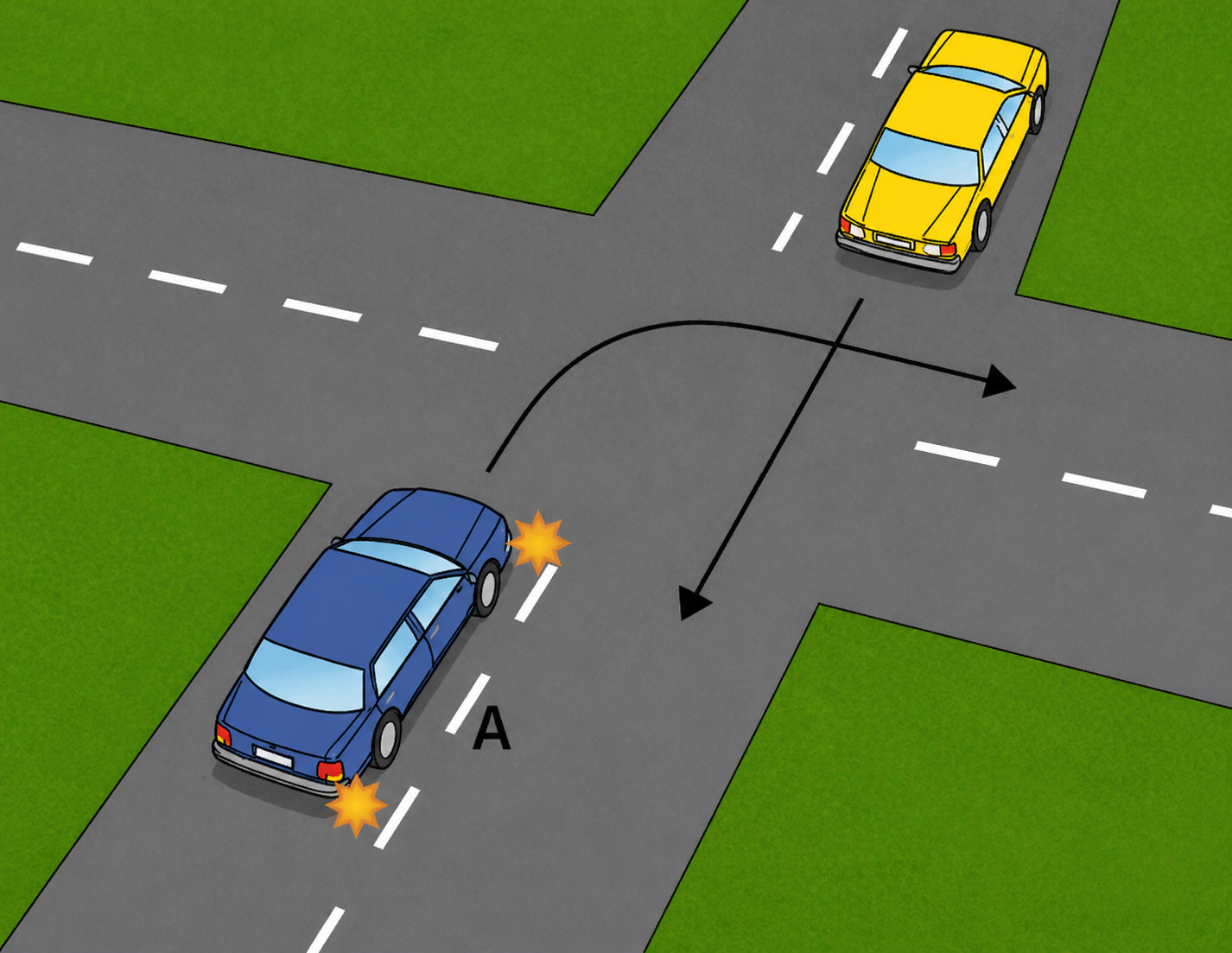
Before the car going straight ahead has passed.
As soon as you get to the intersection.
After the car going straight ahead has passed.
When turning right at an uncontrolled intersection, you must give way to oncoming traffic going straight or turning left.
To reduce the effect of alcohol before driving or riding you should:
Drink black coffee.
Wait. The time depends on how much you have had to drink.
Have a glass of water.
Time is the only factor that allows your body to process alcohol and lower your blood alcohol concentration to a safe level for driving.
You are in the pink vehicle, you may overtake the vehicle in front:
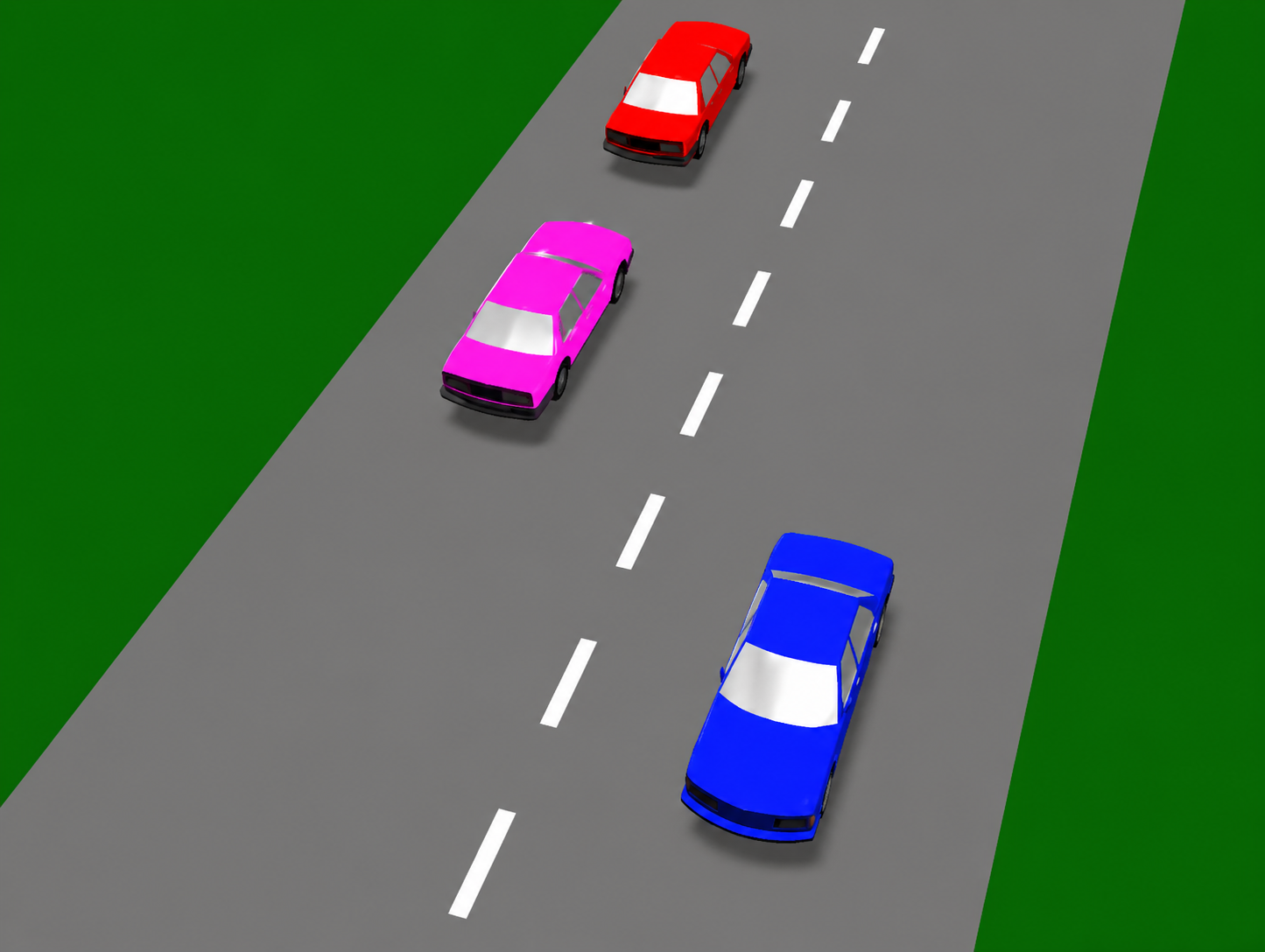
Not at anytime.
On either side.
Only on its right-hand side.
In Australia, you must normally overtake on the right-hand side to maintain a safe and predictable traffic flow.
You must give way to pedestrians on a marked pedestrian crossing:
If there is any danger of a collision.
When they are crossing from your right only.
When they are crossing from your left only.
You must yield to pedestrians on a marked crossing regardless of which side they are approaching from to ensure their safety and prevent any potential accident.
You drive up to an intersection with a stop sign in the car marked A and you wish to turn right. The car marked B facing you also has a stop sign and is indicating to turn left. Who can go first?
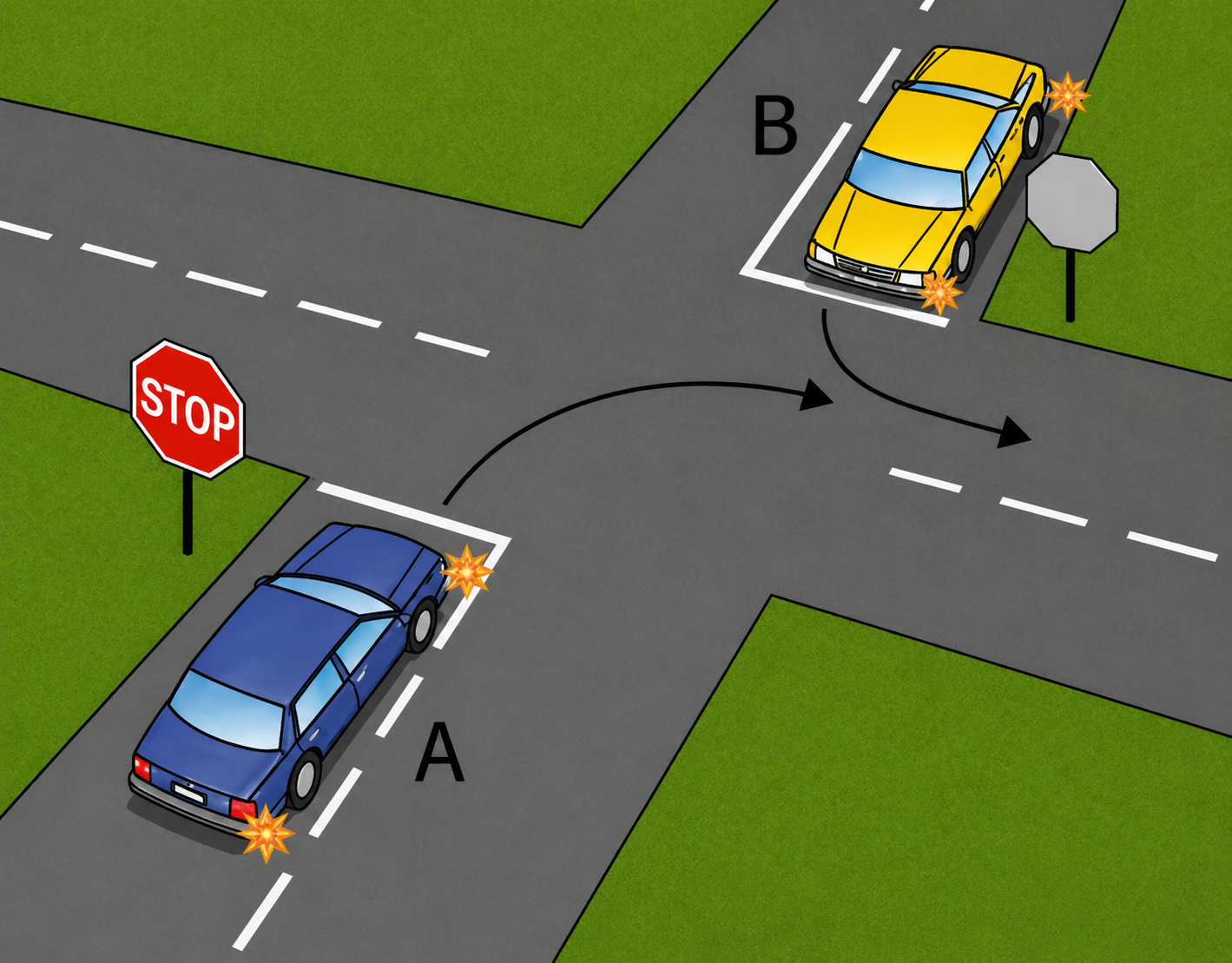
Car B.
Car A.
Whoever arrives at the intersection first.
When two vehicles face each other at Stop signs, the driver turning right must give way to the oncoming driver turning left.
A GIVE WAY sign at an intersection means that you must:
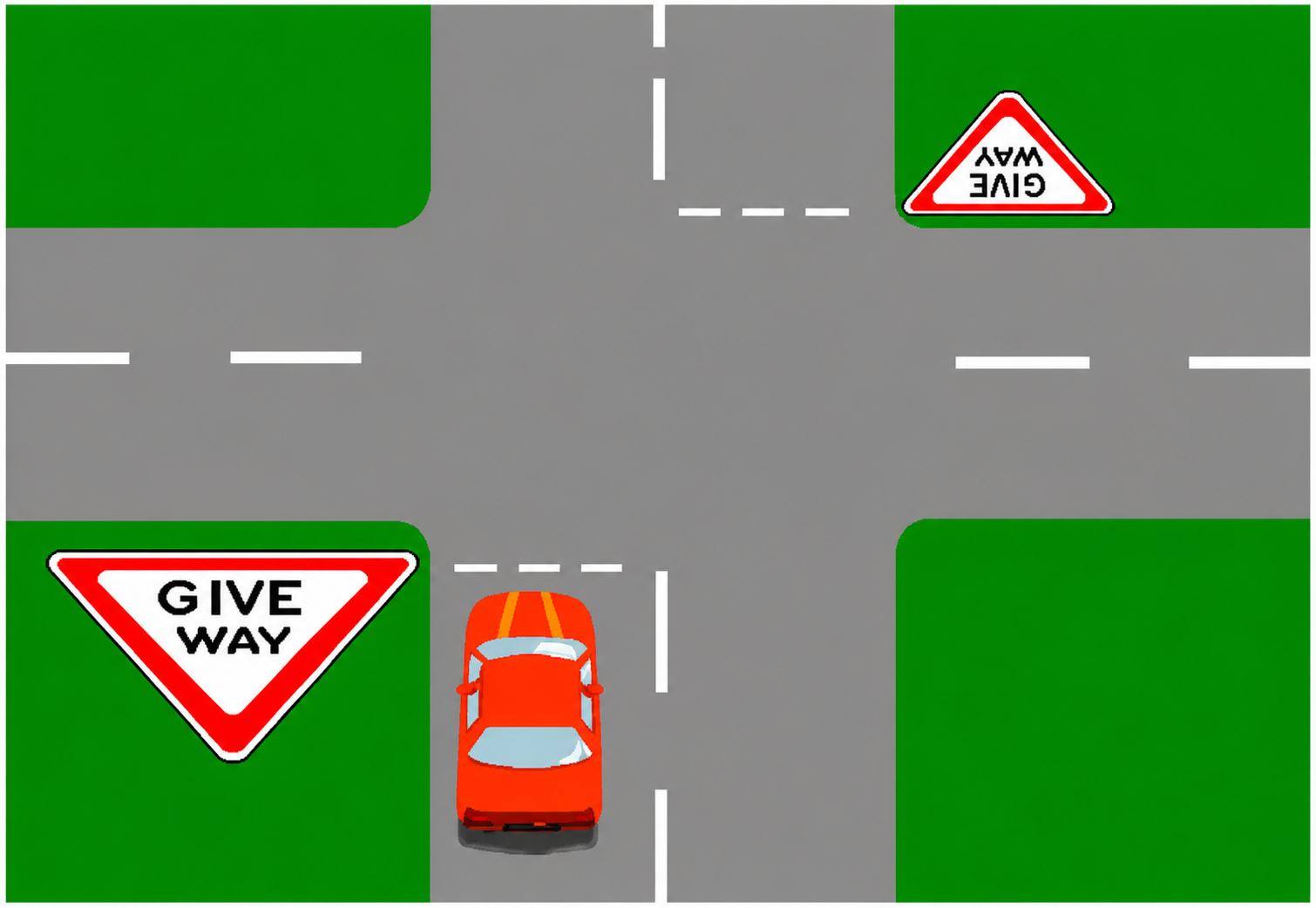
Stop completely at all times and have no right of way.
Be ready to stop and give way to all other traffic if there is danger of a collision.
Slow down and only give way to traffic on your right.
A Give Way sign requires you to slow down and prepare to stop to let any traffic on the crossroad pass before you enter the intersection.
When entering or leaving a driveway you must:
Give way to bicycles, vehicles and pedestrians.
Stop and give way only to vehicles.
Blow your horn to warn other road users.
You must yield to all other road users, including those on the footpath or cycle path, to ensure safety when crossing their path to enter or exit a property.
It is 3 o'clock in the morning. You cannot see any other traffic. You want to turn right. You may:
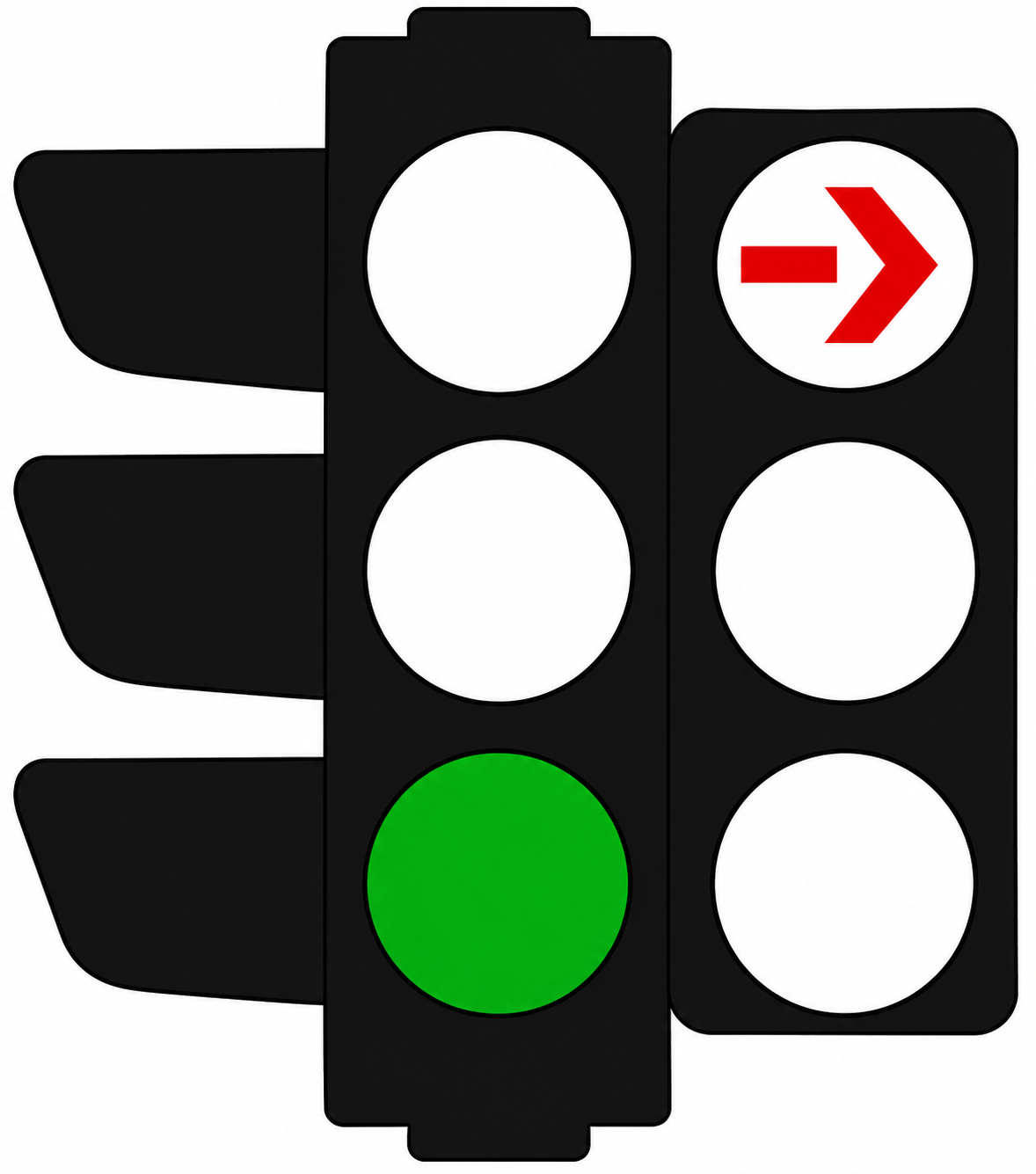
Turn right when you have waited one minute.
Turn right if it is safe to do so.
Not turn right while the arrow is red.
You must always obey a red traffic light or arrow, regardless of the time of day or the absence of other traffic.
Before taking any drugs and then driving it is most important to:
Plan to have some other person with you.
Know what the effects of the drug are.
Have some food in your stomach.
Different drugs can impair your reaction time and judgment; you must understand these side effects before operating a vehicle.
The diagram shows a priority sign for buses. Which of the following statements is correct?
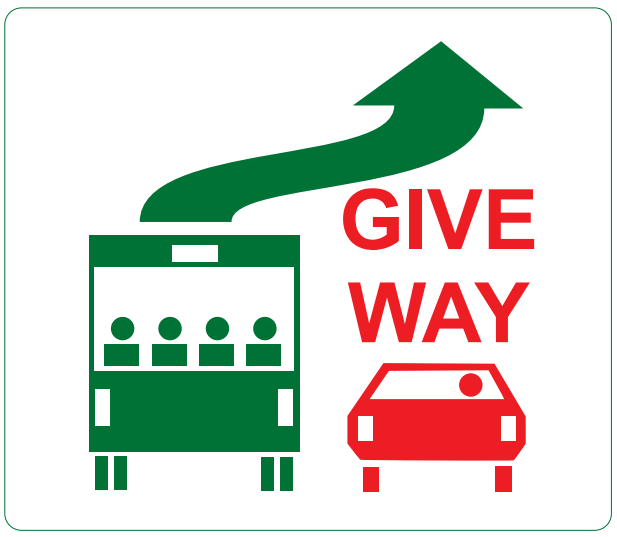
Priority applies at all times.
Priority does not apply when the speed limit is 40 Km/h.
Priority applies when the bus is travelling in a built-up area.
In built-up areas, you must give way to a bus that is displaying this sign and signaling its intention to pull out from a bus stop into the left lane.
When travelling behind a motorcycle you should:
Sound your horn and flash your lights to get them to move out of the way.
Allow for extra space between you and the motorcycle.
Sit as close as possible.
Motorcycles can stop more quickly than cars and are more vulnerable to road surface changes; maintaining extra following distance ensures you have enough time to react safely.
When driving on a multi-lane road with a speed limit of more than 80 km/h, which lane should you choose?
The left lane unless overtaking.
Either left or right lane.
The right lane to avoid slow moving vehicles.
On high-speed roads, you must keep to the left lane to allow faster traffic to pass safely in the right-hand lanes.
It is 4:30pm on a school day. You are driving at 60 km/h, the same speed as traffic around you. You approach this sign but the other cars do not slow down much. What should you do?
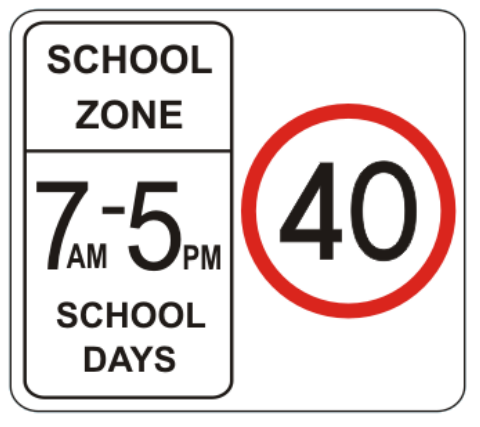
Drive at the speed of the other drivers because it is safer to go with the flow of traffic than slow others up.
Stay at 60 km/h because it is nearly 5pm and the times on the school sign are only advisory.
Slow down immediately to 40 km/h or less even though other drivers want to go faster.
Since it is 4:30pm on a school day, the 40 km/h limit is legally enforceable; you must comply with the sign regardless of the behavior of other drivers.
You are about to move away from the kerb in your car. What is the last thing you should do before you move into traffic?
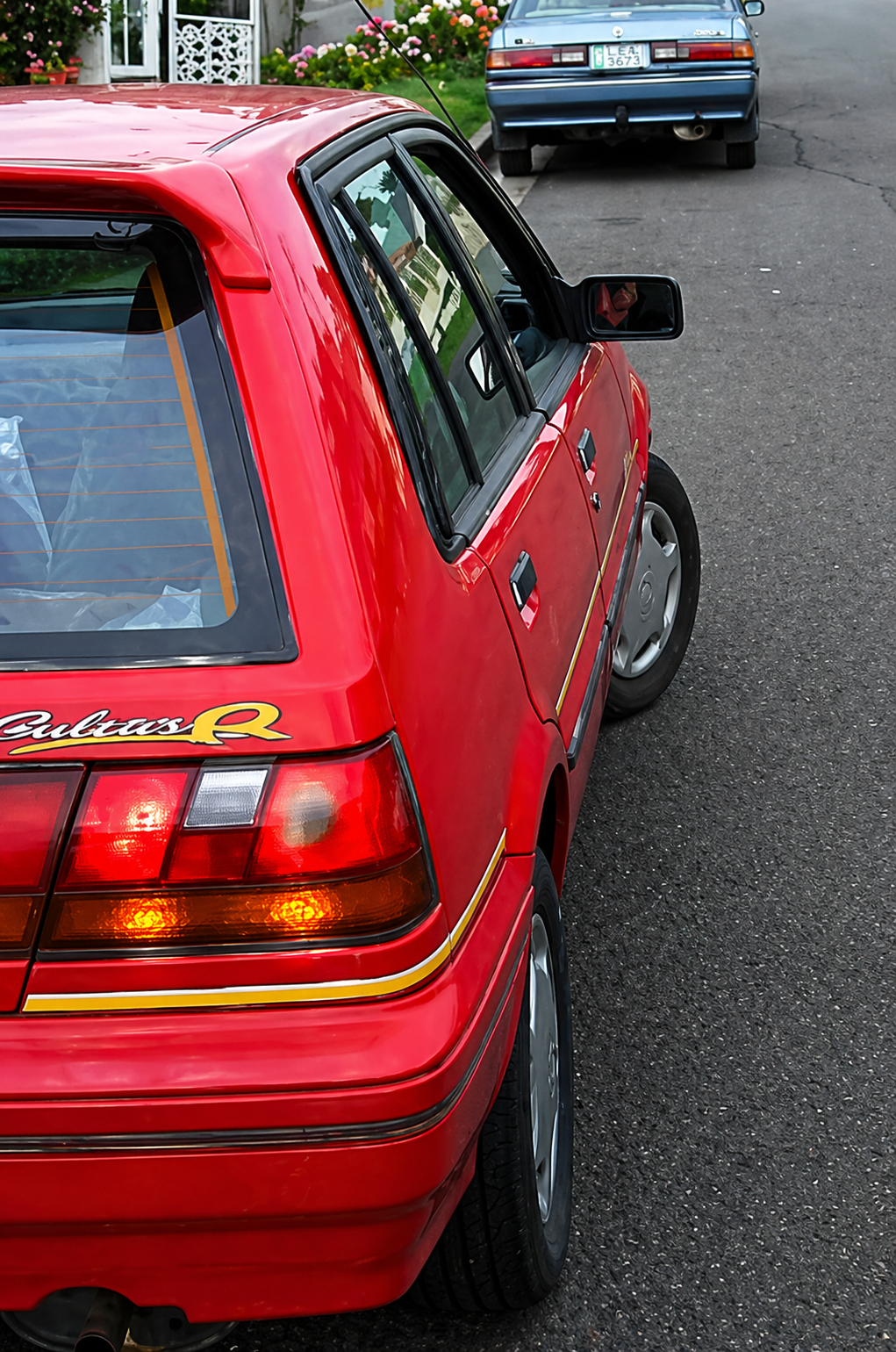
Adjust your seat.
Put on your seat belt.
Complete a shoulder check.
A shoulder check covers the blind spots your mirrors miss, ensuring it is safe to pull out.
When passing a cyclist in a speed zone of 60km/h or less, what is the recommended passing distance?
1 metre.
1.5 metres.
Stay as close as possible.
In speed zones of 60km/h or less, drivers must maintain a minimum lateral distance of at least 1 metre when overtaking a bicycle rider.
Alcohol is a depressant. This means:
It makes you calm down and think more clearly.
It slows down how quickly your brain works.
It speeds your brain up so you can work better.
As a depressant, alcohol affects the central nervous system by slowing down vital functions, resulting in impaired judgment and slower reaction times while driving.