Syllabus: Your Keys to Driving in QLD (2026)
QLD Road Rules: Full Practice Test A
Official 30-question simulation for the TMR Queensland Learner Licence.
Part 1: Give Way
10 Mandatory Questions
Part 2: Road Rules
20 Practice Questions
Pass Threshold
90% (27/30 Correct)
⚠️ Study Mode: This is a standard practice session. It covers all core topics including intersections, signage, and the Fatal Five safety rules.
Start QLD Test A
Ready to master the basics?
You are driving vehicle C. You must give way to:
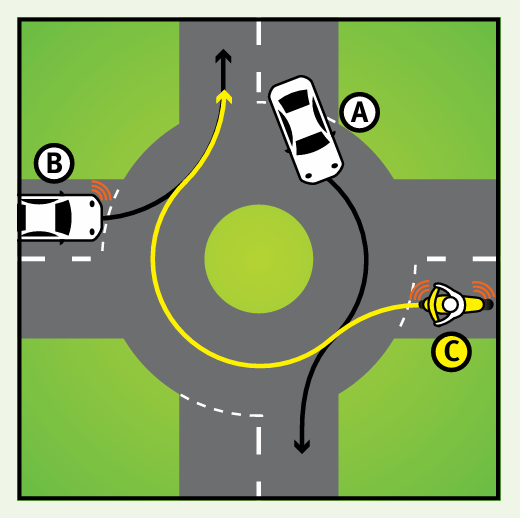
Both vehicle A and B.
Vehicle A only.
Neither vehicle A or B.
You must give way only to vehicles already on the roundabout, so vehicle C gives way to A but not to B.
Which vehicle should give way at this roundabout?
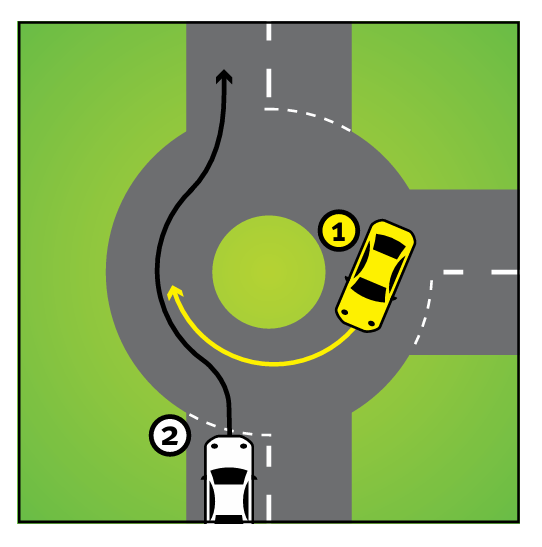
Vehicle 2 must give way to Vehicle 1.
Vehicle 1 must give way to Vehicle 2.
Both proceed without giving way.
At a roundabout, vehicles entering must give way to vehicles already on the roundabout.
What does this signmean?
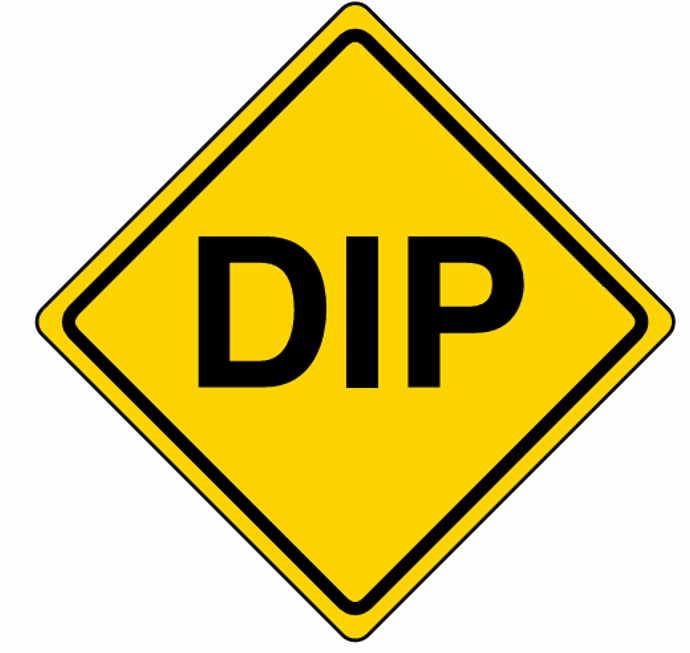
A low section in the road ahead.
A narrow bridge ahead.
A raised hump ahead.
This sign warns that the road dips suddenly, so you must reduce speed to maintain control and avoid damage.
what does this sign mean?
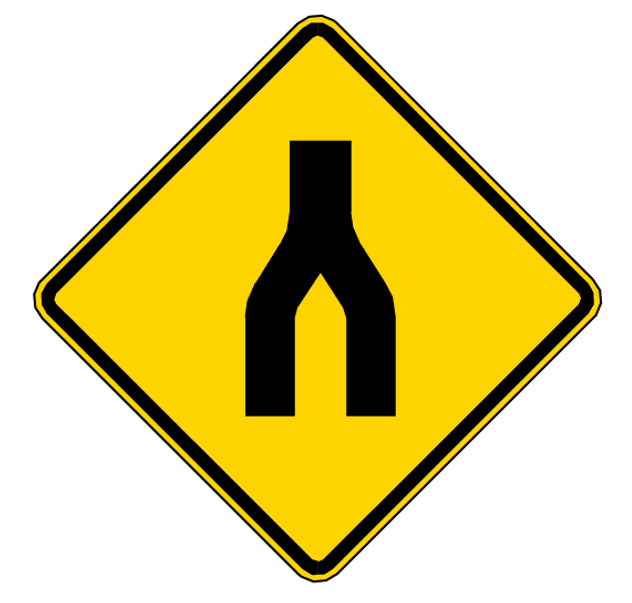
End of divided road.
Divided road begins.
Y-intersection ahead.
This sign warns that the median or separation between directions is ending, so you must be prepared for opposing traffic to merge closer.
Who has total priority in a 'Shared Zone'?
Cars and bicycles.
Public buses.
Pedestrians.
In a shared zone, pedestrians have right of way over all other vehicles, including cars and bicycles. Drivers must always give way to them.
A hand signal with the arm straight out indicates:
Left turn.
Right turn.
Slowing down.
Extending your right arm straight out of the window is the manual signal used to indicate you are turning right.
Default speed limit in a built-up area (no signs) is:
40 km/h.
50 km/h.
60 km/h.
In Queensland, the default speed limit in a built-up area is 50 km/h unless otherwise signed.
What does this sign represent?
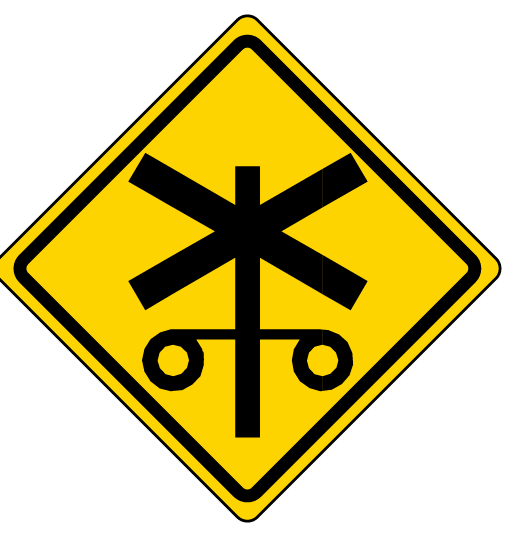
Railway level crossing ahead.
Road works ahead.
Tram crossing ahead.
This sign warns that a rail crossing is ahead, so you must be alert and prepared to stop for trains.
At an unmarked intersection, you must give way to:
All vehicles on your left.
All vehicles on your right.
No one; first to arrive.
At a crossroad intersection where there are no signs, lines, or traffic lights, the basic rule is to always give way to vehicles approaching from your right.
what does this sign indicate?
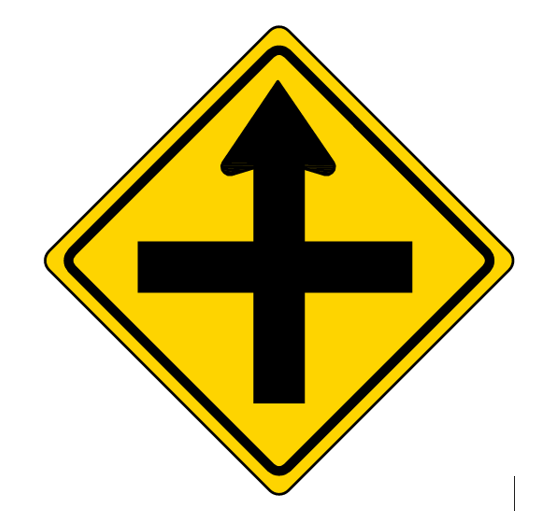
Crossroad intersection ahead.
A Double T-intersection ahead.
Helicopter landing pad ahead.
This sign warns that a four-way intersection is ahead, so you must be alert for traffic from all directions and be prepared to give way if required.
When should you use high beams in fog?
Always use high beams.
When no cars are around.
Never; low beam is better.
High beams reflect off fog back into your eyes, while low beams provide better visibility by directing light downward.
A child aged 0 to 6 months must be in:
Forward facing restraint.
Rearward facing restraint.
Booster seat.
Infants under 6 months must be secured in an approved rearward-facing restraint to provide the best protection for their head and neck.
You are driving the vehicle shown. In what direction must you travel?
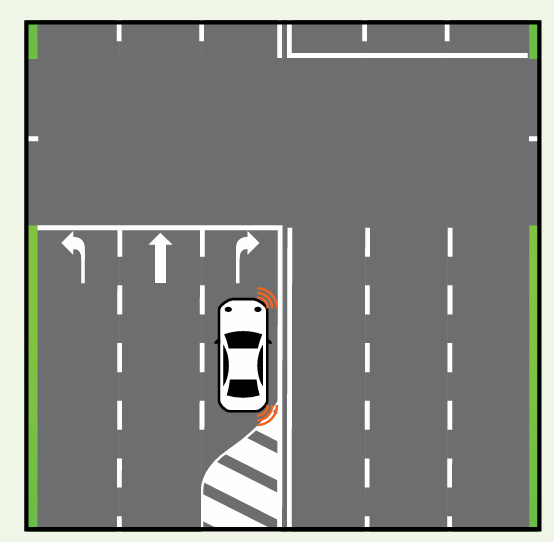
Turn right or go straight.
Go straight only.
Turn right only.
The lane marking shows a right-turn arrow, so you must turn right and cannot go straight or left.
If you miss your exit in a tunnel, you should:
Reverse back to the exit.
Make a u-turn.
Continue to the next exit.
You must never reverse, stop, or attempt a u-turn in a tunnel; always drive forward until you reach the next available exit.
A 'Pilot' vehicle for an oversize load is identified by:
Red flashing lights.
Blue wigwag lights.
Yellow flashing lights.
Pilot vehicles use yellow flashing lights and signage to warn other drivers of an approaching oversized load.
What does this sign indicate?
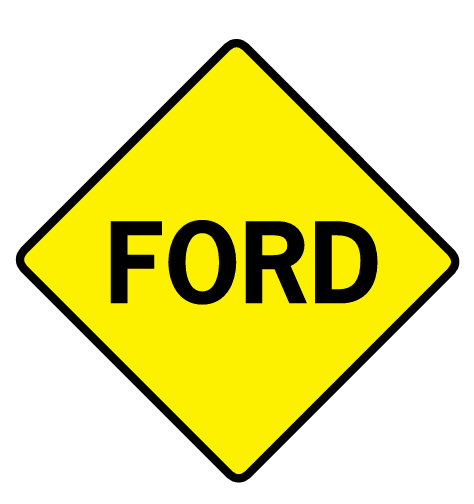
Flooded road ahead.
River crossing ahead.
Water flows across the road.
This sign warns that water may flow over the road surface, so drivers should slow down and proceed with caution.
You are driving vehicle 1. Your lane ends and you must change lanes. Which is correct?
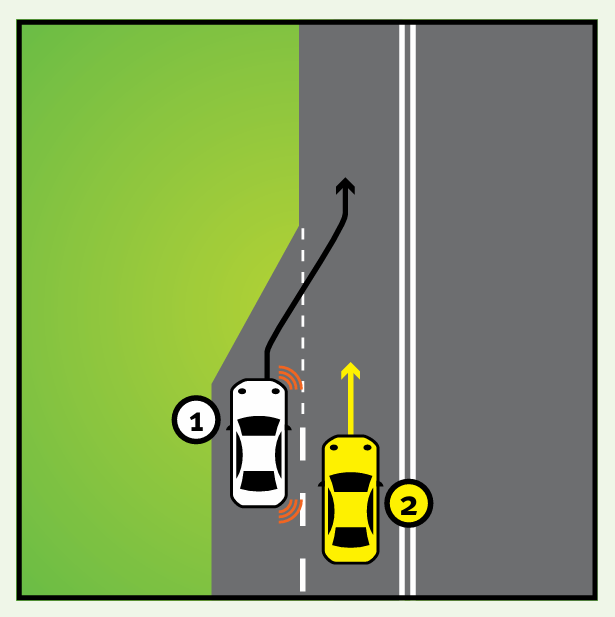
Give way to vehicle 2.
Vehicle 2 must give way to you.
Vehicle 2 gives way as it is in right lane.
When changing lanes, you must give way to vehicles already in the lane you are entering.
If a tyre blows out while driving, you should NOT:
Apply brakes immediately.
Grip the wheel firmly.
Keep the vehicle straight.
Immediate braking can cause a total loss of control during a blowout; you should let the vehicle slow down naturally first.
A yellow diamond-shaped sign indicates:
Regulatory instruction.
Guide and information.
Warning of hazards.
Yellow diamond-shaped signs are warning signs that alert you to potential hazards, changes in road conditions, or upcoming dangers.
When making a u-turn, who must you give way to?
Only vehicles from your right.
All vehicles and pedestrians.
Only cyclists and pedestrians.
You must give way to everyone, including all vehicles, pedestrians, and cyclists, when making a u-turn.
What does this sign indicate?
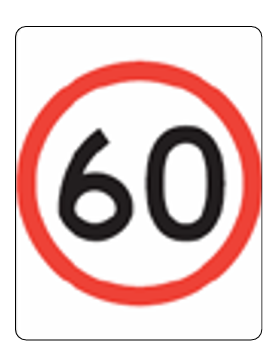
Do not exceed 60 km/h.
Travel more than 60 km/h.
You are on Highway 60.
This sign shows the maximum speed limit, meaning you must not drive faster than 60 km/h.
While driving in a tunnel, You should avoid:
Removing sunglasses.
Changing lanes.
Turning on headlights.
Changing lanes is a major cause of crashes in tunnels and should be avoided unless absolutely necessary.
In this situation, which vehicle must stop and give way at the intersection?
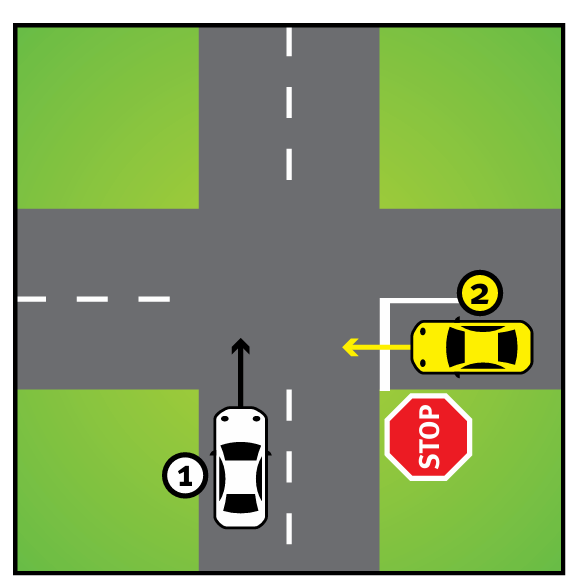
Vehicle 1.
Vehicle 2.
Both vehicles.
Vehicle 2 must stop at the stop sign and give way, while vehicle 1 can proceed as it has priority.
Driving without sleep for 24 hours equals a BAC of:
0.05.
0.08.
0.10.
Staying awake for 24 hours impairs your driving performance to the same level as having a 0.10 blood alcohol concentration.
What does this sign mean?
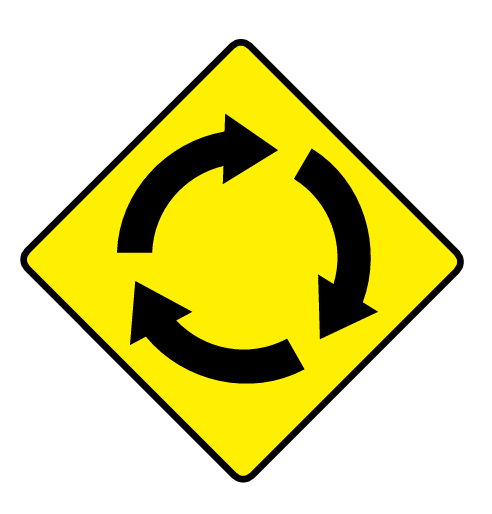
Roundabout ahead.
Mini roundabout ahead.
Staggered junction ahead.
This warning sign alerts drivers that they are approaching a roundabout. You should slow down and prepare to give way.
Rule for indicating when exiting a roundabout:
Always indicate right.
Indicate left if practical.
No exit signal required.
Unless it is not practical to do so, you must always give a left-turn signal when exiting a roundabout to inform other drivers of your intention.
When you see this signal, what must you do?
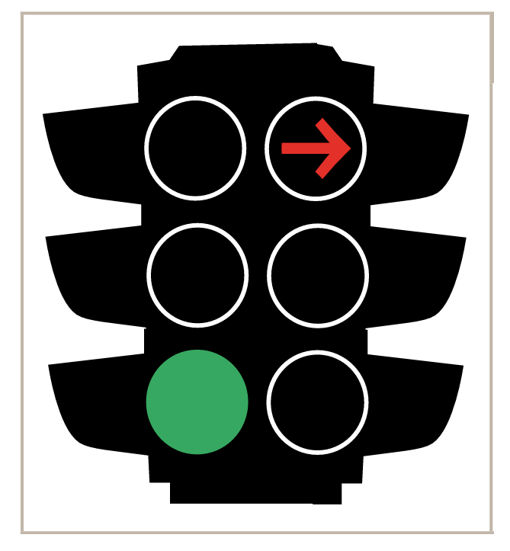
Turn right with caution.
Do not turn right.
Wait before turning right.
A red arrow is a strict instruction. Even if the main light is green, you must not turn right until the red arrow disappears or turns green.
What does this sign signify?
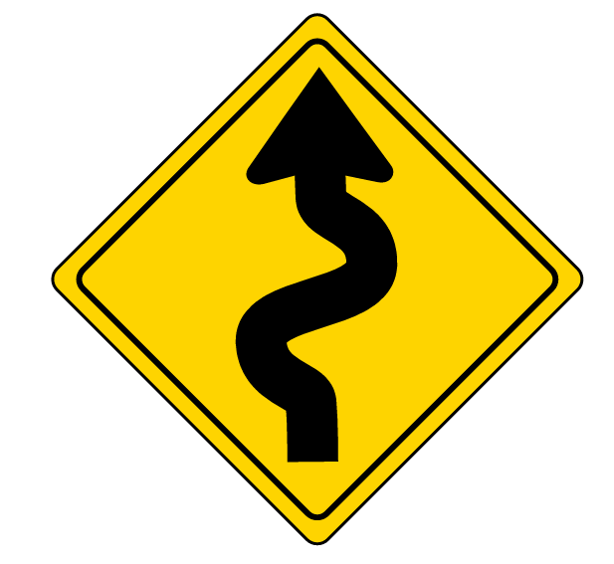
Winding road ahead.
Sharp turn right then left.
Sharp turn left then right.
This sign indicates a winding road ahead with multiple curves; you must slow down and prepare to adjust your steering continuously.
Based on this situation, which vehicle has the right of way?
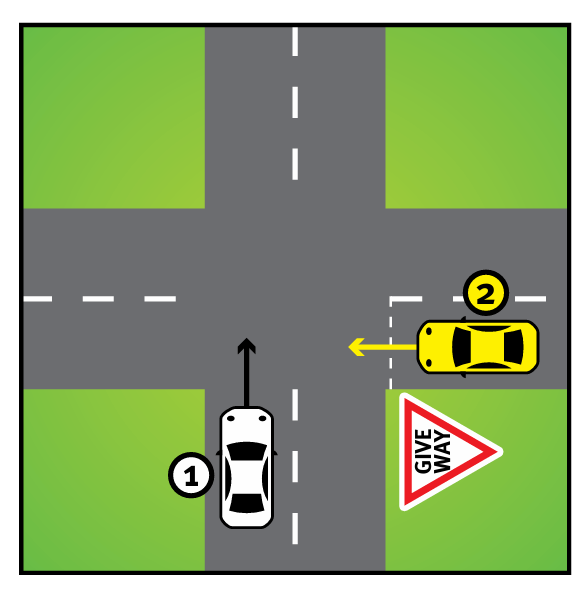
Vehicle 2.
Vehicle 1.
Both vehicles.
Vehicle 1 has the right of way because vehicle 2 must give way at the give way sign before entering the intersection.
When do school zone speed limits typically apply?
24 hours every day.
Only when children visible.
On school days during sign hours.
School zone speed limits apply on school days during the specific morning and afternoon times displayed on the signs.