Syllabus: Your Keys to Driving in QLD (2026)
QLD Road Rules: Full Practice Test B
Intermediate simulation focusing on defensive driving and rural road rules.
Part 1: Give Way
10 Complex Scenarios
Part 2: Road Rules
20 Safety Focus Questions
TMR Format
Randomized from 2026 Bank
⚠️ Random Mode: Test B pulls randomized questions to ensure you haven’t just memorized the order of Test A. 90% is the goal.
Start QLD Test B
Test your knowledge randomized
What does this sign mean?
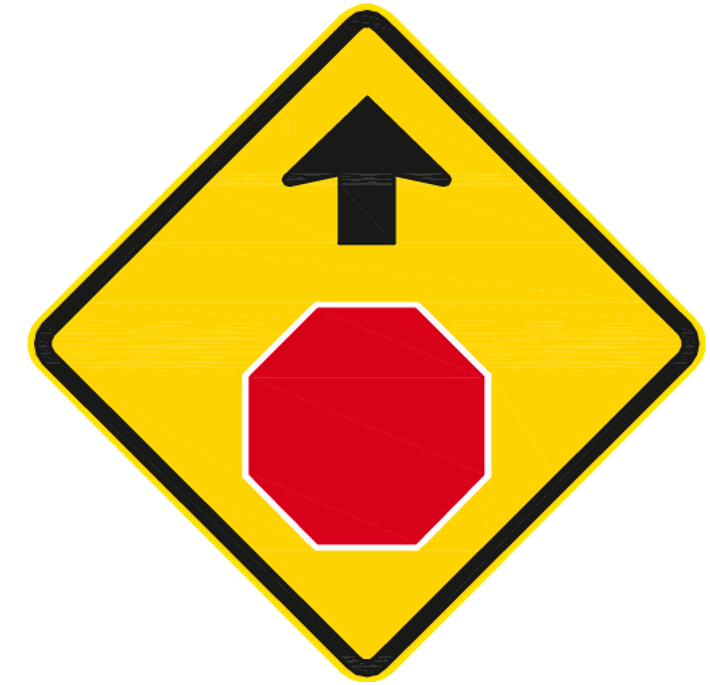
Yield sign ahead.
School zone ahead.
Stop sign ahead.
This warning sign alerts you that a 'Stop' sign is coming up, giving you plenty of time to slow down and prepare for a complete halt.
The 'ABC' plan for preventing skids stands for:
Accelerate, Brake, Corner smoothly.
Always Brake Carefully.
Alert, Beware, Cautious.
Smoothly managing acceleration, braking, and cornering is the key to maintaining traction and preventing skids.
What must you expect when you see this sign?
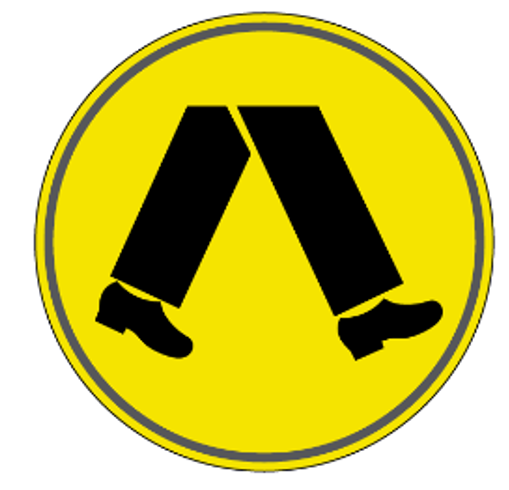
Shared path ahead.
School zone ahead.
Pedestrian crossing ahead.
This sign warns you that there is a pedestrian crossing ahead; you must be prepared to stop and give way to people crossing.
When you see these hazard markings, you should drive to:
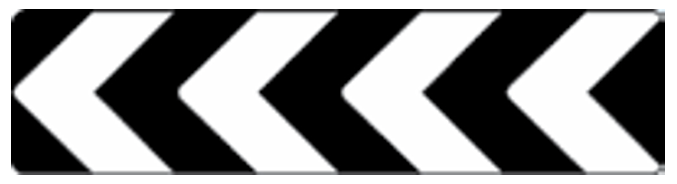
The left of the hazard.
The right of the hazard.
Either side of the hazard.
These markings indicate you must pass to the left side of the hazard for safe traffic flow.
Are you allowed to park in a marked bicycle lane?
No, parking is never allowed.
Yes, unless signs prohibit it.
Only if using hazard lights.
Unless there is a 'No Parking' or 'No Stopping' sign, you are generally allowed to park in a bicycle lane. However, you must not block the path of cyclists if it's avoidable.
When overtaking a heavy vehicle, you should:
Slow down after passing.
Maintain speed after passing.
Move back in too soon.
You must maintain speed until well clear to avoid forcing the heavy vehicle to brake suddenly.
For a pregnant woman, the lap seatbelt must be worn:
Over the thighs and pelvis.
On the abdomen.
Around the waist.
The lap belt should sit low across the hips and pelvis, below the baby, to avoid direct pressure on the abdomen during an impact.
Are U-Turns allowed at traffic lights?
Only if 'U-Turn Permitted' sign exists.
Yes, if there is no oncoming traffic.
No, U-turns are never allowed.
You must not make a u-turn at traffic lights unless a sign specifically says it is allowed.
What does this sign indicate?
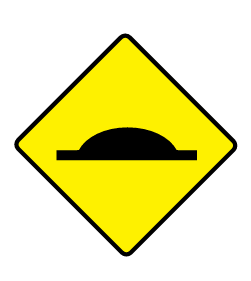
Road hump ahead.
Uneven surface ahead.
Steep climb ahead.
This sign warns of a speed hump (or speed breaker) ahead. You should slow down to cross it comfortably and safely.
A hand signal with the right arm bent upward indicates:
Left turn.
Right turn.
Slowing down.
Extending the right arm and bending it upwards at the elbow is the manual signal to indicate a left turn.
You are turning right into a two-way road. What should you do?
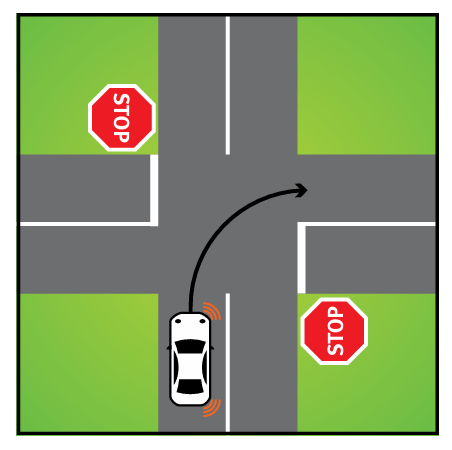
Turn into the right side of the road.
Keep left of the centre of the road.
Drive in the middle of the road.
When turning right into a two-way road, you must keep to the left side of the centre line to enter correctly and safely.
If you double your speed, braking distance increases by:
Double.
Triple.
Four times.
Braking distance increases with the square of speed, so doubling your speed makes the stopping distance four times longer.
When entering a roundabout, you must give way to:
Only vehicles from your right.
Only vehicles from your left.
All vehicles already on it.
When entering a roundabout, you must give way to all vehicles already in the roundabout, regardless of which entrance they used.
Minimum legal tyre tread depth in Queensland:
1.0 mm.
1.5 mm.
2.0 mm.
Tyres must maintain a minimum tread depth of 1.5 mm across the entire tread surface to ensure legal safety standards.
What does this sign signify?
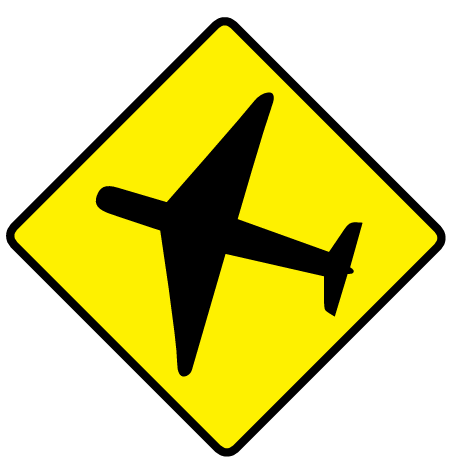
High flying aircraft area.
Low flying aircraft ahead.
Restricted aircraft zone.
This sign warns that aircraft may be flying low over the road, so drivers should be alert.
What does this sign mean?
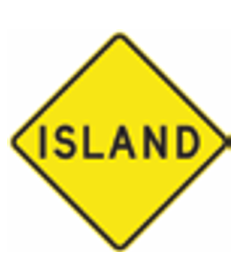
Road narrows ahead.
Uneven surface ahead.
Raised area on road.
This sign warns you of a raised traffic island or median ahead. You should slow down and be careful as you pass it.
What does this sign indicate?
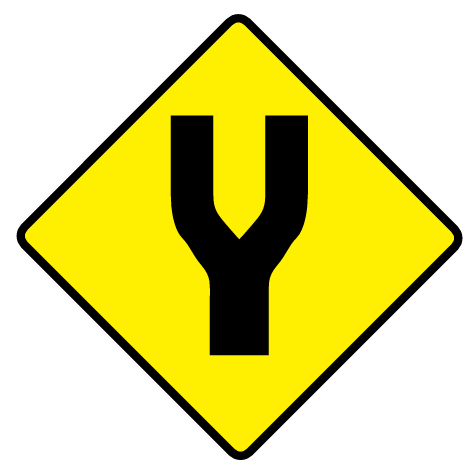
Y-intersection ahead.
End of divided road.
Divided road begins.
This sign indicates the start of a divided road where traffic is separated by a median or barrier.
When turning at green lights, must you give way to pedestrians?
No, green light allows you.
Yes, always.
Only if on a crossing.
Even if the light is green, drivers turning must give way to any pedestrians crossing the road they are entering.
Driving without sleep for 17 hours equals a BAC of:
0.08.
0.05.
0.10.
Staying awake for 17 hours impairs your driving performance to the same level as having a 0.05 blood alcohol concentration.
In this situation, which vehicle must give way?
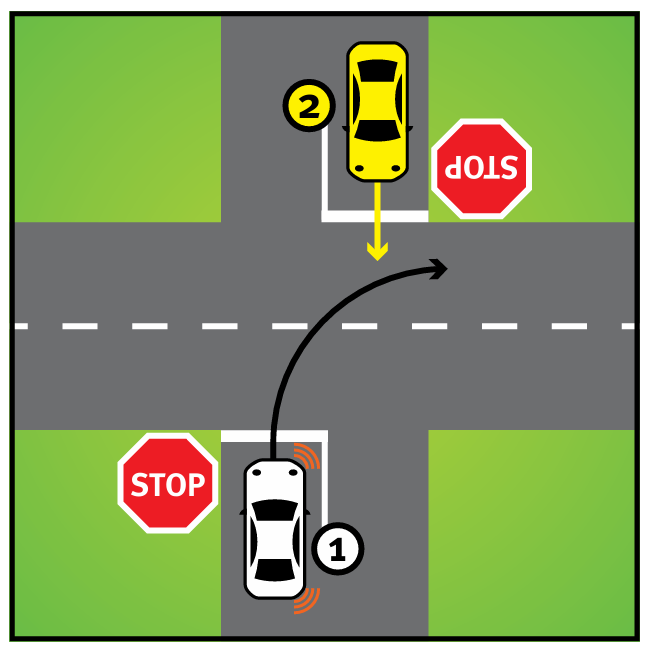
Vehicle 1.
Vehicle 2.
Both vehicles.
After stopping, vehicle 1 must give way to vehicle 2 because it is turning right across vehicle 2’s path.
What does this sign signify?
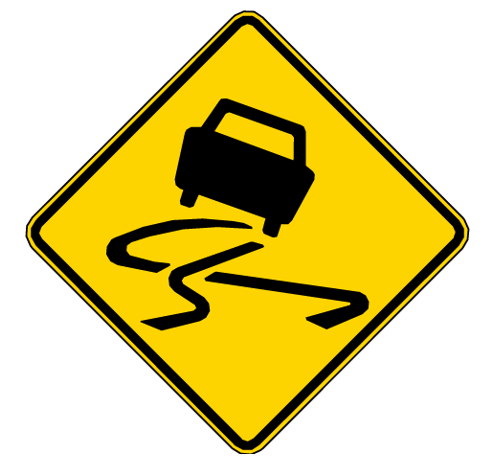
Winding road ahead.
Slippery when wet.
Loose gravel on road.
This sign warns the road may become slippery in wet conditions, so you must reduce speed and drive carefully.
If an overhead lane shows a flashing red cross, you should:
Stop immediately in the lane.
Increase speed to clear it.
Leave the lane as soon as safe.
A flashing red cross means the lane is about to close. You must move to another lane as soon as it is safe.
You are approaching a multi-lane roundabout and want to go straight. Which lane should you use?
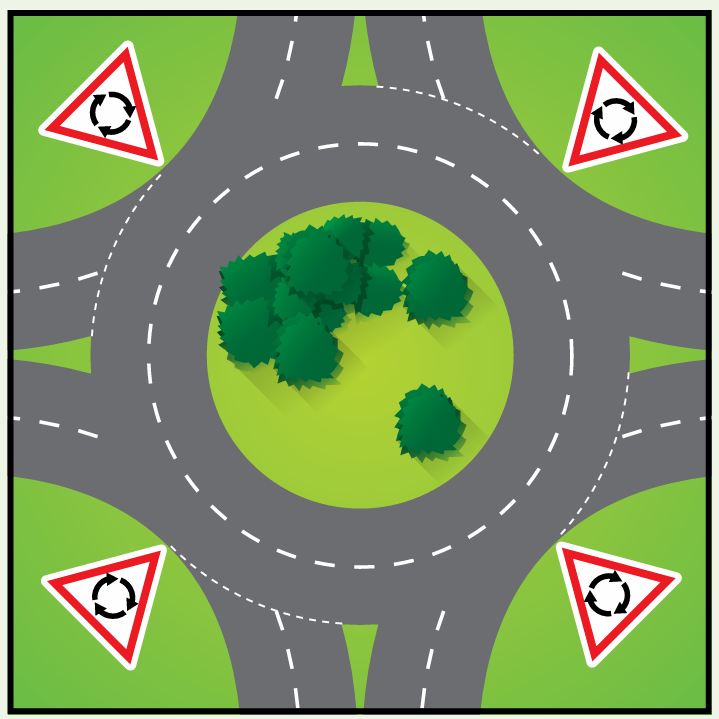
Enter and exit in the left lane.
Enter and exit in the right lane.
Enter and exit in either lane.
When going straight at a multi-lane roundabout, you may use either lane unless road markings indicate otherwise.
Reaction distance plus braking distance equals:
Total stopping distance.
Total traction loss distance.
Total visual lead distance.
Total stopping distance is the sum of the distance traveled while you react and the distance traveled after applying brakes.
Based on this situation, which vehicle must give way?
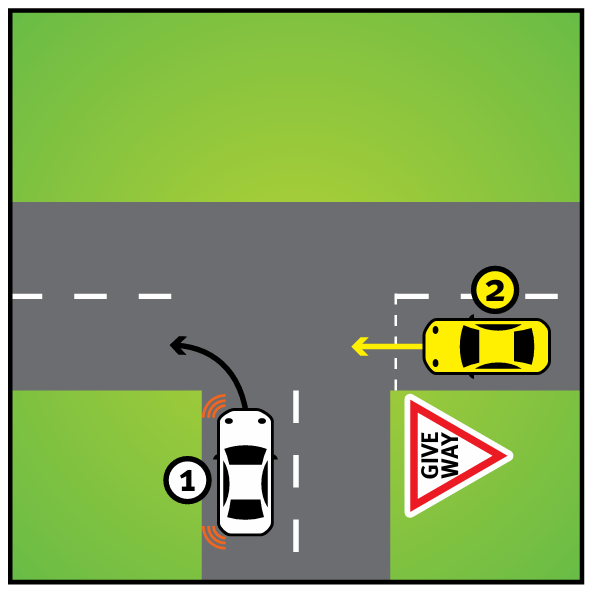
Vehicle 1.
Vehicle 2.
Both vehicles.
Vehicle 2 must give way because it is facing a give way sign before entering the intersection.
What does this sign represent?
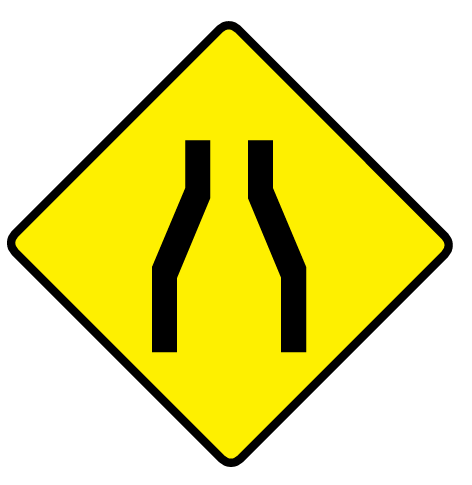
Divided road begins.
End of divided road.
Road narrows ahead.
This sign warns that the road becomes narrower ahead, so drivers should slow down and adjust position.
When you see this signal, what must you do?
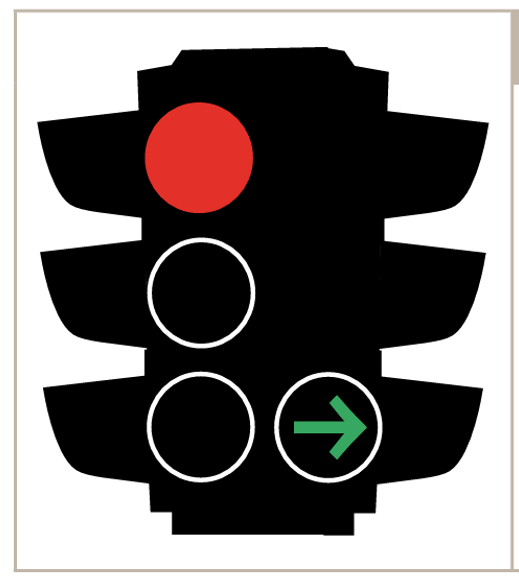
Stop and remain behind the line.
Wait for the green signal.
Turn right when it is safe.
This signal allows a right turn when safe, even if the main light is red, provided you give way to other road users.
You are turning left at this intersection. What should you do?
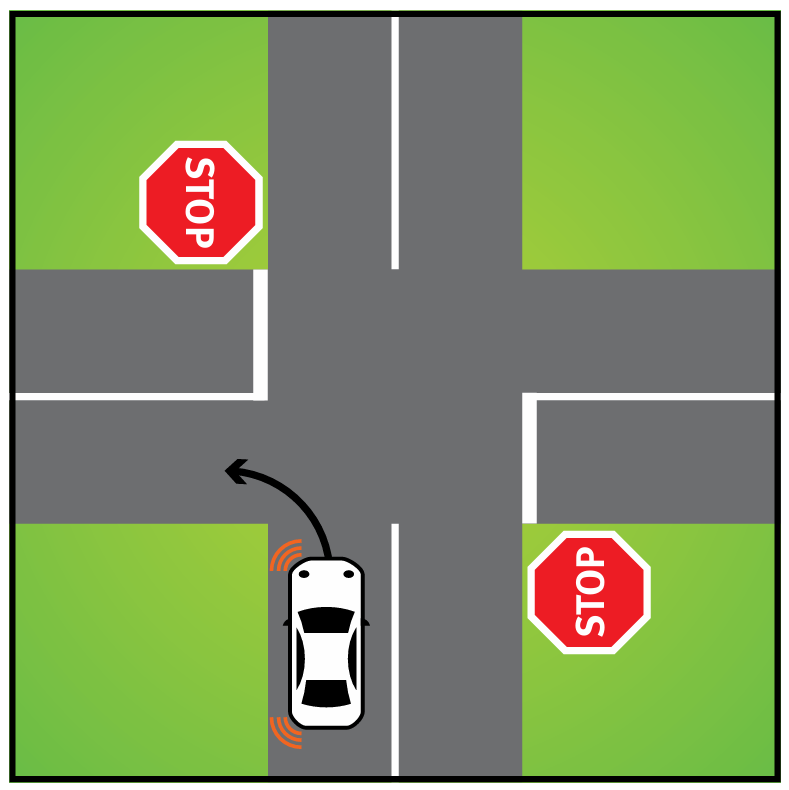
Keep close to the far left side.
Turn from the center of the road.
Keep close to the far right side.
When turning left, you must position your vehicle close to the far left side of the road before turning.
How far can you drive in a bus lane to enter or leave a road?
Up to 50 meters.
Up to 100 meters.
Not allowed to enter.
You may drive in a bus lane for up to 100 meters only when necessary to enter or leave the road, such as turning into a side street or driveway.
When are you permitted to cross continuous lane lines?
To safely pass a bicycle rider.
To overtake a slow vehicle.
Whenever the road is clear.
You may cross continuous lines only to maintain a safe passing distance from a bicycle rider, provided you have a clear view and it is safe.