Syllabus: SA Driver’s Handbook (2026)
SA Theory: Full Practice Test A
Complete practice set for the Service SA Learner’s Theory Test.
Part 1: Give Way
8 Mandatory Questions
Part 2: Road Rules
42 Practice Questions
Question Format
Multiple Choice (50 Total)
⚠️ Practice Mode: This is a relaxed study session. You can complete all 50 questions to review the correct answers, even if you make a mistake.
Start Practice Test A
Ready to master the questions?
Seatbelts must be worn by:
Everyone in the vehicle.
Only the driver.
Only front-seat passengers.
By law, every person in the vehicle must wear a properly adjusted seatbelt or child restraint to ensure safety for all occupants.
A 'Give Way' sign at an intersection means:
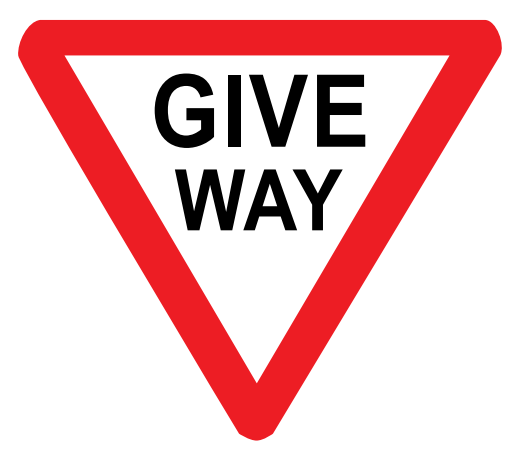
Slow down and be prepared to stop if there is traffic.
You have the right of way over vehicles coming from the right.
Stop and wait for 3 seconds.
A 'Give Way' sign requires you to slow down and yield to traffic on the intersecting road, stopping only if necessary to avoid a collision.
You are approaching a pedestrian crossing. A person is waiting to cross. You must:
Speed up to get past before they step out.
Stop and let the pedestrian cross safely.
Honk your horn to warn them to stay back.
Drivers are legally required to give way to pedestrians at designated crossings to ensure their safety and prevent accidents.
When driving in heavy rain or fog, you should:
Use your high beam lights.
Turn on your headlights (low beam) and slow down.
Drive at the normal speed limit to avoid being hit from behind.
Low beam headlights improve your visibility to others without creating a dangerous glare against the fog or rain, while slowing down gives you more time to react to hazards.
Alcohol affects your driving by:
Improving your concentration.
Speeding up your reactions.
Slowing down your reactions and affecting your judgment.
Alcohol is a depressant that impairs the central nervous system, making it harder to process information and react quickly to road hazards.
When can you drive across a railway crossing?
As soon as the lights stop flashing and the booms are fully up.
While the lights are still flashing if you don't see a train.
By driving around the lowered boom gates if they are stuck.
You must wait until all warning signals have ceased and the barriers are completely raised to ensure no other trains are approaching from either direction.
When must you use your indicators?
Only when there are other cars behind you.
Every time you change direction, turn, or change lanes.
Only when turning at major intersections.
Indicators must be used consistently to communicate your intentions to all road users, regardless of whether you think someone is watching.
If a vehicle is overtaking you, what should you do?
Speed up so they can't get past.
Move to the right to block them.
Maintain an even speed and keep to the left.
Staying to the left and keeping a steady speed allows the other vehicle to complete the overtake safely and quickly without confusion.
You see a 'School Zone' sign with a 40 km/h limit. When does this speed limit apply?
Only if you see children on the road.
At all times, including late at night and weekends.
During the days and times shown on the sign.
The school zone speed limit is legally enforceable only during the specific hours and days mentioned on the official signage.
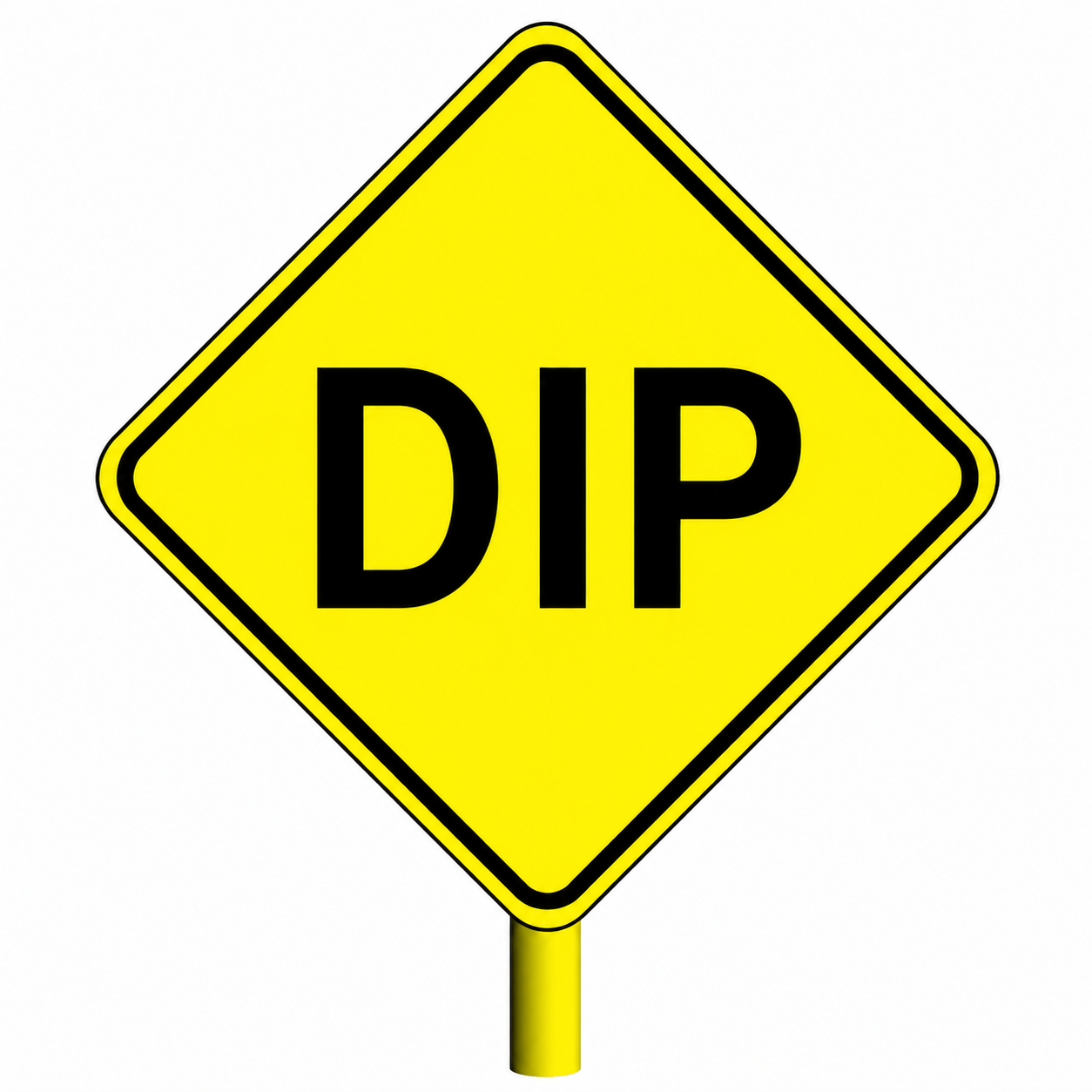
What does this sign represent?
Do not drive with your lights on high beam.
Police station ahead.
A sharp depression in the road is ahead, be prepared, slow down.
This sign warns of a sudden dip or depression in the road surface. Slowing down prevents damage to your vehicle and loss of control.
Both cars O and P are facing GIVE WAY signs. Which car must give way?
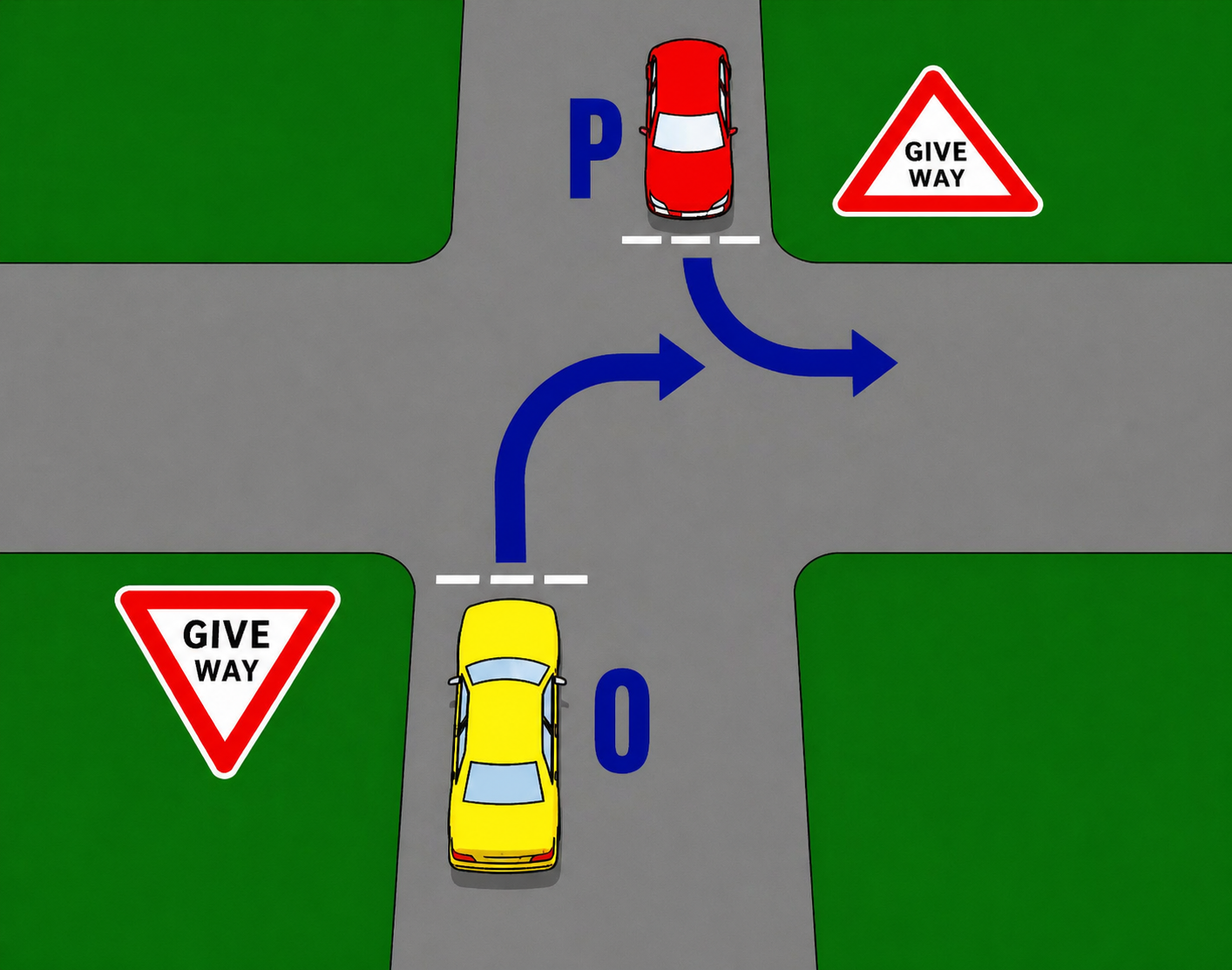
Car O.
Car P.
Both cars must give way.
When both face GIVE WAY signs, the usual rule applies. Car O must give way to car P because P is on O’s right.
At this intersection, which car must give way?
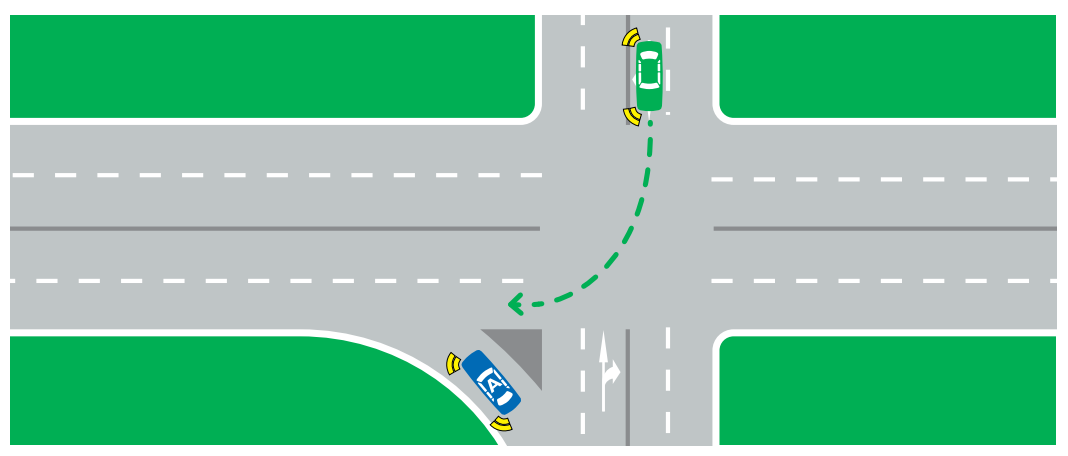
The blue car must give way.
The green car must give way.
Both cars must give way.
The blue car is turning left and must give way to oncoming traffic going straight or turning. The green car is approaching from the opposite direction, so the blue car must wait.
When approaching a crest (hill) or a curve where you cannot see ahead, you must:
Stay in the middle of the road.
Keep to the left and slow down.
Speed up to get past the curve quickly.
Reducing your speed and staying to the far left ensures you have enough time to react to any oncoming vehicles or hidden hazards that appear suddenly over the hill or around the bend.
What does this sign indicate?
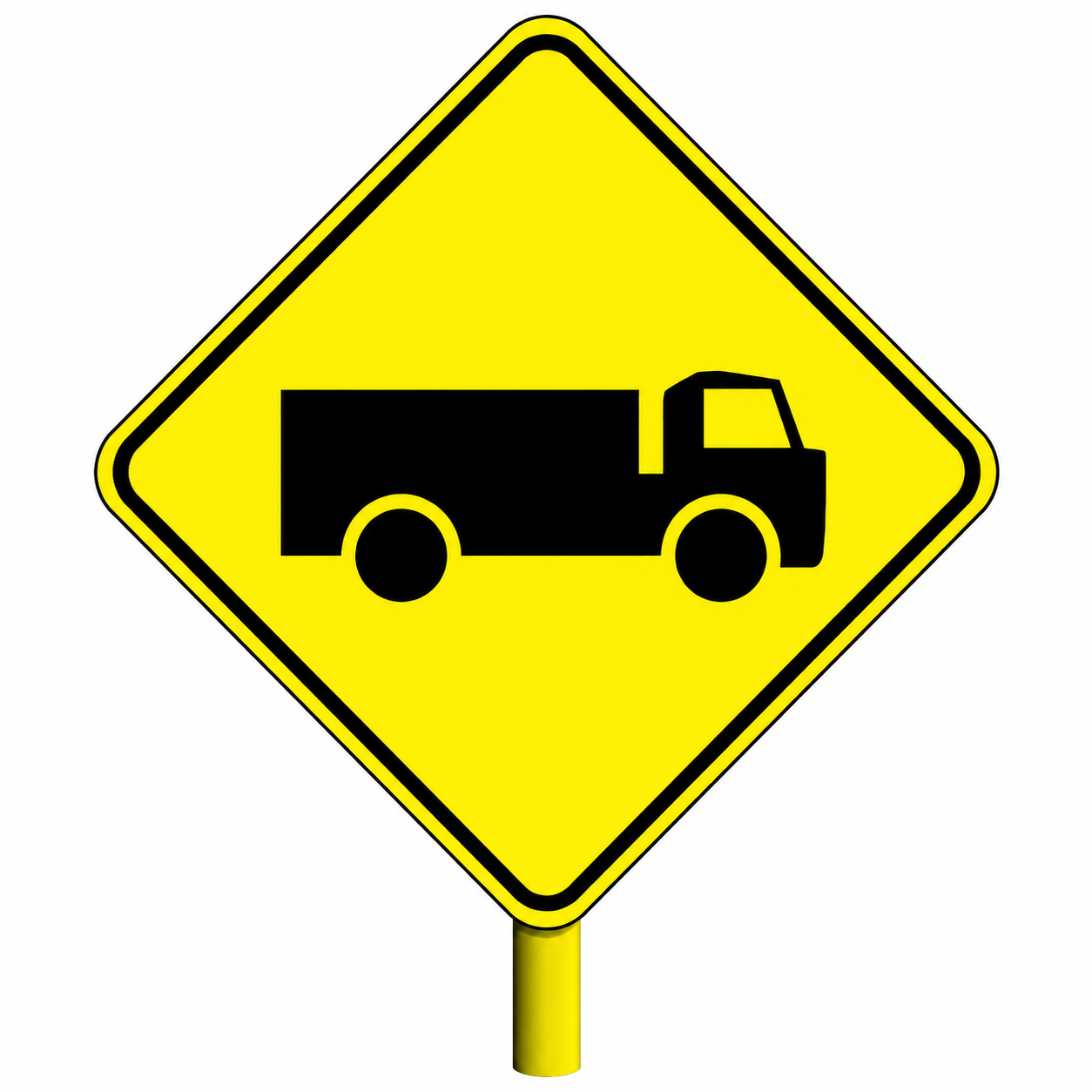
Trucks must use low gear.
Heavy vehicle checking station ahead.
Slow down and beware of trucks entering from the side.
This warning sign indicates that trucks may be entering or crossing the road ahead. You should reduce your speed and stay alert for large vehicles joining the traffic flow.
At this intersection, both vehicles A and B are turning right. Which vehicle must give way?
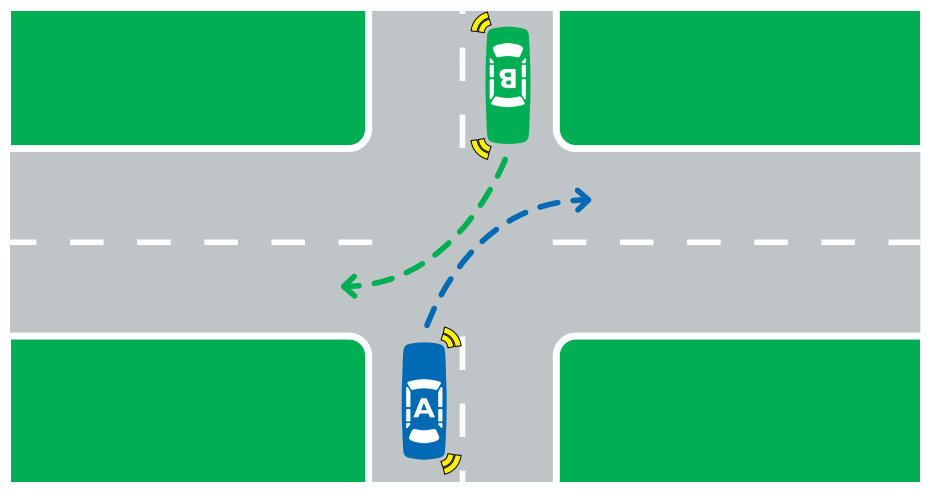
Vehicle A must give way to B.
Vehicle B must give way to A.
Neither vehicle needs to give way.
Both vehicles are turning right and can pass each other safely without crossing paths. Since their paths do not conflict, neither vehicle is required to give way.
If you see a 'Keep Clear' marking on the road at an intersection, it means:
You must not stop your vehicle in that area.
You should drive faster through that area.
Only emergency vehicles can use it.
'Keep Clear' markings are used to prevent vehicles from blocking intersections or property entrances, ensuring traffic flow is not obstructed even during heavy congestion.
What is the 'two-second rule' used for?
To maintain a safe following distance behind the vehicle in front.
To see how fast you can take off from traffic lights.
To time how long you can look away from the road.
This rule helps drivers maintain enough space to react and stop safely if the vehicle ahead brakes suddenly.
At this T-intersection, which car must give way?
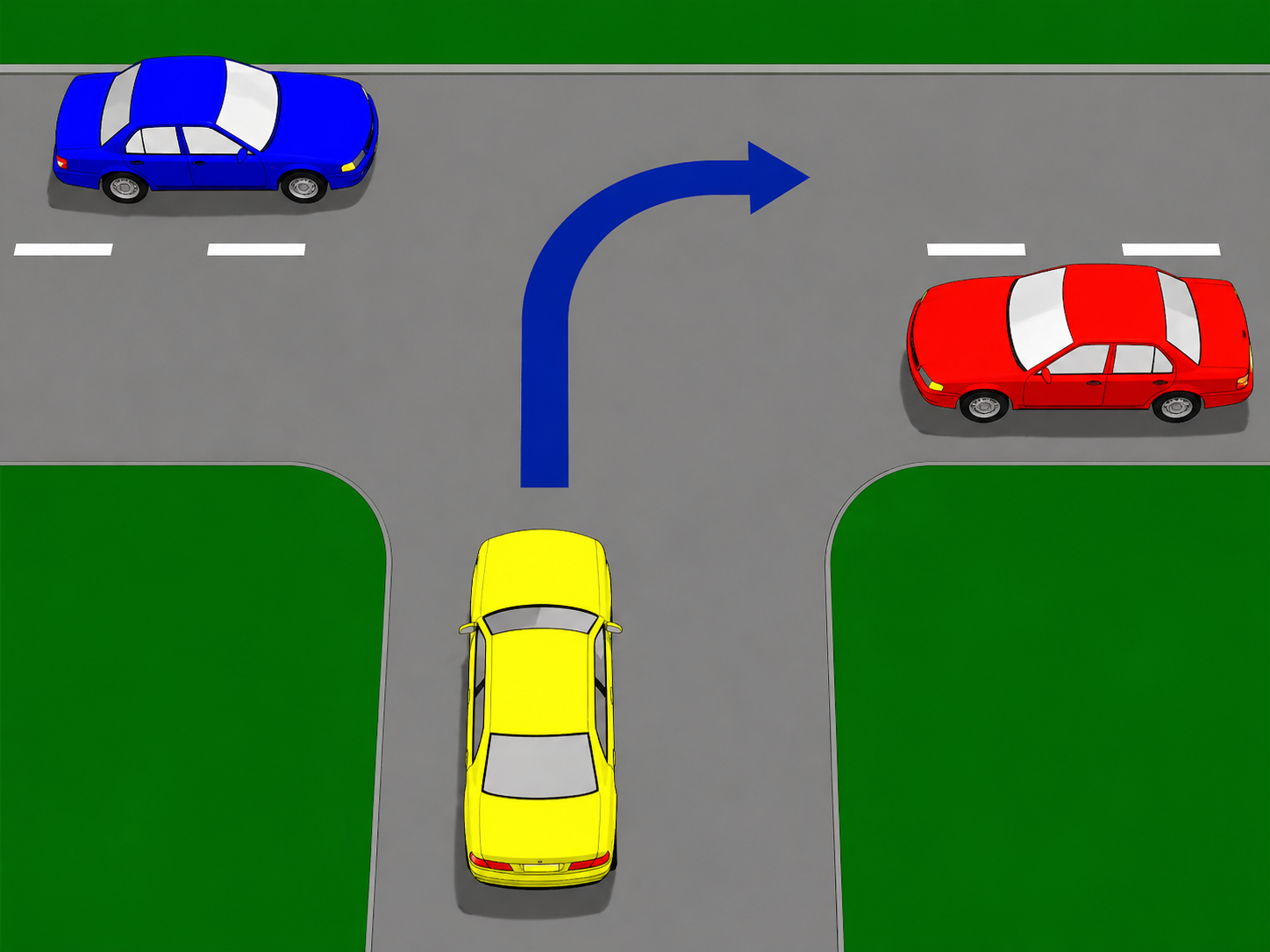
Blue car.
Yellow car.
Red car.
At a T-intersection, a vehicle on the terminating road must give way to all traffic on the continuing road. The yellow car is on the terminating road, so it must give way to both the blue and red cars.
What does this sign indicate?
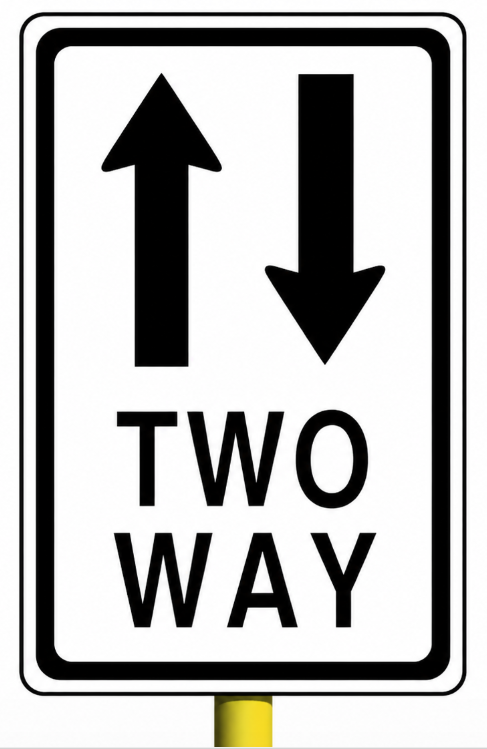
Traffic travels in each direction.
Double lane bridge ahead.
No turns permitted.
This sign warns that the road has two-way traffic, so you must stay in your lane and watch for oncoming vehicles.
You are going to turn right from a one-way street. Where should you be when you start your turn?
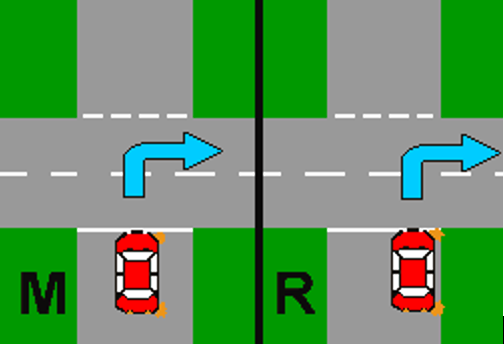
Any position if it is safe to do so.
Position M. From the middle of the road.
Position R. As close as possible to the right side of the road.
On a one-way street, you must turn from the far right lane to ensure you don't cut across other lanes of traffic.
At this intersection, which vehicle must give way?
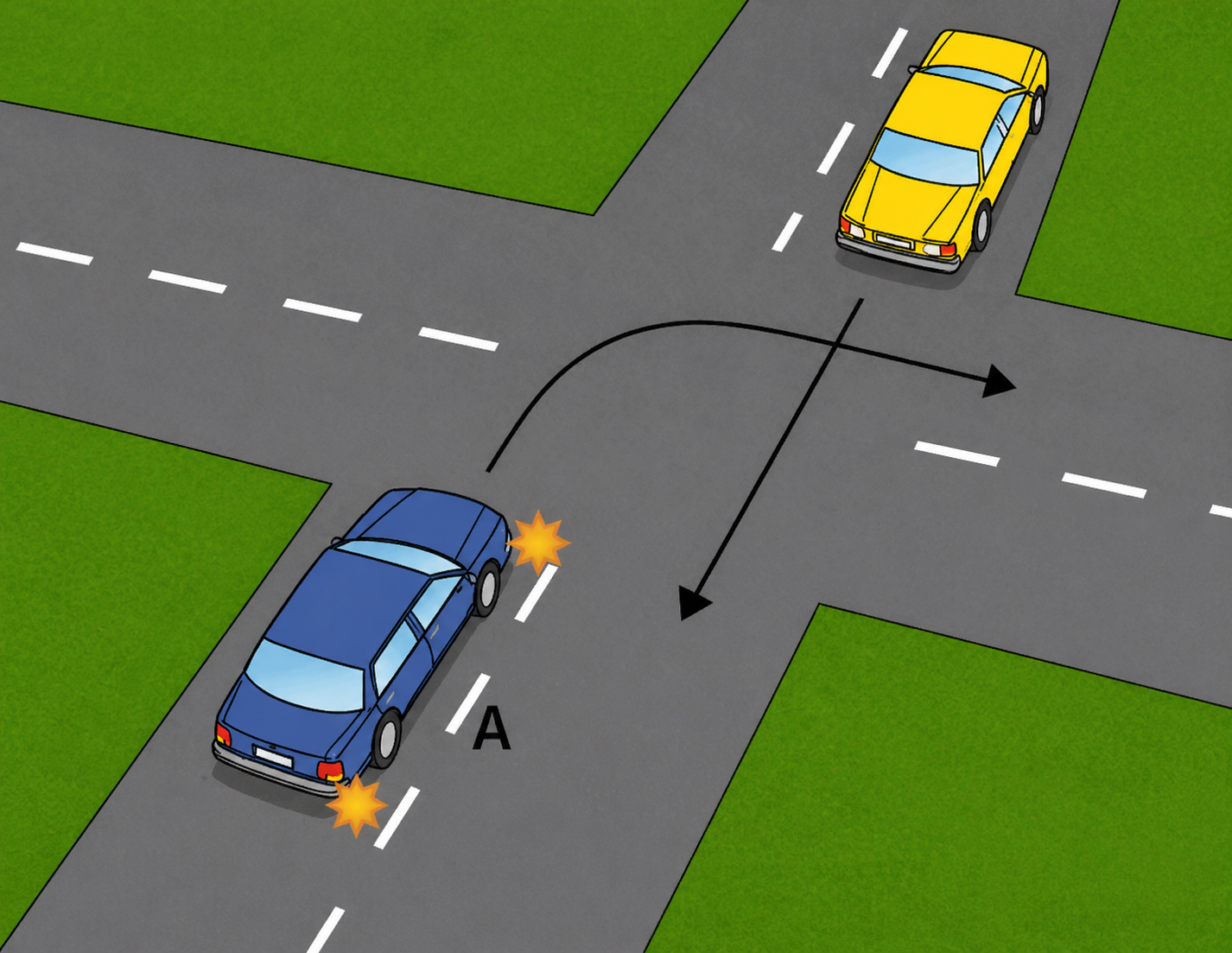
The yellow car must give way.
The blue car (A) must give way.
Both vehicles must give way.
The blue car (A) is turning right across the path of the oncoming yellow car. A must give way to oncoming traffic going straight before completing the turn.
What does this sign mean?
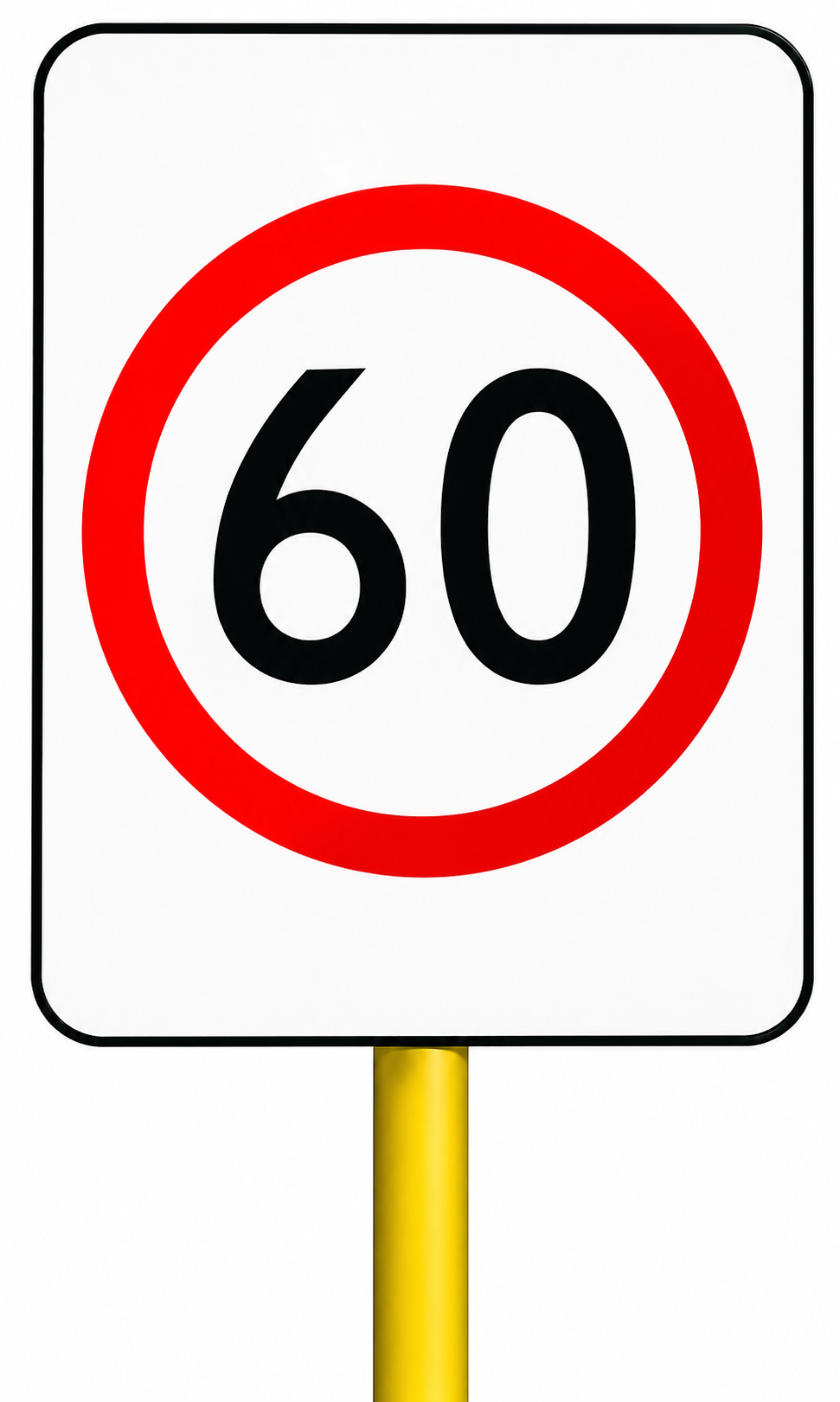
You can go faster than 60 km/h.
You are not to exceed 60 km/h.
You are on Highway 60.
This is a regulatory speed limit sign. The number inside the red circle is the maximum legal speed you are allowed to drive in good conditions.
At this intersection, which car is required to give way before entering?
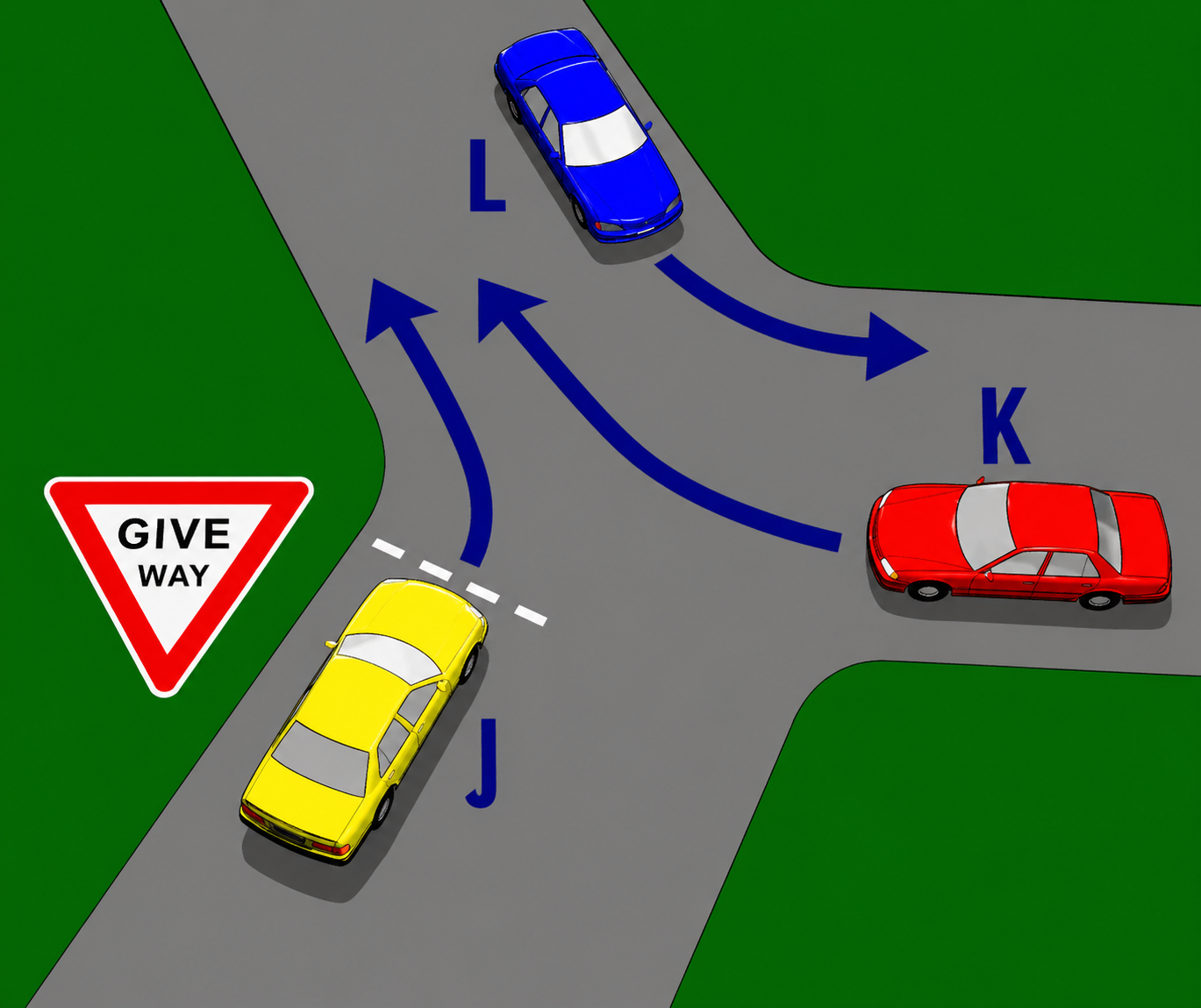
Car K.
Car J.
Car L.
Car J is facing a GIVE WAY sign, so it must give way to vehicles on the road it is entering. Cars K and L have priority, so J must wait until it is safe to proceed.
If you are involved in a crash where someone is injured, what is your first legal duty?
Drive away as quickly as possible to avoid being blamed.
Stop and give whatever help you can, then call emergency services.
Stay in your car and wait for someone else to report the accident.
It is a legal requirement to stop and provide assistance to any injured person immediately after an accident.
If you are driving at night and an oncoming vehicle's high beam is blinding you, what should you do?
Turn your high beams on as well.
Stop immediately in the middle of the road.
Look towards the left-hand side of the road and slow down.
Looking to the left edge of the road helps you stay on track and protects your eyes from the direct glare of the oncoming lights.
Looking at the diagram, which vehicles must O give way to?
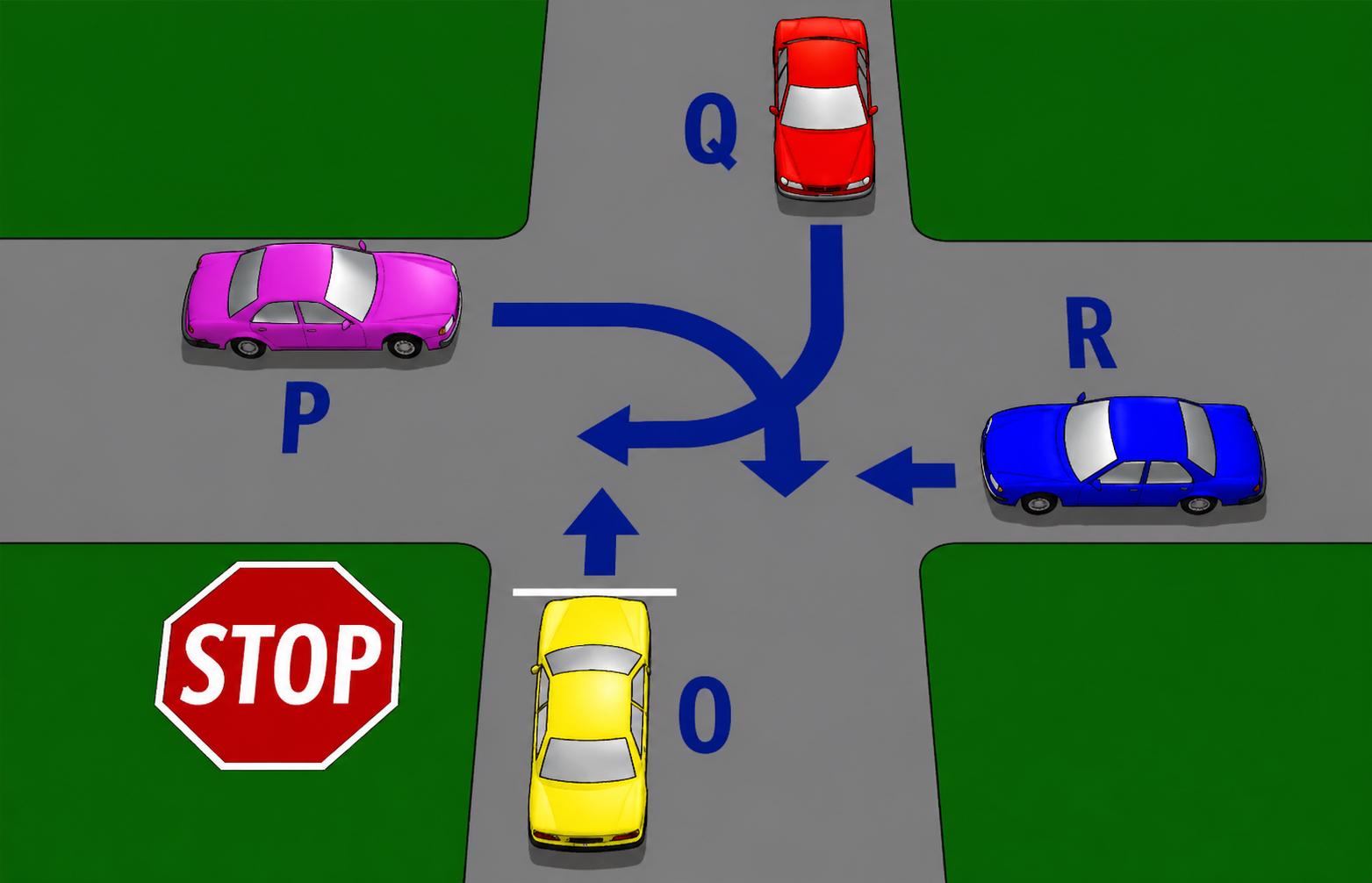
Only vehicle R.
Vehicles P and R only.
Vehicles P, Q and R.
Vehicle O faces a STOP sign, so it must stop completely and give way to all vehicles already at or entering the intersection. Therefore, O must give way to P, Q, and R before proceeding.
When are you allowed to use a hand-held mobile phone while driving?
Never while driving (including when stopped in traffic).
Only when stopped at traffic lights.
Only to send a quick text message.
Using a hand-held phone is prohibited at all times while the vehicle is in traffic to prevent dangerous distractions.
You are driving and start to feel tired or sleepy. What should you do?
Drink a coffee and keep driving.
Open the window for fresh air.
Pull over in a safe place and take a break or a nap.
Sleep is the only effective cure for tiredness, and taking a rest break is essential to prevent fatigue-related accidents.
What is the legal BAC limit for a learner (L) or provisional (P1/P2) driver?
0.00.
0.05.
0.02.
Learner and provisional drivers are required by law to maintain a zero blood alcohol level to ensure maximum safety and focus while driving.
At this intersection, which vehicle must give way?
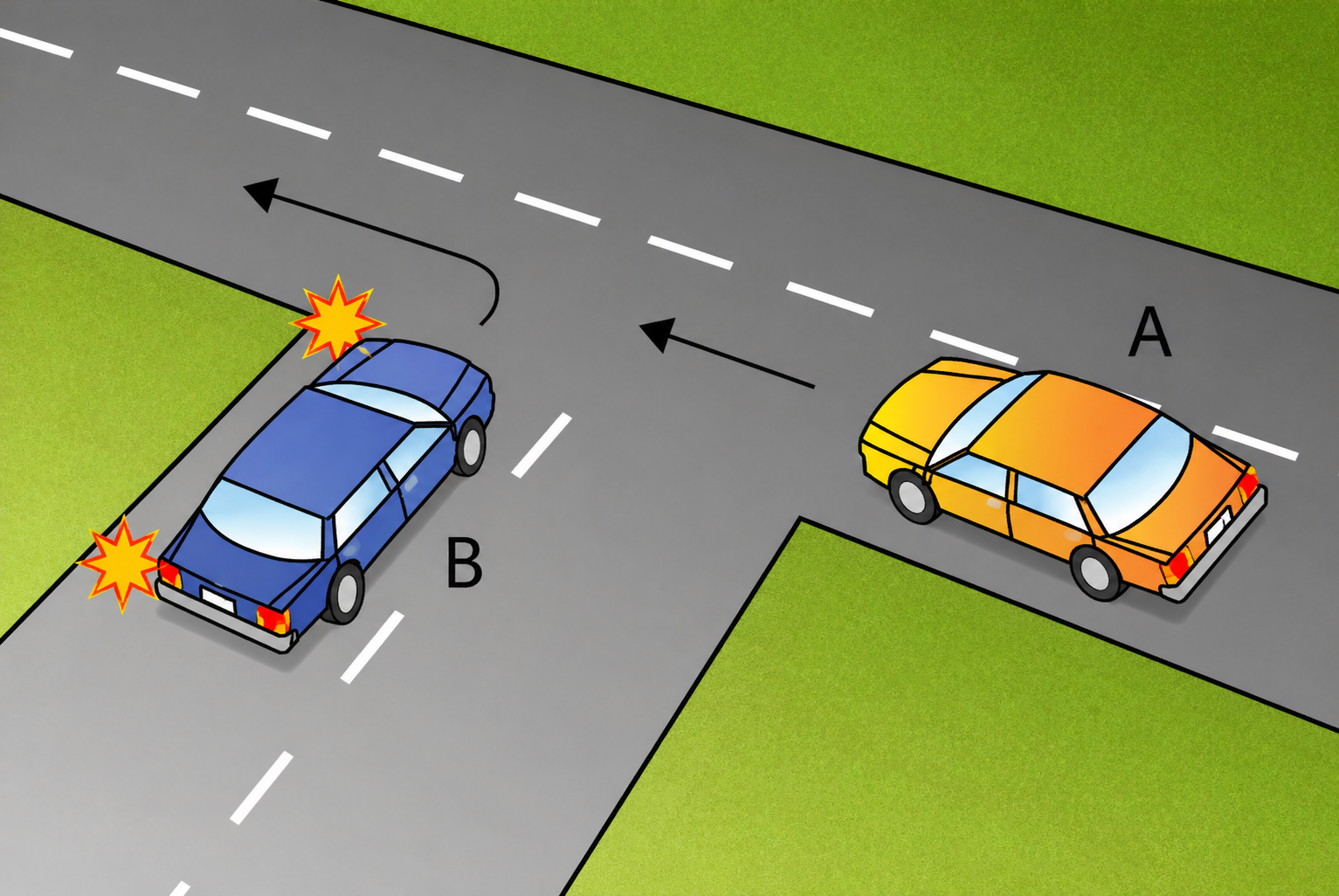
Vehicle A.
Vehicle B.
Both vehicles.
Vehicle B is turning left across the path of vehicle A. A vehicle turning left must give way to oncoming traffic going straight, so B must wait.