Syllabus: Road to Solo Driving (2026)
Victoria Learner Permit: Practice Test C
The Comprehensive Challenge: Covering niche road signs and regional Victorian traffic scenarios.
32 Questions
Full curriculum coverage
Passing: 25/32
Official VicRoads standard
Critical Items
School zones & shared ways
🎯 Final Review: Practice Test C is designed to ensure 100% readiness. It includes a randomized selection of questions focusing on low-tolerance safety rules and penalty-related knowledge.
Start Practice Test C
Final step before your official permit test
What does this sign represent?
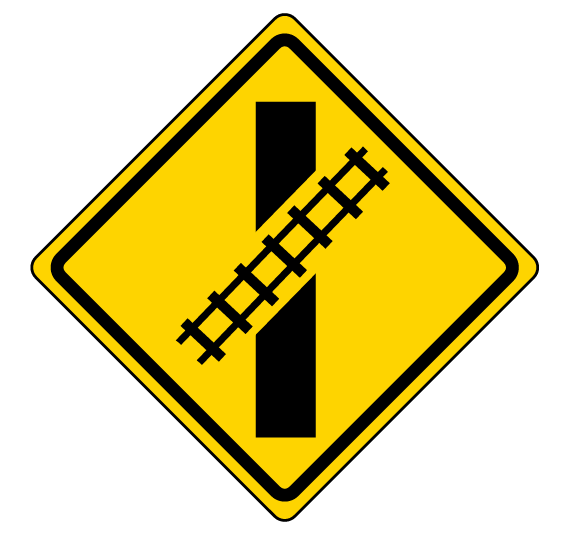
Uncontrolled crossing ahead.
Controlled crossing ahead.
Railway crossing with signals.
This sign warns of a railway crossing without signals or barriers, so you must check carefully and be ready to stop.
Based on this situation, how must you make a U-turn?
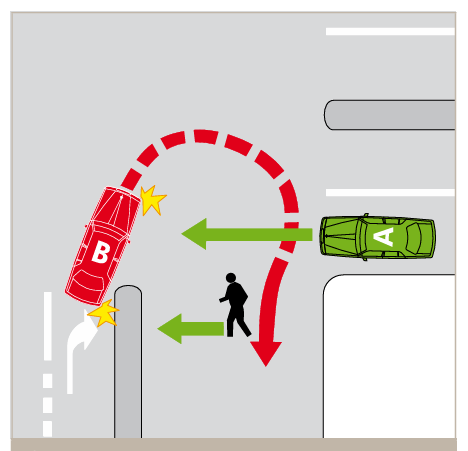
From the left lane.
From the right lane.
From any lane.
Where there is a median, a U-turn must be made from the right lane to ensure safe positioning and traffic flow.
How much space should you leave behind a truck in wet weather?
One car length.
Double the normal distance.
The same as in dry weather.
In wet weather, braking distances increase and trucks create spray that reduces visibility. Doubling your following distance ensures more reaction time.
What should you do before changing lanes?
Check mirrors, signal and head check.
Accelerate and merge quickly.
Sound the horn before moving.
You must check mirrors, signal, and perform a head check to ensure the blind spot is clear before moving.
Why is a 'safe gap' important when turning?
To avoid conflicts with approaching traffic.
To maintain a steady driving speed.
To complete the turn more quickly.
A safe gap allows you to complete your turn without forcing other drivers to slow down, swerve, or stop to avoid a collision.
What is the main purpose of Stage 4 in the Learner Kit?
Learning basic vehicle control.
Acting as a solo driver.
Practicing in quiet streets.
Stage 4 focuses on preparing learners to make most driving decisions independently, as if they were already driving solo.
Who must give way in this merging situation?
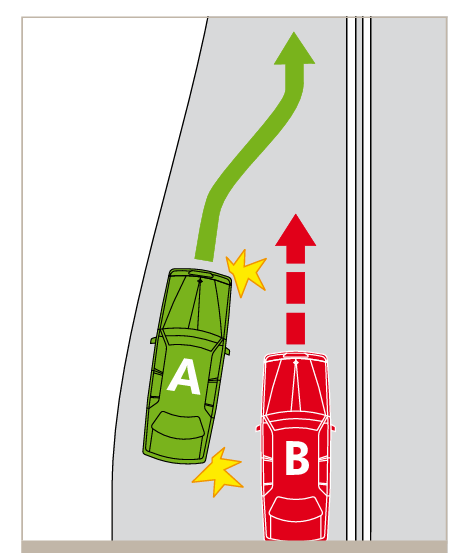
The faster vehicle.
Green vehicle.
Red vehicle.
The red vehicle must give way as it is merging into the lane and must allow the vehicle already in the lane to continue.
L-plates must be clearly visible from what distance?
20 metres.
50 metres.
100 metres.
L-plates must be displayed at both the front and rear of the vehicle and be clearly visible from a distance of at least 20 metres.
Which action increases the risk of a crash with a cyclist?
Signaling turns early.
Leaving a 1.5 metre gap.
Opening door without looking.
'Dooring' is a common and dangerous accident for cyclists. Always perform a head check for riders before opening your car door.
When you see this signal, what must you do?
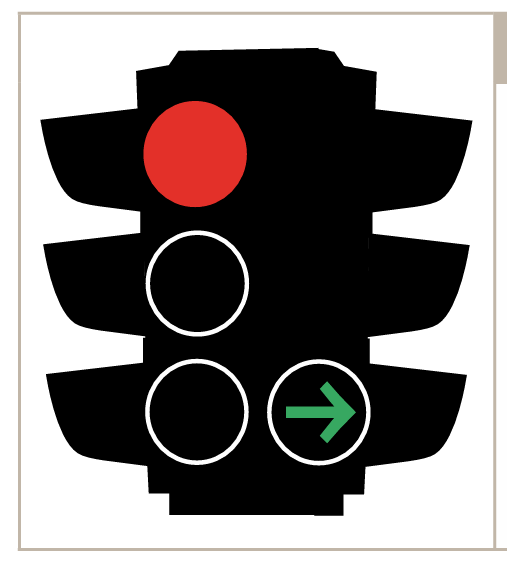
Stop and remain behind the line.
Wait for the green signal.
Turn right when it is safe.
This signal allows a right turn when safe, even if the main light is red, provided you give way to other road users.
What should you do if you feel tired while driving?
Open the window for fresh air.
Pull over and take a break.
Drive faster to reach sooner.
The only effective cure for fatigue is sleep. If you feel tired, you must pull over safely and take a break or a power nap.
What is the best way to avoid phone distraction?
Switch it off or keep it out of reach.
Use a hands-free device on your lap.
Check messages at red lights.
Keeping the phone out of reach or switched off removes temptation and helps you stay fully focused on driving.
What does this sign indicate?
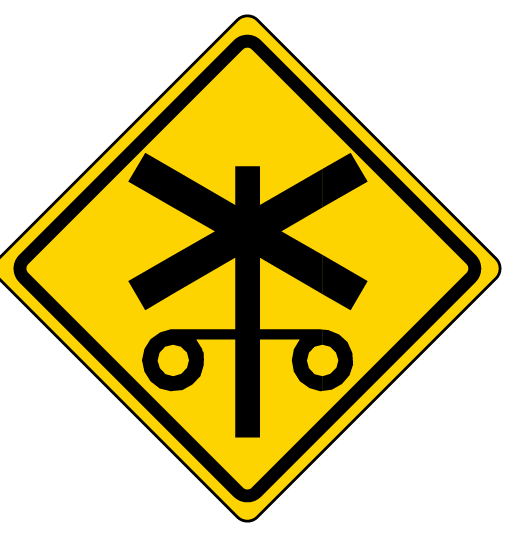
Tram crossing ahead.
Road works ahead.
Railway level crossing ahead.
This sign warns that a rail crossing is ahead, so you must be alert and prepared to stop for trains.
While preparing to turn right at this intersection, how should you position your vehicle?
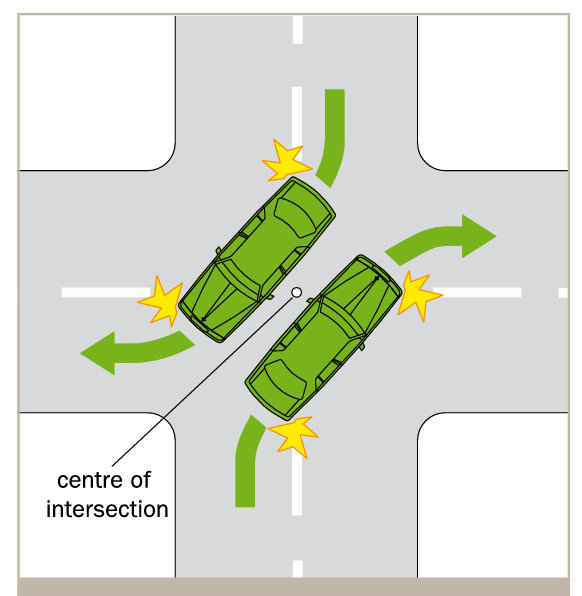
Keep close to the left of the centre line.
Move to the far right before turning.
Stay in the middle of the road.
You must position near the centre line and turn just right of the intersection centre to avoid conflict with other vehicles.
What speed leads to immediate vehicle impoundment?
15 km/h over the limit.
45 km/h or more over.
Any speed above 100 km/h.
Driving 45 km/h or more over the limit, or exceeding 145 km/h, is a high-level 'hoon' offence and leads to immediate vehicle impoundment.
When approaching a railway level crossing, what must you do?
Speed up to cross before gates close.
Drive around barriers if they are stuck.
Stop if the red lights are flashing.
Flashing red lights mean you must stop immediately. You can only proceed once the lights stop flashing and it is safe to do so.
What does this sign indicate?
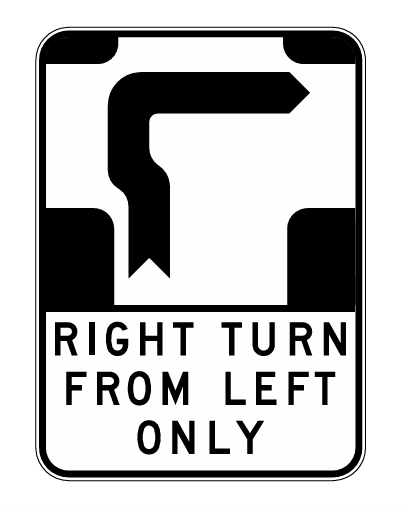
Hook turn.
Right turn only.
Left lane turn.
This sign indicates a hook turn, where you must turn right from the left lane as directed.
Which drivers have the highest risk of crashing?
Learner drivers.
Supervising drivers.
New P-plate drivers.
The highest crash risk occurs immediately after a person gets their probationary license and starts driving solo without a supervisor.
In this roundabout, which vehicle must give way?
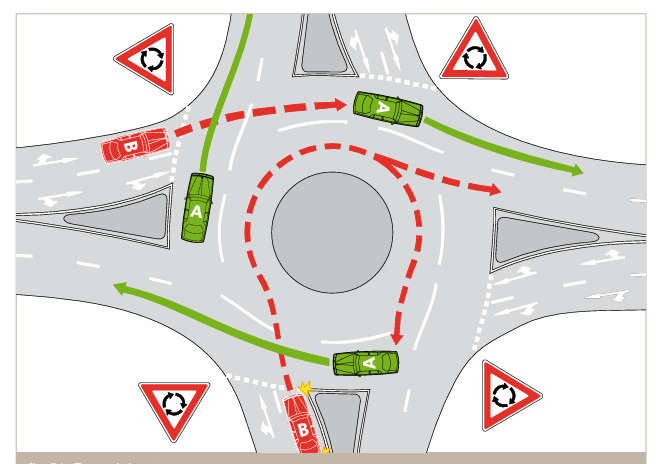
Vehicle A.
Vehicle B.
Both vehicles.
Vehicle B must give way to vehicles already in the roundabout, including Vehicle A, before entering.
In this situation, which vehicle has the right of way?
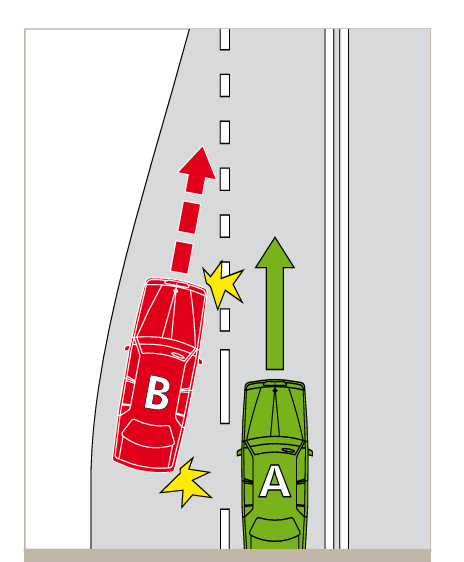
Green vehicle.
Red vehicle.
The vehicle on the left.
The green vehicle has the right of way as it is already in the lane, while the red vehicle is merging and must give way.
How many night driving hours are required for learner drivers?
10 hours.
20 hours.
25 hours.
Learner drivers under 21 must complete at least 120 logbook hours, which must include a minimum of 20 hours of night driving.
Which sign shows your driving is improving?
You can steer with one hand.
Your movements are smooth and fluid.
You can multitask while driving.
Consistent and smooth control of your speed, braking, and steering is a primary sign of increasing driving skill and confidence.
How does alcohol affect your driving ability?
It improves focus.
It increases reaction time.
It slows reaction time.
Alcohol slows down the central nervous system, leading to slower reactions, poor coordination, and impaired judgment while driving.
What does 'scanning' mean in driving?
Looking only at the vehicle ahead.
Reading road signs while driving.
Taking in the road scene around you.
Scanning means constantly observing the road ahead, to the sides, and in your mirrors to stay aware of your surroundings.
What must you do when you see this sign?
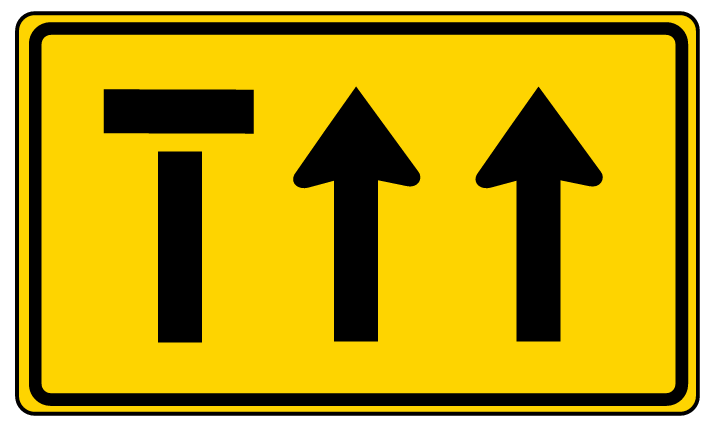
Continue at the same speed in lane.
Change lanes only if traffic slows.
Prepare to move into another lane.
This sign indicates the lane ends ahead, so you must plan to move safely into another lane in time.
What does this sign signify?
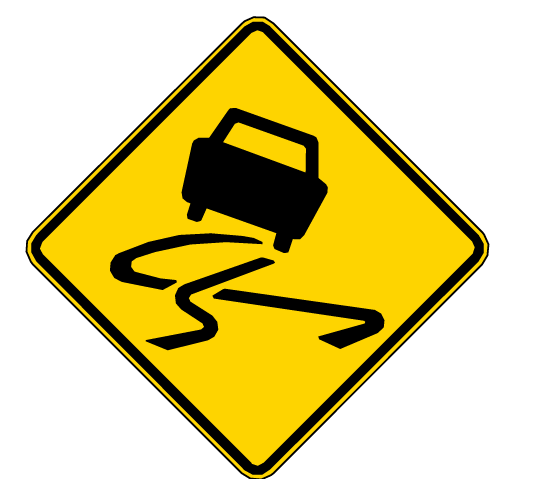
Slippery when wet.
Winding road ahead.
Loose gravel on road.
This sign warns the road may become slippery in wet conditions, so you must reduce speed and drive carefully.
What does ‘dual controls’ mean in a vehicle?
Two steering wheels.
Auto and manual modes.
Extra passenger-side pedals.
Dual controls are additional pedals on the passenger side so an instructor can assist or take control if needed for safety.
Normally, on which side should you pass a tram?
The left side.
The right side.
Either side is fine.
Unless there are specific signs or markings indicating otherwise, you must always pass a tram on the left side for safety.
When is it most dangerous to pass a truck?
When the truck is about to turn.
On a downhill slope or a curve.
On a straight, level road.
Passing on curves or downhills is dangerous because the truck may gain speed or obscure your view of oncoming traffic, increasing collision risk.
What does misjudging gaps usually lead to?
Rear-end crashes.
Intersection crashes.
Collisions when overtaking.
Misjudging gaps in oncoming traffic often causes drivers to enter intersections unsafely, leading to serious collisions.
In a ‘No Parking’ zone, how close must you stay to the vehicle?
Within 1 metre.
Within 3 metres.
Within 5 metres.
In a No Parking zone, you can stop for up to 2 minutes for loading or unloading, but you must remain within 3 metres of your vehicle.
When parallel parking, which direction must your vehicle face?
Opposite direction to traffic flow.
Towards the nearest driveway.
Same direction as the traffic flow.
On a two-way street, you must park your vehicle facing the same direction as the flow of traffic on that side of the road.