Syllabus: WA Drive Safe Handbook (2026)
WA Theory: Full Practice Test B
Complete practice set for the Western Australia Learner’s Permit.
Part 1: General Knowledge
20 Practice Questions
Part 2: Road Rules
10 Practice Questions
Question Format
Multiple Choice (3 Options)
⚠️ Practice Mode: This is a relaxed study session. You can complete all 30 questions to review the correct answers, even if you make a mistake.
Start Practice Test B
Ready to master the questions?
To avoid fatigue, how often should you take breaks on a long trip?
Every 1 hour.
Every 2 hours.
Only when tired.
To prevent driver fatigue, it is recommended to take a 15-minute break at least every two hours of driving.
A 'Stop' sign at a railway crossing means:
Slow down and look.
Stop only if a train is coming.
Stop and ensure the track is clear.
You must come to a complete stop at the stop line and only proceed when no trains are approaching from either direction.
At a children's crossing with flags displayed, you must:
Slow down to 20 km/h.
Drive through carefully.
Stop and wait for flags.
You must stop before the crossing and remain stationary until the attendant withdraws the flags and all children have cleared the road.
What does this sign indicate?
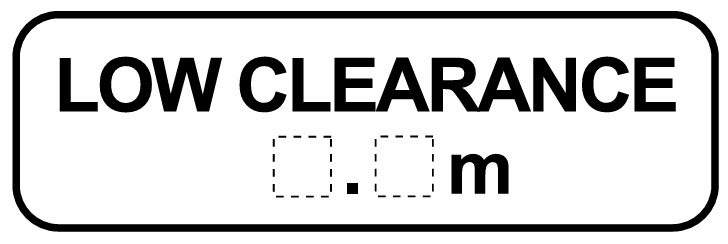
Maximum height limit.
Maximum width limit.
Maximum weight limit.
This sign shows the maximum clearance height ahead, so vehicles taller than the limit must not proceed.
In situations A and B, which shows the correct way for you to enter a freeway?
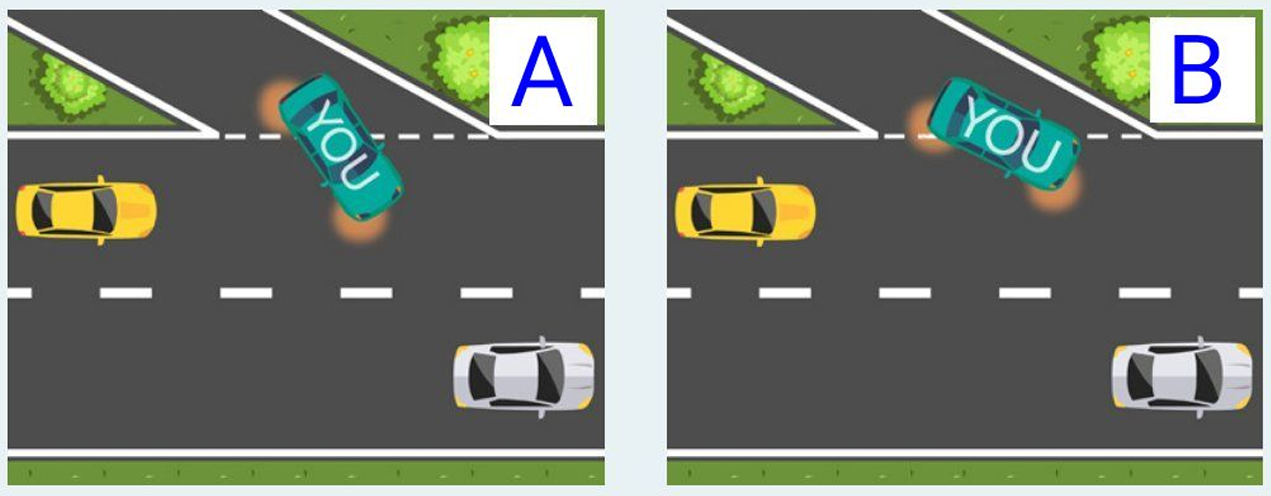
Situation A.
Situation B.
Both A and B.
You must merge smoothly into traffic by matching speed and joining the lane safely, as shown in situation B.
When being overtaken by another vehicle, you must:
Move to the left.
Speed up slightly.
Move to the center.
When another vehicle is overtaking, you should keep as far left as safely possible and not increase your speed until it has completely passed.
If a bus ahead signals to pull out, you must:
Speed up to pass it.
Stay in its blind spot.
Slow down and give way.
In built-up areas, you must give way to a bus that is signaling to pull out from a bus stop, provided it is safe to do so.
What does this sign indicate?
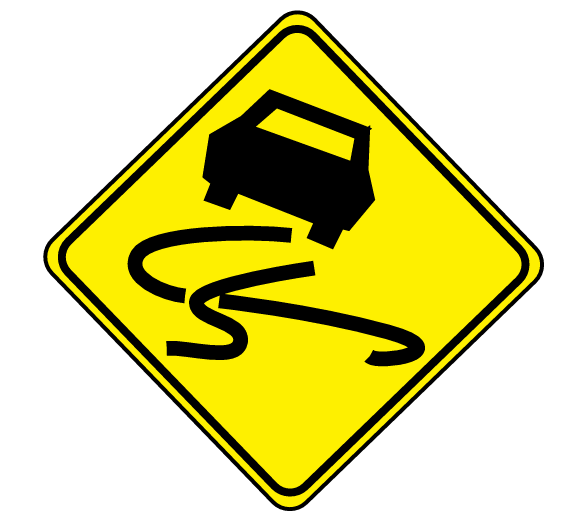
Slippery road ahead.
Winding road ahead.
Uneven surface ahead.
This sign warns that the road surface may be slippery, so drivers should reduce speed and avoid sudden braking or sharp turns.
Speed limit in built-up areas unless signed otherwise:
40 km/h.
60 km/h.
50 km/h.
The default speed limit in built-up areas is 50 km/h. This applies to all streets where there are no speed limit signs.
From the following situation, which one must give way?
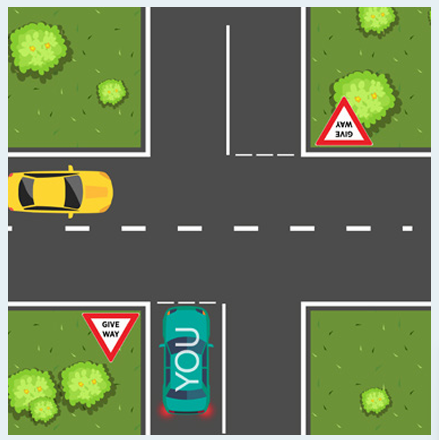
Your car.
Yellow car.
Both cars.
Your car is facing a GIVE WAY sign, so it must give way to traffic on the main road, including the yellow car.
At what age can a child sit in the front seat?
Under 4 years.
4 to 7 years.
7 years and above.
Children aged 7 years or older may sit in the front seat, while children under 7 must sit in the rear seat unless no rear seats are available.
First step in the 'Ten Rules to Safe Driving':
Know your vehicle.
Give correct signals.
Drive at a safe speed.
The first rule in the 'Ten Rules to Safe Driving' is to drive at a safe speed, as it is the most critical factor in giving you time to react to hazards.
You want to pull out from the kerb into traffic. You must:
Signal and move immediately.
Sound your horn and wait.
Signal for at least 5 seconds.
Before moving from a stationary position at the kerb, you must signal for at least five seconds to give other road users enough warning of your intention.
Which collision usually causes the most injury or death?
Car collision.
Engine collision.
Human collision.
The human collision refers to the occupants hitting the interior of the vehicle or being thrown out; this is the primary cause of serious injury or death in a crash.
A yellow box marking at an intersection means you must:
Stop and wait inside the box.
Not enter unless your exit is clear.
Keep clear for emergency vehicles.
You must not enter the yellow box unless your exit road or lane is clear, to avoid blocking the intersection.
When turning left at an intersection, you must give way to:
Vehicles behind you.
Vehicles on your right.
Pedestrians crossing.
When turning left at an intersection, you must give way to pedestrians crossing the road you are turning into.
In this situation, which vehicle must give way?
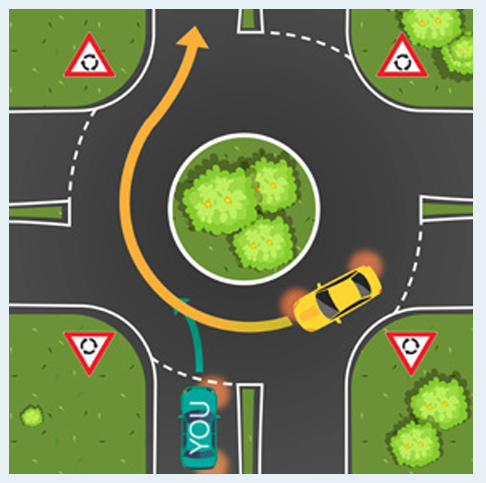
Yellow car.
Your car.
Both cars.
Vehicles entering a roundabout must give way to traffic already on the roundabout, including the yellow car.
When must you give way to a pedestrian at an intersection?
When turning into their path.
Only if a sign is present.
Only at marked crossings.
Drivers must give way to pedestrians crossing the road into which the vehicle is turning, regardless of whether there are markings or signs.
When is the road most slippery during rain?
When the rain first starts.
During heavy rain.
After several hours of rain.
When it first starts to rain, the water mixes with oil and dust on the road surface to create a slippery film. Heavy or prolonged rain eventually washes this mixture away.
After driving through deep water, you should:
Increase your speed.
Test your brakes.
Turn off the engine.
Deep water can make brakes wet and less effective. You should test them at low speed to ensure they are working correctly.
What does this sign represent?
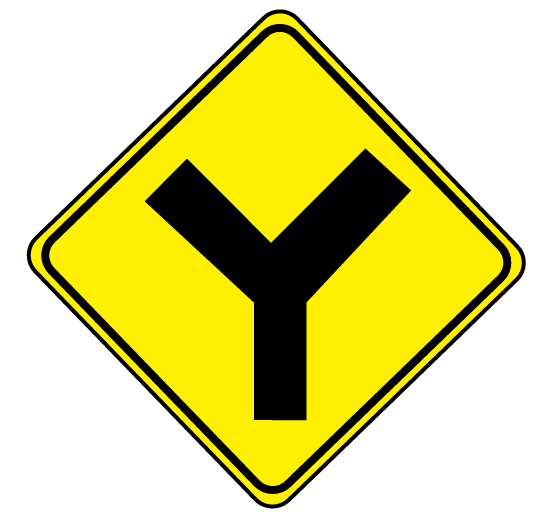
Y-junction ahead.
Divided highway begins.
Side road merges ahead.
This sign warns that the road ahead splits into two separate directions (Y-junction), so drivers must choose the correct path and be alert for diverging traffic.
What does this sign signify?
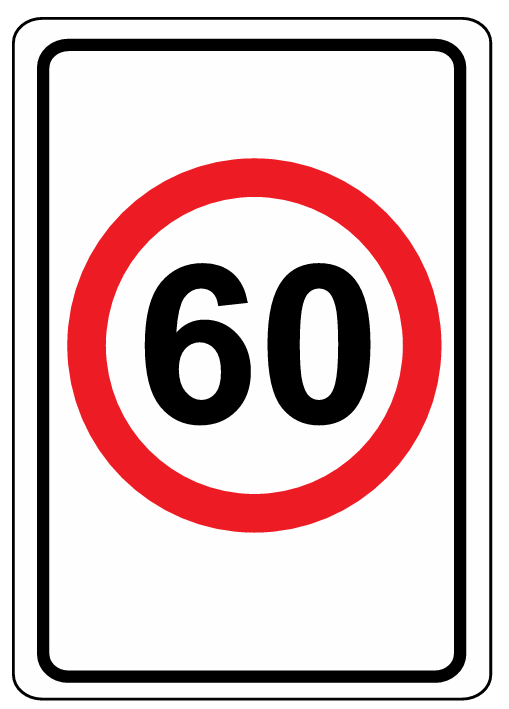
Recommended speed is 60 km/h.
Maximum speed is 60 km/h.
Minimum speed is 60 km/h.
This sign indicates the highest legal speed allowed, and drivers must not exceed 60 km/h under normal conditions.
If you are at a roundabout and want to turn left, you should:
Signal right, then left.
Signal left until you exit.
Signal left only on exit.
When turning left (taking the first exit), you must signal left as you approach the roundabout and keep it on until you have exited.
Based on this situation, which car must give way?
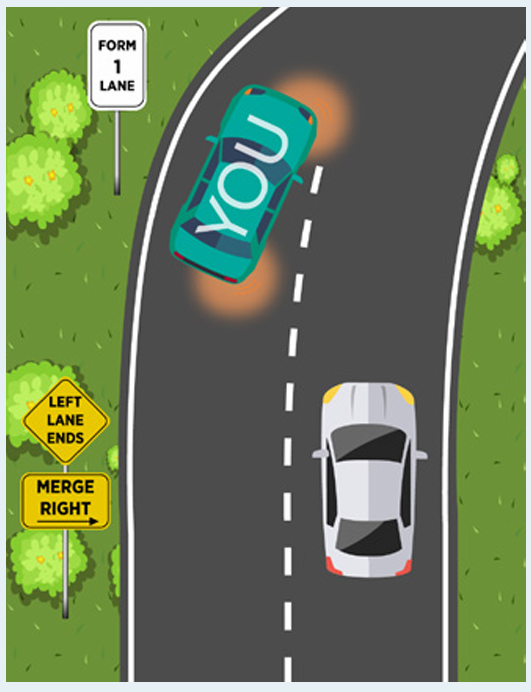
White car.
Your car.
Both cars.
The merging vehicle (your car) must give way to the vehicle already in the lane (white car).
What is the BAC limit for novice drivers?
0.00%.
0.05%.
0.08%.
Novice drivers (learners and provisional drivers) must have a zero Blood Alcohol Concentration (BAC), meaning no alcohol is permitted while driving.
Traffic is blocking the intersection ahead. What should you do?
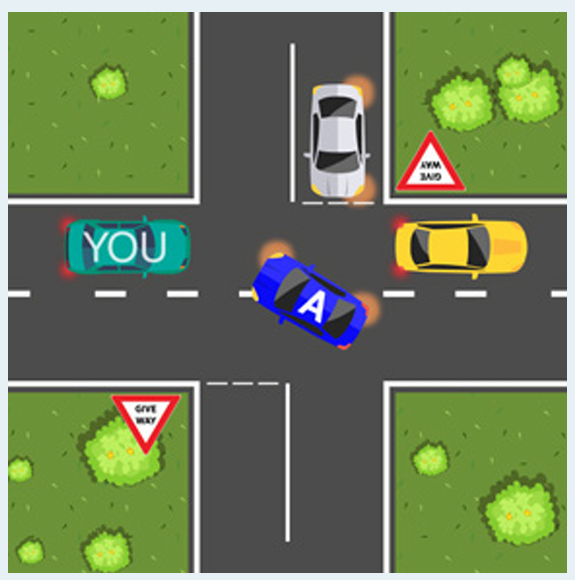
Enter and wait.
Stop before the intersection.
Move in slowly.
You must not enter the intersection unless there is enough space to clear it, otherwise you may block crossing traffic.
What does this sign denote?
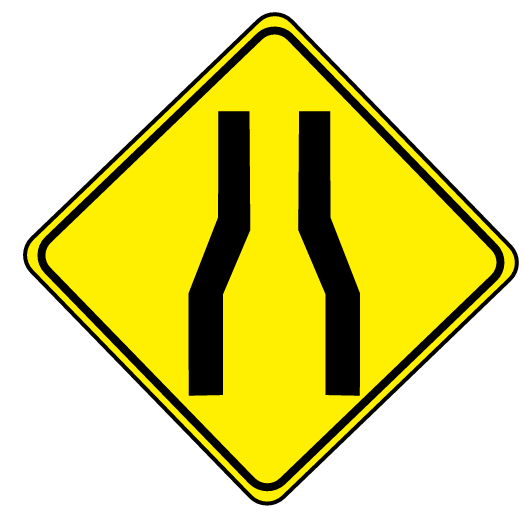
Road narrows ahead.
Narrow bridge ahead.
Divided road ends.
This sign warns that the road becomes narrower on both sides, so drivers should slow down and be prepared for reduced space.
Minimum supervised driving hours required for a Learner:
25 hours.
75 hours.
50 hours.
Learners must complete at least 50 hours of supervised driving, including 5 hours at night, before taking the Practical Driving Assessment (PDA).
When you see a green light with a green arrow, you may:
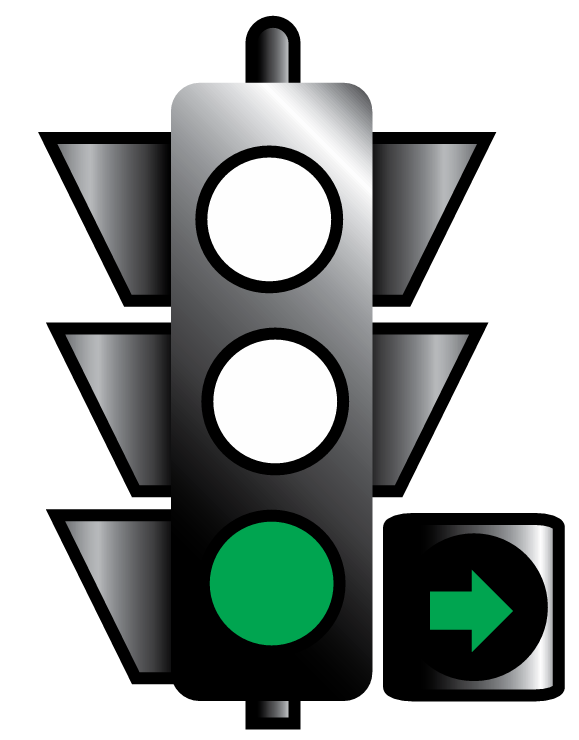
Go straight only.
Go straight or turn if safe.
Turn only in the arrow direction.
A green light combined with a green arrow allows you to either proceed straight ahead or turn in the direction the arrow is pointing, as long as it is safe to do so.
What does this sign mean?
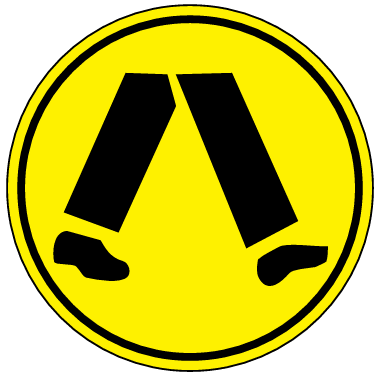
Pedestrians must cross here.
Pedestrians crossing ahead.
No pedestrian access.
This sign warns that pedestrians may be crossing the road ahead, so drivers should be alert and prepared to slow down.